

Trade policy often sounds distant until it starts to affect everyday decisions. Now it is showing up in one of the most important places in the economy: hiring.
Why tariffs are showing up in hiring plans

For months, the biggest effect of tariffs seemed to be higher costs and louder political debate. That picture is changing. As import taxes raise the price of steel, aluminum, parts, apparel, and other inputs, companies are being forced to rethink how much they can spend, how much they can produce, and whether they can afford to keep adding workers. In many cases, the first response is not mass layoffs. It is hesitation.
That shift is visible in the Federal Reserve’s April 2026 Beige Book. The report said labor demand was mostly stable nationwide, but hiring was often limited to replacement needs rather than expansion. It also noted that tariff-related uncertainty was complicating decisions on pricing, investment, and staffing. Several districts specifically reported rising costs for metals such as steel, copper, and aluminum because of tariffs, while businesses described a generally cautious outlook on growth and employment.
National labor data point in the same direction. The Bureau of Labor Statistics reported that U.S. job openings were 6.882 million in February 2026, while hires fell to 4.849 million. In simple terms, companies still have jobs on paper, but they are bringing people on more slowly. That is often what a wait and see economy looks like. Firms are not collapsing. They are just less willing to commit.
What makes tariffs especially powerful in hiring decisions is uncertainty. A company can sometimes absorb a known cost increase. What is harder is planning around a policy that may change by product, country, or court ruling. The result is a labor market that feels frozen at the edges. Businesses keep core staff, postpone new roles, and stretch existing teams further before approving another headcount request. According to Reuters reporting on comments from Kansas City Fed President Jeff Schmid, firms have been delaying that next hire in part to protect profit margins while tariff risks remain unclear.
The sectors feeling pressure first
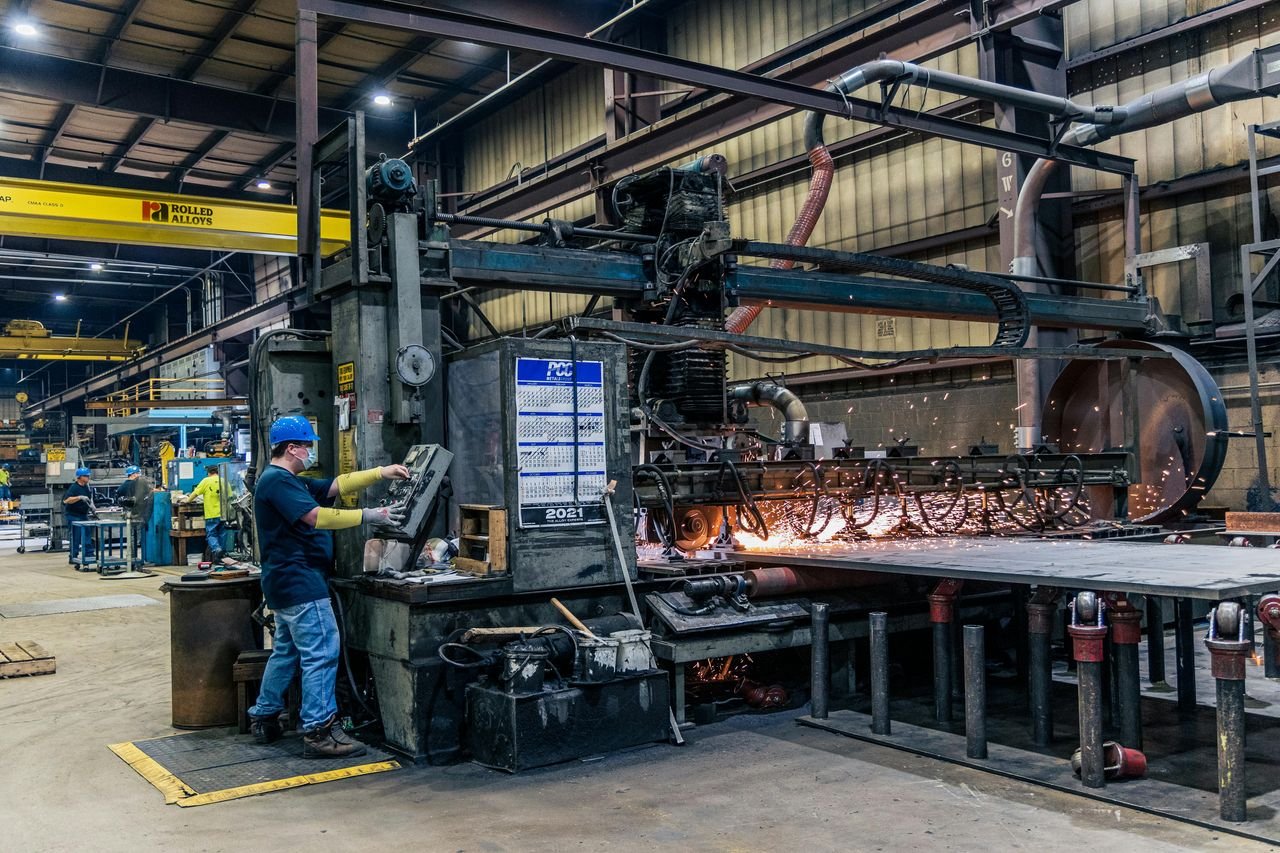
Manufacturing is one of the clearest places to see the effect. Tariffs are meant in part to support domestic production, but in the short run many factories still rely on imported inputs, specialized components, and globally priced raw materials. When those costs jump, margins tighten quickly. Some manufacturers can pass those costs along. Many cannot, especially if customers are already price sensitive.
The Beige Book’s district reports capture that strain in detail. In Cleveland, manufacturers said materials costs continued to rise, especially for copper, steel, and aluminum, with tariffs cited as a driver. In Philadelphia, contacts reported continued cost pressure from tariffs and transportation. In Boston, a construction contact said hiring was lower than a year earlier because supply bottlenecks and tariff-related uncertainty were weakening demand. These are not isolated stories. They show how trade costs move through supply chains and arrive in payroll decisions.
Official hiring data for manufacturing also show softness. BLS figures for February 2026 put manufacturing job openings at 439,000 and hires at 286,000, down from 310,000 hires in February 2025. Durable goods hiring was 160,000, below 186,000 a year earlier. Construction showed a similar slowdown, with hires falling to 274,000 from 348,000 a year earlier. That matters because these sectors are especially exposed to higher input costs and project delays.
Retail and consumer goods companies are under pressure too, especially those that depend on imports from Asia. Reuters reported that some clothing and accessories retailers delayed orders and froze hiring as tariff hikes approached. Smaller brands described scrambling to write multiple tariff contingency plans at once, while some feared the added cost could threaten their survival. When a business is unsure what its landed costs will be in a few months, it becomes very hard to hire for growth with confidence.
The energy and project economy are also exposed. Reuters reported that tariff-driven inflation and financial uncertainty could delay major oil and gas investment decisions worth more than $50 billion. When large projects move out by quarters or years, the hiring tied to engineering, construction, logistics, and support services moves with them. This is how tariffs can affect employment without showing up as a single dramatic announcement. The slowdown spreads through postponed orders and delayed capital spending.
Why companies are cutting openings before they cut jobs
Most businesses do not jump straight from cost pressure to layoffs. The more common response is to trim around the edges. Open roles are left unfilled. Expansion plans are shelved. Managers are told to justify each new hire. Contract labor may be reduced before full-time staff are touched. In accounting terms, this is rational. In labor market terms, it means fewer chances for job seekers even if unemployment has not surged.
That pattern helps explain why the current labor market can feel weak without looking catastrophic. The April 2026 Beige Book described hiring as mostly for replacement and noted low turnover in many districts. In New York, the Fed said labor demand was subdued in a low-hire, low-fire environment. In San Francisco, employers reported generally stable employment but continued caution. The phrase low-hire, low-fire captures the moment well. Companies are not broadly dismissing workers, but they are also not expanding their teams with much energy.
JOLTS data reinforce that picture. Total separations in February 2026 were 4.971 million, only modestly above hires of 4.849 million, while layoffs and discharges were unchanged at 1.7 million. That suggests the labor market is not being driven mainly by firing. It is being shaped by slower hiring. For workers trying to change jobs, enter the market, or move up, that distinction matters a lot. A labor market with limited openings can feel harsh even when headline layoff numbers remain calm.
There is also a psychological dimension. Employers facing tariff uncertainty are often dealing with several problems at once: rising input costs, unclear consumer demand, higher financing costs, and questions about where to source materials next. Under those conditions, a new hire becomes a long-term commitment made at exactly the wrong moment. It is easier to ask current employees to do more, delay backfilling a vacancy, or automate part of the work than to add permanent staff.
That helps explain why hiring weakness can spread beyond import-heavy industries. A manufacturer that postpones purchases affects trucking, warehousing, staffing firms, software vendors, and local service businesses. The first cut is often not visible to the public. It is the job posting that never appears, the interview process that quietly stops, or the budget line that gets moved to next quarter.
The economic signals behind the slowdown
Several economic indicators suggest that tariffs are feeding into a broader climate of caution. The Institute for Supply Management’s manufacturing survey has shown ongoing pressure from tariffs, with respondents pointing to higher material costs and weaker activity. Reuters reported that tariff strains were squeezing supply chains, keeping factory prices elevated, and encouraging some firms to lay off workers or slow hiring. Economists cited by Reuters said they expected hiring to soften as companies adjusted to the new cost environment.
Research tied to JPMorganChase Institute, reported by the Associated Press in February 2026, found that tariffs paid by midsize U.S. companies tripled over the prior year. The same AP report said the average U.S. tariff rate had risen to 13% from 2.6% the year before, citing New York Fed researchers. That does not automatically mean every company will cut jobs. But it does mean a much larger share of firms now faces a direct cost shock that has to be absorbed through prices, margins, investment cuts, or staffing restraint.
The data also show why this pressure may not appear evenly across the country. Federal Reserve district reports reflect local industry mix. Areas tied to construction, manufacturing, ports, or trade-heavy retail may feel the effects sooner. In Richmond, firms said tariffs were contributing to higher non-wage input costs. In Boston, tariff uncertainty was described as clouding pricing and hiring. In New York, contacts said changing tariffs made pricing decisions harder. Together, those observations suggest that hiring is being shaped not just by cost increases, but by the sheer difficulty of planning ahead.
Even when hiring rebounds in headline payroll reports, the underlying mood can remain fragile. AP reported in March 2026 that employers added 130,000 jobs in one month, stronger than expected, yet 2025 had still been marked by weak hiring and tariff uncertainty. A single decent jobs report does not erase the fact that many businesses remain reluctant to make long-term commitments while trade policy stays unsettled. Hiring plans are often more sensitive to uncertainty than payroll totals are.
What this means for workers, businesses, and the broader economy
For workers, the most immediate effect is not necessarily job loss. It is fewer openings, longer job searches, and less leverage. Recent graduates may find that entry-level roles are slower to appear. Mid-career workers may see interview processes drag out or disappear. People in sectors tied to imported goods, logistics, building materials, and manufacturing may feel the chill first, but the spillovers can reach well beyond those industries.
For businesses, the risk is that defensive behavior becomes self-reinforcing. A firm that delays hiring may protect margins in the short term, but it can also limit output, postpone innovation, and increase burnout among current staff. If many firms make the same choice at once, overall demand weakens further. Consumers spend less when job opportunities look scarce. Suppliers receive fewer orders. Local economies lose momentum. What begins as a tariff cost problem can turn into a growth problem.
There is also a timing mismatch in the policy debate. Tariffs are often defended as a way to support domestic production and encourage investment at home. That may happen in some industries over time. But building factories, shifting supply chains, and training workers take years, not months. Reuters reporting on economists and policymakers has noted this lag clearly. Even if firms eventually localize production, the short-run effect can still be delayed hiring, project deferrals, and tighter budgets.
The central takeaway is simple. Tariffs are no longer just raising the price of goods. They are beginning to shape the labor market through caution, delay, and reduced appetite for expansion. That makes the hiring slowdown easy to miss at first, because it often appears as silence rather than shock. But across the country, from factory floors to retail offices to construction planning rooms, that silence is becoming an economic signal of its own. If tariff uncertainty persists through the rest of 2026, hiring may remain one of the clearest places where trade policy leaves its mark.