


Washington’s budget fights are rarely just about numbers. They are arguments over national priorities, executive power, and the political limits of governing.
A blueprint designed to provoke Congress

President Trump’s latest budget blueprint arrived on Capitol Hill as both a fiscal document and a political challenge. The White House’s fiscal year 2026 “skinny budget,” released by the Office of Management and Budget on May 2, 2025, proposed a 23% reduction in non-defense discretionary spending, or $163 billion below the 2025 enacted level, while seeking major increases for defense and homeland security. According to the White House, the request aims to shift federal resources away from climate programs, diversity initiatives, education grants, and what the administration describes as bureaucratic overreach. In practical terms, it is a statement that the modern domestic state should be narrowed while national security and border enforcement are expanded.
The administration presented the plan in ideologically charged terms, arguing that domestic discretionary spending had drifted toward progressive social engineering and away from core state functions. OMB said the request would deliver the lowest level of non-defense spending since 2017 and claimed savings from eliminating programs tied to DEI, environmental initiatives, and activities it says should be left to states and localities. At the same time, it called for a 13% increase in defense spending and a nearly 65% increase in appropriations for the Department of Homeland Security. Those headline shifts signal that the blueprint is not merely trimming margins; it is attempting to reorder the federal government’s hierarchy of missions.
Yet even by the standards of presidential budgets, this document is only a starting point. Congressional Research Service materials make clear that a presidential budget request initiates the process but does not bind Congress, which retains the constitutional power of the purse. The so-called skinny budget is especially limited because it offers topline priorities rather than a fully elaborated fiscal architecture. That matters because a blueprint can dramatize choices, but appropriators still need bill text, account-level detail, and political votes.
This is why the proposal instantly opened a new battle rather than settling one. Republicans broadly welcome the emphasis on defense and immigration enforcement, but many lawmakers are wary of politically costly cuts to popular domestic programs. Democrats, for their part, see the plan as an attempt to weaken education, clean energy, research, and anti-poverty efforts while using cultural grievance as a governing tool. The budget, in other words, is less a neutral planning exercise than an opening salvo in a broader struggle over what the federal government is for.
Why Capitol Hill, not the White House, will decide the outcome
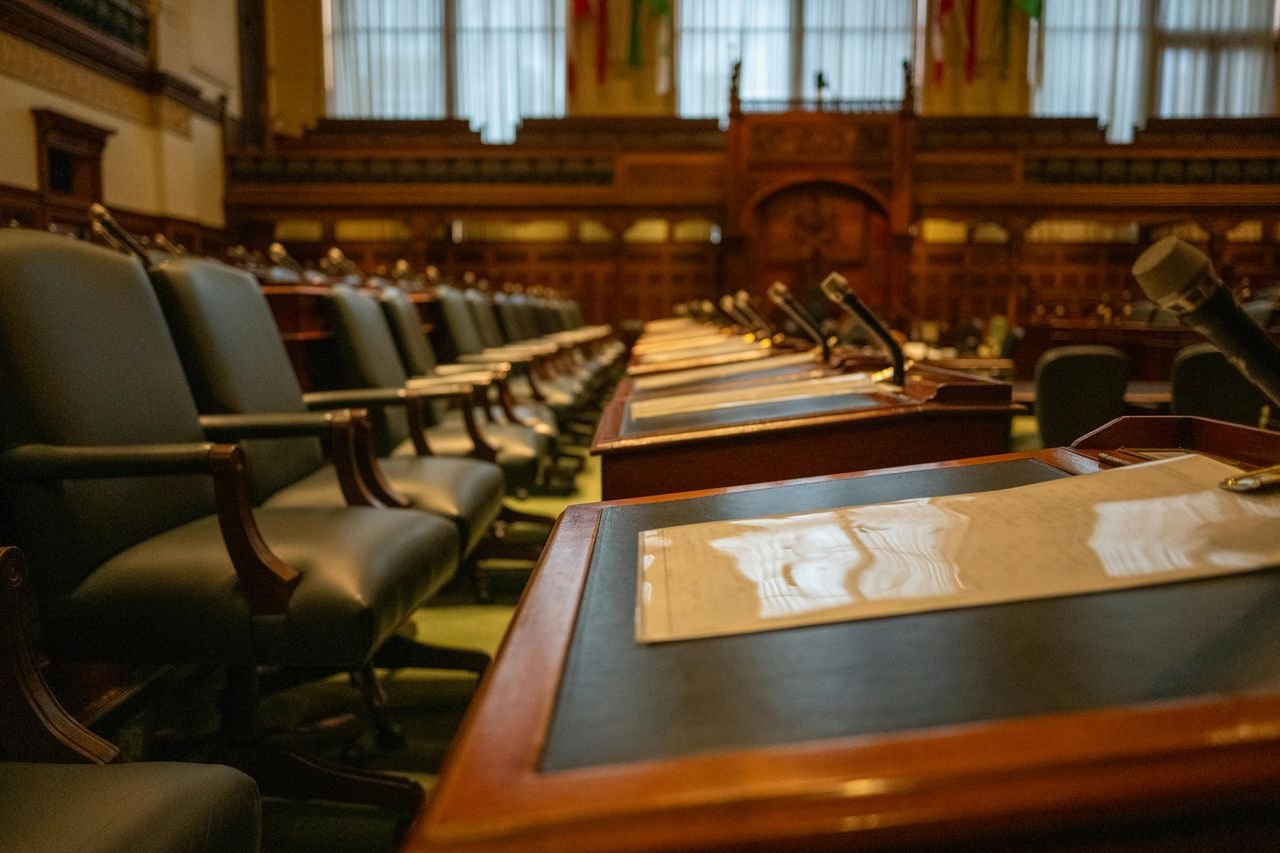
The constitutional structure of budgeting ensures that even an assertive White House cannot dictate the final result. Congress writes appropriations bills, sets spending levels, and decides whether to follow, ignore, or selectively adapt presidential proposals. CRS has repeatedly emphasized that the president’s budget is advisory in legal force even when it is politically influential. That distinction is central to understanding the current fight: the administration can frame the terms of debate, but it cannot unilaterally convert its blueprint into law.
This institutional reality gives Capitol Hill several points of leverage. House and Senate appropriators must translate broad priorities into the concrete funding lines that sustain agencies, contracts, grants, and personnel. Moderate Republicans often become pivotal at this stage, especially when cuts threaten programs with strong district-level constituencies such as biomedical research, transportation grants, agricultural assistance, or K-12 education support. Senators, who tend to defend home-state spending more openly than House fiscal hawks, can also blunt the sharper edges of a president’s plan.
The politics become even more complex because this blueprint intersects with other fiscal tracks. Reporting from the Associated Press noted that the White House was also looking to Congress to provide hundreds of billions of dollars in additional defense and homeland security resources through a separate party-line package. That means the administration is effectively trying to use more than one legislative vehicle at once: annual appropriations for regular agency funding and broader budget legislation for favored priorities. Such overlap complicates negotiations by forcing lawmakers to weigh not just spending totals, but sequencing, offsets, and partisan process.
Appropriators are also constrained by deadlines that repeatedly turn budgeting into crisis management. If Congress fails to pass the regular spending bills before the fiscal year begins, lawmakers must rely on continuing resolutions, omnibus packages, or, in the worst case, endure shutdowns. Recent events underscore the stakes. AP reported in late April 2026 that Congress moved a bipartisan Homeland Security funding measure after a prolonged shutdown episode, while lawmakers separately prepared a larger border and immigration bill. That recent disruption is a reminder that budget conflict is not abstract; it affects airport staffing, agency operations, and public confidence in governing competence.
The result is a familiar but unstable equilibrium. Presidents submit budgets to define ambition and mobilize allies. Congress rewrites those ambitions through bargaining, logrolling, and procedural constraint. Trump’s blueprint is therefore best understood as a forceful attempt to move the center of gravity rightward, knowing full well that the real contest will be fought in committee rooms, floor amendments, and deadline-driven negotiations.
The deeper ideological divide beneath the numbers

Behind the spreadsheets lies a philosophical dispute about the role of the federal government in American life. Trump’s budget blueprint assumes that many domestic functions should be downsized, consolidated, or devolved to states, while federal authority should be concentrated in defense, policing, immigration control, and select infrastructure and veterans’ services. This is not a technocratic adjustment. It reflects a theory of governance in which Washington should be muscular in matters of sovereignty and restraint, but thinner in social provision and regulatory ambition.
That worldview is visible in the sectors targeted for cuts. The White House budget materials describe efforts to eliminate or reduce climate-related programs, reshape education funding into simplified grants, refocus workforce policy, and pare back scientific and administrative functions deemed ideological or inefficient. Even NASA is framed through strategic rivalry, with funding redirected toward lunar and Mars ambitions while climate-related or experimental initiatives are cut. The pattern is consistent: resources are justified where they reinforce national strength, and suspect where they support redistribution, decarbonization, or institutional pluralism.
Critics argue that this framework confuses ideology with efficiency. Fiscal watchdogs such as the Committee for a Responsible Federal Budget noted that the administration’s 2026 request cut base non-defense discretionary spending sharply but relied on separate legislation to raise defense and some other spending, leaving overall fiscal discipline less clear than the rhetoric suggested. Maya MacGuineas argued that a credible budget should reduce borrowing and present the full picture. That critique is important because it reframes the issue from culture war symbolism to arithmetic: a budget that rearranges priorities without stabilizing debt may be politically potent but fiscally incomplete.
The broader economic context sharpens the stakes. CRFB’s summary of the Congressional Budget Office outlook in early 2026 said federal borrowing remained exceptionally high, with deficits above 6% of GDP and debt roughly the size of the economy. Under those conditions, every major budget proposal is judged not only by what it funds but by whether it addresses long-term imbalance driven by aging, healthcare costs, veterans spending, and interest payments. A blueprint centered on discretionary cuts alone can influence annual debates, but it leaves the main structural drivers of debt only partially addressed.
This tension helps explain why budget battles now feel more existential. The parties are not merely disagreeing over line items. They are offering rival answers to three foundational questions: what government should do, what the nation can afford, and which institutions deserve trust. Trump’s blueprint intensifies all three disputes at once, making compromise possible only at the price of ideological ambiguity.
The political risks for both parties
For Republicans, the budget blueprint is an opportunity to demonstrate alignment with Trump’s priorities while reviving long-standing conservative themes of spending restraint and state-level flexibility. It gives party leaders a document around which to organize committee hearings, media messaging, and negotiations with activists who want visible proof that the administration is shrinking government. It also creates a contrast with Democrats by elevating border security, military readiness, and anti-bureaucratic reform as governing priorities rather than campaign slogans.
But the risks are substantial. Deep cuts to domestic discretionary programs can quickly become unpopular when translated into local consequences: fewer research grants, strained school support systems, delayed infrastructure projects, or reduced public-health capacity. Even voters skeptical of Washington often defend the federal programs that touch their communities. Republican lawmakers from competitive districts or states may therefore support the rhetoric of austerity while resisting its practical application. That gap between symbolic conservatism and distributive politics has undermined many previous budget revolutions.
Democrats face their own strategic dilemma. On one hand, the blueprint offers a clear target. They can portray it as an assault on education, science, environmental protection, and the administrative capacity of the state. The White House’s language around “weaponization,” “woke programs,” and the “Green New Scam” may energize conservatives, but it also gives opponents vivid evidence that the budget is animated by ideological antagonism. For Democrats, that can unify labor groups, public-sector advocates, universities, clean-energy interests, and social-service organizations.
On the other hand, opposition alone may not be enough. Voters remain concerned about inflation, deficits, and government performance. If Democrats respond as though every federal program is equally defensible, they risk appearing inattentive to demands for reform. The challenge is to defend public investment while acknowledging inefficiency and waste where it exists. That is especially important in an era when distrust of institutions runs high and procedural arguments rarely persuade on their own.
The timing also matters politically. Budget battles unfold alongside election cycles, debt concerns, and fights over reconciliation packages, all of which can blur accountability. A party may denounce cuts in one venue while accepting them in another as part of a broader deal. Because appropriations often conclude through sprawling compromises, both sides can end up claiming victory while quietly absorbing policy losses. Trump’s blueprint thus creates a political contest in which messaging will be almost as consequential as substance, and where the final outcome may be less dramatic than the opening confrontation suggests.
What this battle means for governing in the years ahead
The importance of this budget fight extends beyond fiscal year 2026. It is an early test of whether Trump can convert campaign-era grievance and executive messaging into durable legislative change. Presidential budgets often fail in detail but succeed in shaping the agenda. If Congress accepts even part of the administration’s framework, especially the idea that domestic non-defense spending should contract sharply while security functions expand, the center of budget politics could shift for years.
Such a shift would have institutional consequences. Agencies threatened with cuts do not merely lose money; they lose planning certainty, staffing continuity, and policy ambition. Universities, states, local governments, contractors, and nonprofit partners also revise expectations around federal support. Over time, repeated budget pressure can alter what public institutions believe is possible. That is one reason “skinny budgets” matter even when Congress rejects many of their specifics: they establish a vocabulary of legitimacy around some functions and doubt around others.
The fight may also test the resilience of congressional power itself. Trump-aligned arguments for aggressive executive control over spending, program direction, and regulatory rollback raise perennial questions about impoundment and presidential discretion. CRS materials on the Impoundment Control Act make clear that the president cannot permanently withhold appropriated funds without following statutory procedures. If future disputes arise over whether the administration must spend what Congress appropriates, budget conflict could spill into legal and constitutional confrontation. In that sense, the current blueprint is tied to a larger debate over separation of powers.
For the broader public, the lesson is that budget politics should not be mistaken for technical housekeeping. It is where campaign promises encounter institutional limits, and where ideological narratives are translated into operating government. A proposal to cut $163 billion from non-defense discretionary spending is not just a fiscal signal. It implies different classrooms, laboratories, enforcement regimes, transportation systems, and state-federal relationships. Every appropriation is ultimately a theory of citizenship made concrete.
Trump’s budget blueprint has therefore opened more than another seasonal fight on Capitol Hill. It has exposed a governing conflict over austerity, nationalism, federalism, and democratic accountability. Whether Congress softens, redirects, or partly embraces the proposal, the confrontation will help define not only what gets funded, but what kind of state the United States intends to sustain in the years ahead.