


The diplomacy keeps moving, but the war keeps moving with it. That is the central problem haunting every new round of Ukraine peace talks.
The negotiations keep returning to the same hard questions
Every attempt to revive negotiations over Ukraine eventually crashes into a familiar wall: the two sides are not merely bargaining over terms, but over entirely different visions of the war and its end. Ukraine wants a settlement that preserves sovereignty, territorial integrity, and long-term security. Russia, by contrast, has repeatedly tried to turn battlefield gains into political concessions, pressing for terms that would lock in leverage even if the fighting slows. That gap has defined the diplomacy since 2022, and it still defines it in 2026.
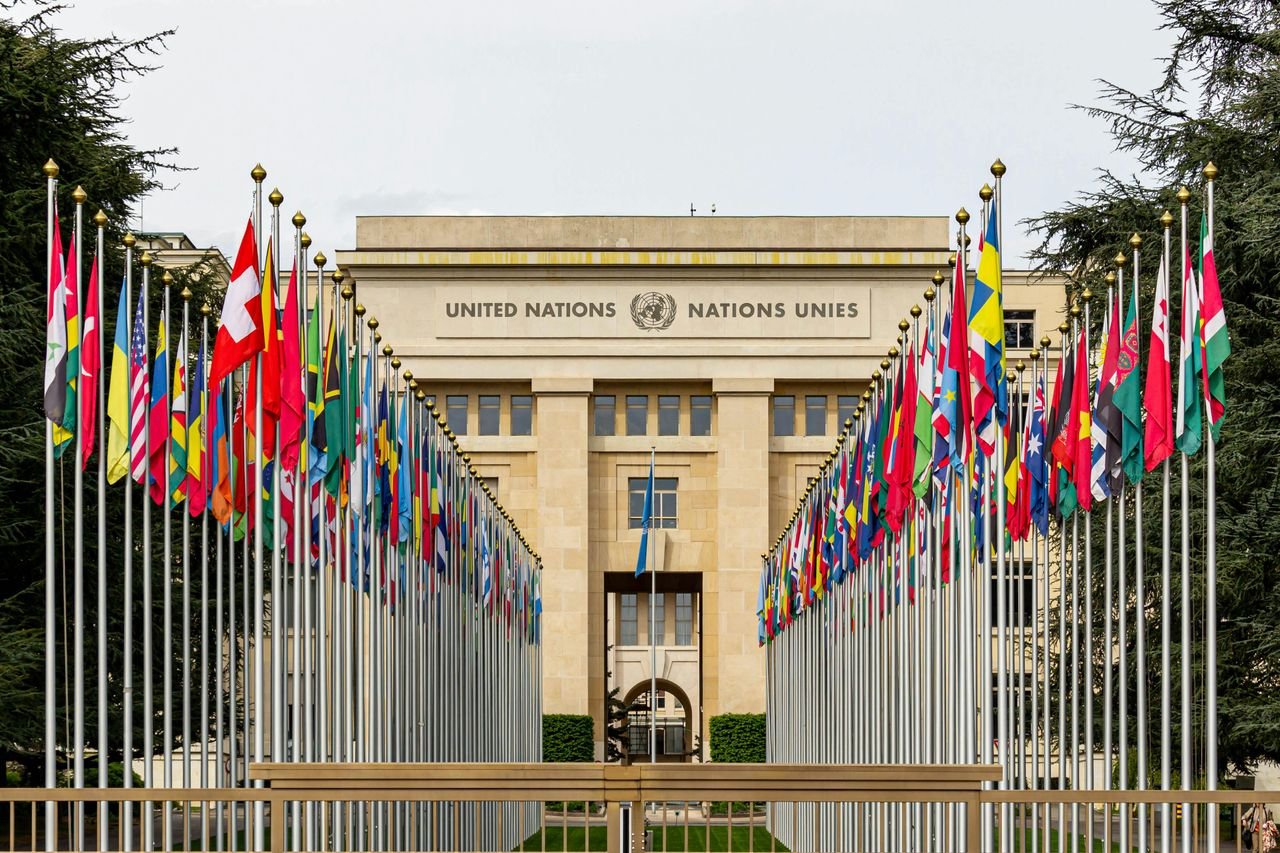
Recent diplomacy has shown both motion and paralysis at once. According to AP, Russia floated a short ceasefire around May 9 tied to Victory Day commemorations, while Ukrainian President Volodymyr Zelenskyy said Kyiv needed details and has remained wary of symbolic pauses that do not change the wider military reality. The United Nations, meanwhile, has continued to call for an immediate, full, and unconditional ceasefire as the first step toward a just and lasting peace. That language matters because it underscores how far the actual talks remain from any durable framework.
The recurring disputes are easy to list and extraordinarily hard to resolve. They include the status of occupied territory, the sequencing of a ceasefire versus political negotiations, the future of sanctions, reparations, accountability for war crimes, and Ukraine’s long-term security architecture. Each item is politically explosive on its own. Taken together, they form a negotiation agenda so heavy that even modest breakthroughs are difficult to sustain.
That is why intermittent talks often produce narrow humanitarian outcomes rather than strategic progress. Prisoner exchanges are possible because they are concrete, reciprocal, and limited. A full ceasefire is much harder because each side fears it will advantage the other. For Ukraine, a ceasefire without strong guarantees risks freezing the conflict on Russian terms. For Russia, a ceasefire without political concessions risks giving Ukraine time to regroup while Moscow gains nothing permanent in return.
Ceasefire diplomacy keeps failing on sequencing and trust
The word “ceasefire” sounds simple to outside audiences, but in this war it conceals a basic disagreement about sequence. Ukraine and many of its partners have argued that a ceasefire must lead toward a just settlement rooted in international law, not simply pause the war while occupation lines harden. Russia has often signaled interest in halting combat under conditions that critics say would effectively ratify military gains before the deeper political issues are settled. That sequencing dispute has repeatedly derailed talks.
Trust is even more scarce than common ground. Ukrainian and European officials have long warned that Moscow can use negotiations tactically: easing pressure when sanctions or international criticism mount, then returning to military escalation once the diplomatic temperature falls. AP reported in February that Ukrainian and European officials accused President Vladimir Putin of feigning interest in peace talks partly to avoid new punitive measures while Russian attacks continued. Whether one sees that as strategy or cynicism, it explains why Kyiv treats limited truce offers with intense caution.
The military backdrop reinforces the mistrust. UN human rights monitors said 2025 was the deadliest year for civilians in Ukraine since 2022, with at least 2,514 civilians killed and 12,142 injured. In the first quarter of 2026, civilian casualties remained extremely high, and the March 2026 tally alone reached at least 211 killed and 1,206 injured. Those numbers are not abstractions in a negotiating room. They shape the politics of every concession and make it harder for Ukrainian leaders to sell compromise at home.
Even narrow pauses have not changed that perception. The UN noted renewed fighting and devastation at the start of 2026, while later briefings referred to short truce proposals around Easter and continued escalation nonetheless. When civilians keep dying and infrastructure keeps getting hit, even earnest diplomacy struggles to create political confidence. A ceasefire that cannot be monitored, enforced, and tied to a credible next step does not look like peace. It looks like an intermission before the next round of attacks.
Territory and security guarantees remain the core deadlock
At the heart of the peace process lies the issue that has shadowed every discussion from the beginning: land and the power that comes with it. Russia wants political recognition, or at minimum practical acceptance, of the territory it controls. Ukraine insists that sovereignty cannot be negotiated away under force. That is not a semantic disagreement. It is the difference between a settlement that restores the principle of territorial integrity and one that normalizes conquest.
This is why outside formulas that sound reasonable in theory often collapse in practice. Suggestions that the war could be “frozen” along current lines may appear pragmatic to exhausted observers, but they collide with Ukraine’s fear that any frozen line would become a permanent source of coercion. The UN has repeatedly framed a just peace as one consistent with the UN Charter, international law, and Ukraine’s independence, sovereignty, and territorial integrity. That principle is clear. Translating it into an enforceable diplomatic arrangement is far less so.
Security guarantees are the second half of the same problem. Even if active combat were paused, Ukraine would still face the question that has haunted it for years: what prevents a future Russian offensive? Any durable deal would need more than signatures. It would require credible deterrence, military support, or institutional guarantees strong enough to convince Kyiv that a pause would not simply invite another invasion later. Yet the stronger those guarantees become, the less acceptable they are likely to be to Moscow.
This deadlock also traps outside mediators. If they push Ukraine toward territorial concession, they risk legitimizing aggression and destabilizing European security norms. If they insist on full restoration without a plausible enforcement mechanism, they can sound morally right but diplomatically stuck. The result is a cycle of proposals that either ask too much of Ukraine or too little of Russia. That imbalance is one reason talks repeatedly narrow into technical measures, while the central dispute over borders and security remains unresolved.
Domestic politics and war aims make compromise even harder
Peace talks do not occur in a vacuum; they are constrained by politics in Kyiv, Moscow, Washington, and European capitals. Ukrainian leaders must answer to a population that has endured invasion, occupation, mass displacement, strikes on cities, and years of loss. Any settlement seen as rewarding force would be politically fraught even if international partners quietly favored pragmatism. The more civilian harm rises, the narrower the space for compromise becomes.
Russia faces its own political logic. The Kremlin has invested heavily in the war’s narrative and in the argument that Russia is resisting the West as much as fighting Ukraine. That makes concessions harder to frame domestically. A settlement that falls well short of stated aims could look like retreat, especially after years of mobilization, casualties, sanctions, and economic adaptation. In such an environment, maximalist rhetoric is not just propaganda; it is a constraint on what leaders can publicly accept.
Outside powers complicate the picture further. The United States and Europe remain central because sanctions, military aid, and diplomatic pressure all shape the incentives for both sides. But allied governments do not always emphasize the same end state with the same urgency. Some prioritize justice and deterrence above all else. Others increasingly worry about war fatigue, economic strain, escalation risks, and the need to define a realistic diplomatic off-ramp. Those differences do not break support for Ukraine, but they can influence how negotiations are framed.
That helps explain why talks often produce ambiguous language and carefully staged signaling rather than decisive breakthroughs. Each side is speaking to multiple audiences at once: the battlefield, domestic opinion, international backers, and future historians. In that environment, flexibility can look like weakness. Even humanitarian gestures, such as prisoner exchanges, are politically safer than strategic concessions because they show movement without forcing leaders to redraw red lines they have spent years defending.
What a real breakthrough would actually require
If the same problems keep recurring, it is because the war’s core issues have never been politically solved, only temporarily managed. A real breakthrough would require more than another meeting, another mediator, or another short truce proposal. It would need a framework that addresses not just how to stop shooting, but how to prevent the next round of coercion. That means sequencing, verification, enforcement, and security guarantees would all have to be more credible than they have been so far.
First, any serious process would need a ceasefire mechanism that both sides believe can be monitored independently and violations can be documented quickly. Without that, every pause becomes vulnerable to mutual accusations and rapid collapse. Second, the talks would need a clear order of operations: what happens first, what is deferred, and what cannot be settled at all without broader international backing. Ambiguity can help launch diplomacy, but too much ambiguity kills implementation.
Third, the political framework would have to confront the territorial issue honestly rather than bury it in vague language. That does not mean an immediate final-status solution is likely. It does mean durable diplomacy cannot pretend the question is secondary. As long as sovereignty, control, and recognition remain unresolved, every military pause will carry the risk of becoming only a tactical reset.
Finally, the wider international environment matters. The UN has continued to insist that peace must be just, lasting, and grounded in international law. That principle remains the benchmark against which any deal will be judged. But principles alone do not end wars. They need leverage, enforcement, and political will behind them. Until those elements align, Ukraine peace talks are likely to keep producing the same limited gains and running into the same old problems that have blocked peace from the start.