

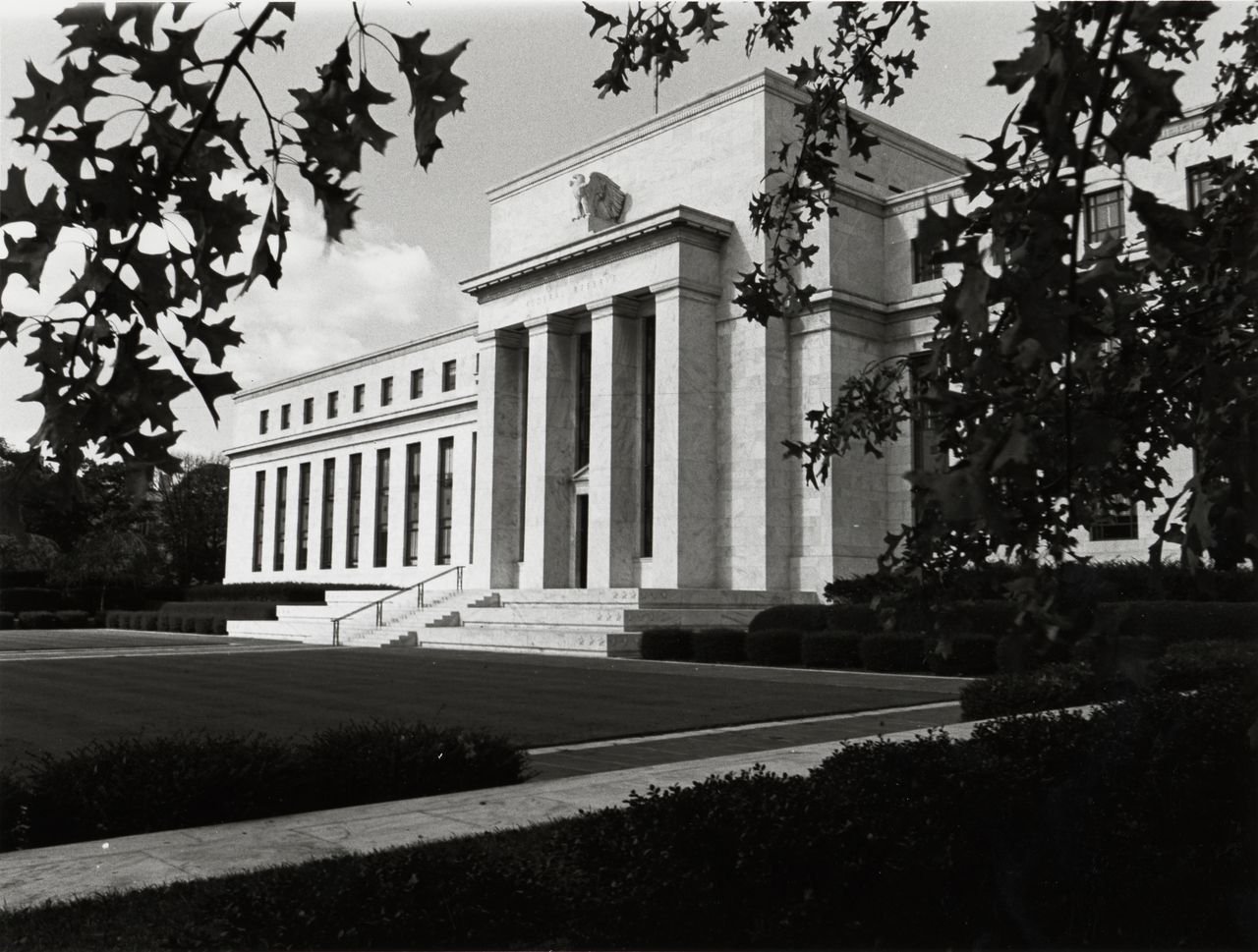
The Federal Reserve is under pressure from all sides. Markets want clarity, borrowers want relief, and politicians want outcomes that fit their message.
But the most likely path for the Fed right now is patience, not haste.
Inflation Is Still Too High for Comfort

The clearest reason the Fed is likely to stay patient on rates is simple: inflation has not fully returned to target. The central bank’s goal is 2% inflation over time, and the latest data still show price pressures running above that mark. The Fed’s preferred inflation gauge, the personal consumption expenditures price index, rose 3.5% from a year earlier in March 2026, while core PCE, which strips out food and energy, was up 3.2%. That is an improvement from the worst of the inflation surge, but it is not the kind of clean victory that would justify an aggressive move toward easier policy.
What makes the picture more complicated is that inflation is no longer just about one overheated category. Goods inflation has become less dominant than it was during the pandemic era, but services inflation has proved more persistent, and energy prices have pushed fresh pressure into the headline numbers. In its April 29, 2026 statement, the Federal Open Market Committee explicitly said inflation is elevated, in part because of the recent increase in global energy prices. That language matters. It tells markets the Fed is not viewing the latest pressure as trivial background noise.
There is also a credibility issue. Inflation has run above target for years, and central bankers know the public’s confidence can erode if policymakers ease too early. At his April 29 press conference, Chair Jerome Powell noted that some measures of inflation expectations have risen this year, likely because of the substantial rise in oil prices. For a central bank, expectations are not a side issue. If households and businesses begin assuming higher inflation will persist, that belief can shape wage demands, contracts, and pricing behavior in ways that make inflation harder to finish off.
That is why patience becomes the safer choice. The Fed does not need inflation to be merely better; it needs inflation to be convincingly on a path back to 2%. As long as price growth remains sticky, and as long as new shocks can still feed into the data, policymakers have a strong reason to keep rates where they are rather than gamble on relief too soon.
The Economy Has Slowed, But It Has Not Broken

A patient Fed also reflects an economy that is softer than before, but far from weak enough to demand emergency support. According to the Bureau of Economic Analysis, real GDP grew at a 2.0% annual rate in the first quarter of 2026. That is not booming growth, yet it is still growth, and it signals an economy that continues to expand despite high borrowing costs. For the Fed, that matters enormously. Rate cuts are easier to justify when output is stalling or contracting. That is not the picture the latest data present.
Consumer activity has also held up better than many forecasters expected. BEA data show personal consumption expenditures rose 0.9% in March from the prior month in current-dollar terms. Americans may be feeling pressure from prices and rates, but they are still spending. That resilience reduces the urgency for policy easing. If households were suddenly retrenching, if retail demand were falling sharply, or if broader spending data were rolling over, the Fed would face a different calculus. Instead, the economy still looks durable enough to withstand a wait-and-see stance.
This is one of the reasons market hopes for rapid cuts have repeatedly been pushed back. The underlying economy keeps refusing to deliver the kind of clear deterioration that would force the Fed’s hand. Reuters reported after the April 2026 Fed meeting that traders continued to bet rates would stay on hold well into next year. That repricing reflects a broader recognition: as long as the economy remains resilient, the case for immediate easing stays weak.
The Fed also understands the asymmetry of the risk. If it cuts too late, growth may cool somewhat more than necessary. If it cuts too early, inflation could revive, forcing an even more painful policy response later. Central bankers usually prefer the mistake they can correct gradually over the one that destroys credibility. In an economy still expanding, patience is easier to defend than preemption.
The Labor Market Is Cooling Gradually, Not Collapsing

The labor market is another reason the Fed can afford to wait. Employment is no longer red-hot, but it has not deteriorated into the kind of weakness that typically compels rapid rate cuts. The March 2026 employment report showed nonfarm payrolls increased by 178,000, while the unemployment rate stood at 4.3%. That is a labor market that is cooling, not cracking. Hiring has slowed from the exceptional pace seen in earlier years, but job creation remains positive and unemployment remains historically low by long-run standards.
Fed officials have been signaling exactly this balance. In the April 29 statement, policymakers said job gains have remained low on average and the unemployment rate has been little changed in recent months. The wording is deliberate. It acknowledges moderation without implying distress. For the Fed, that middle ground is important because it preserves optionality. A collapsing labor market would demand a different response. A stable but cooler one allows policymakers to hold steady and gather more information.
This distinction matters because the Fed’s dual mandate is not only about inflation. It is also about maximum employment. If unemployment were surging and layoffs were spreading broadly, the political and economic pressure for cuts would intensify quickly. But that is not what the data show. Instead, the labor market appears to be rebalancing through slower hiring and less churn rather than through a severe spike in joblessness. That is exactly the kind of adjustment policymakers have hoped for.
There is also a practical point that often gets overlooked. Monetary policy works with lags. The full effect of past tightening can take time to show up in hiring, capital spending, and consumer demand. Because the labor market has not broken, the Fed does not need to rush. It can monitor whether today’s gradual cooling remains orderly or turns into something more serious. Until that shift happens in a clear and sustained way, staying patient is not passivity. It is disciplined risk management.
Fed Officials Are Signaling Caution, Not Urgency
If investors want to know what the Fed is likely to do, the first place to look is not market wishful thinking but the Fed’s own communication. And that communication has been notably cautious. In March 2026, the Fed’s Summary of Economic Projections still showed a median expectation for only one rate cut in 2026. That alone was a message: policymakers do not see a broad need for rapid easing, even after progress on inflation from earlier peaks. They are moving from a phase of active tightening to one of careful restraint.
The April meeting reinforced that message. The Fed left the target range unchanged at 3.5% to 3.75%, marking the third straight hold to start the year. More revealing than the hold itself was the tone around it. Reuters reported that traders kept bets on rates staying unchanged well into next year after the decision, and noted that several officials dissented from keeping an easing bias in place. That kind of internal resistance suggests a committee more worried about inflation proving sticky than about growth suddenly buckling.
Powell’s own comments fit the same pattern. He has repeatedly emphasized data dependence, but data dependence does not mean eagerness to cut at the first sign of softer inflation. It means waiting for evidence that is broad, durable, and convincing. In March, Powell said tariff-related price pressures and higher energy costs were complicating the inflation outlook. In April, the committee again highlighted elevated uncertainty tied to global developments. When uncertainty rises, central banks generally become more careful, not more adventurous.
This is especially true at a moment when institutional credibility matters. A central bank that spent years fighting inflation cannot pivot casually just because markets are impatient. The Fed wants to avoid the appearance of reacting to political demands or short-term swings in sentiment. Patience, in this context, serves two purposes: it protects the inflation fight and reinforces the idea that policy is being set on economic evidence, not outside pressure. That is a powerful reason the bar for cuts remains high.
What Could Change the Picture
None of this means the Fed will stay on hold indefinitely. Patience is not permanence. Monetary policy can shift quickly if the data change decisively, and there are several developments that could alter the outlook. The most obvious would be a sustained decline in inflation. If core inflation softened meaningfully over several months, and if that improvement were confirmed across wages, services, and consumer expectations, the argument for waiting would weaken. The Fed does not need perfect data, but it does need confidence.
A sharper deterioration in the labor market would also matter. If payroll growth turned consistently negative, if unemployment climbed rapidly, or if layoffs broadened across sectors, the balance of risks would move. In that scenario, holding rates high would carry a greater cost to employment and growth. The Fed’s patience depends on the economy remaining resilient enough to absorb current policy settings. If that resilience fades, the policy stance would need to adjust.
Financial conditions are another variable. Credit stress, market dysfunction, or a sudden freeze in lending could force policymakers to act even if inflation remained uncomfortable. Central banking is never conducted in a vacuum. Sometimes the trigger for a policy shift is not a standard inflation or employment release but a broader threat to financial stability. That is not the base case now, but it is always part of the Fed’s risk map.
For now, though, the likely story is continuity. Inflation is still above target, GDP is still growing, consumer spending remains intact, and the labor market is cooler without being weak. Against that backdrop, the Fed has room to wait and strong reasons to do so. For households, businesses, and investors hoping for quick relief, that may be frustrating. For a central bank trying to finish the inflation fight without reigniting it, it is the most defensible path available.