


The American housing market is no longer in a brief affordability shock. It is operating under a more entrenched constraint.
For many households, especially first-time buyers, homeownership has shifted from a near-term goal to a distant financial threshold that keeps moving farther away.
Affordability Has Improved Little Because Prices and Rates Still Work Against Buyers

The central problem is straightforward: monthly ownership costs remain too high relative to income. Home prices no longer appear to be surging at the feverish pace seen earlier in the decade, but they have stayed elevated enough that even modest mortgage rates translate into punishing payments. The National Association of Realtors reported that February 2026 existing-home sales were running at a 4.09 million annual pace, with a median sales price of $398,000 and only 3.8 months of inventory. That is still below the roughly 5 to 6 months generally associated with a more balanced market, meaning buyers continue to face limited choice and little relief on price. According to the Mortgage Bankers Association, the national median payment applied for by purchase borrowers rose to $2,131 in March 2026, up from $2,061 in February, a clear sign that affordability worsened rather than eased this spring.
This is why many households experience the market as immovable even when headline data suggest stabilization. The Federal Housing Finance Agency said U.S. house prices rose 1.8% between the fourth quarter of 2024 and the fourth quarter of 2025, a much slower pace than during the pandemic boom. Yet slower appreciation is not the same as affordability. A buyer confronting a home price near $400,000 and a mortgage rate above the ultra-low levels of 2020 and 2021 still faces a monthly payment that absorbs an unusually large share of income.
Consumer sentiment reflects that strain. Fannie Mae’s Home Purchase Sentiment Index showed in early 2025 that consumers were increasingly pessimistic that affordability would improve, with growing shares expecting home prices, rents, and mortgage rates all to rise. That kind of psychology matters. When households believe costs will stay high, they delay buying, lower their expectations, or exit the market altogether. The result is not simply frustration; it is a reordering of life plans around a housing system that has become financially exclusionary.
Harvard’s Joint Center for Housing Studies framed the problem even more starkly in its 2025 assessment of the market, arguing that high prices and borrowing costs had pushed sales to their lowest level in 30 years. That description captures the present moment well. The affordability crisis is not just about sticker shock. It is about the interaction of prices, interest rates, taxes, insurance, and closing costs, all of which turn the threshold to ownership into a barrier that many working households can no longer cross.
The Supply Shortage Has Become Structural Rather Than Temporary
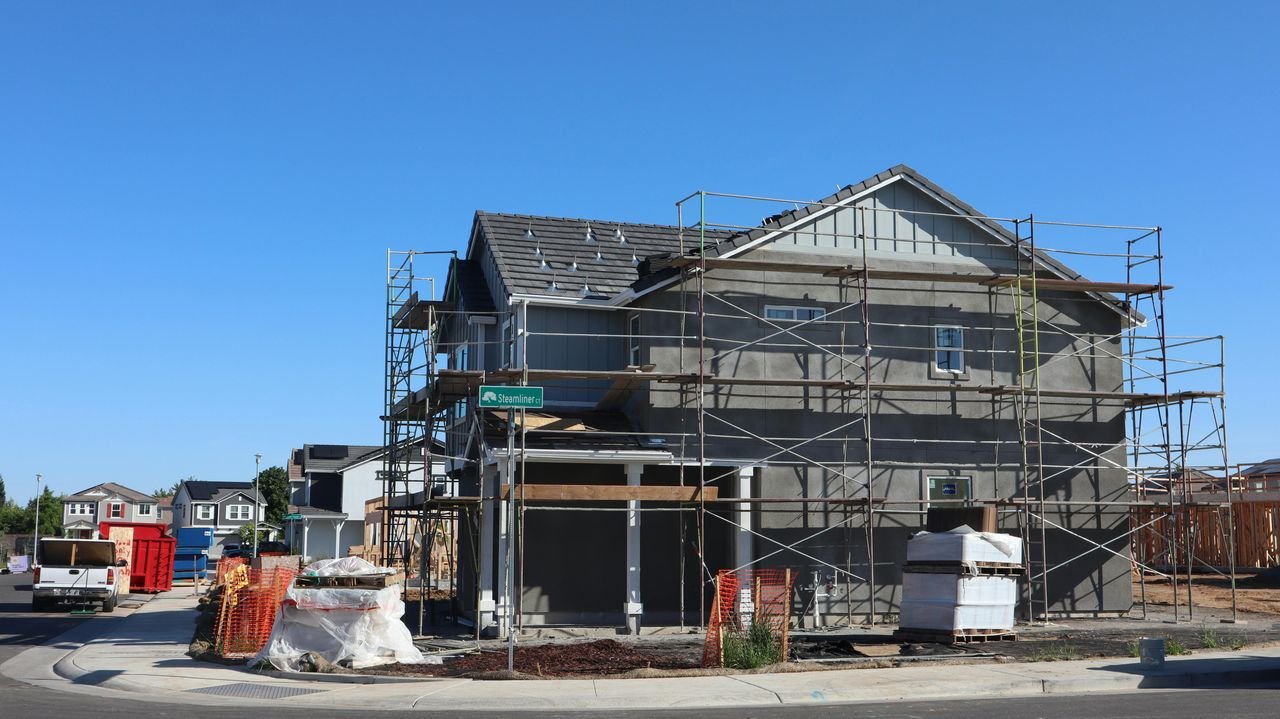
Affordability would be less punishing if the country had enough homes in the right places and at the right price points. Instead, the shortage has become structural. Builders have added supply in some markets, especially at the higher end and in parts of the Sun Belt, but the national market still lacks enough entry-level homes. That scarcity is not an accident of one bad year. It reflects more than a decade of underbuilding, restrictive zoning, labor shortages, expensive land, and higher construction financing costs.
The shortage is especially severe where demand is most durable: job-rich metro areas, close-in suburbs, and neighborhoods with strong schools or transportation links. Harvard’s 2025 housing report emphasizes that buyers are increasingly priced out across metro areas as home-price-to-income ratios continue to rise. In practice, this means households that might once have bought a starter home in a central labor market are pushed farther outward, into longer commutes, smaller homes, or entirely different regions. A shortage of affordable listings does not merely raise prices; it reorganizes geography, opportunity, and family life.
The resale market compounds the problem. Many existing owners locked in mortgage rates far below current levels earlier in the decade and now have a financial incentive to stay put. Economists often describe this as the lock-in effect. Selling a home and purchasing another at today’s borrowing costs can mean paying dramatically more each month, even for a similar property. That keeps would-be move-up sellers from listing their homes, which in turn reduces opportunities for first-time buyers hoping to purchase the smaller, older homes that traditionally formed the first rung of the ladder.
The consequence is a market with pockets of new construction but persistent scarcity where entry-level demand is strongest. The Census Bureau reported a homeowner vacancy rate of just 1.2% in the fourth quarter of 2025, essentially unchanged from a year earlier. That is an extraordinarily tight backdrop for would-be buyers. In such an environment, even a modest increase in listings can feel insufficient because the baseline shortage is so deep. The result is that households are not simply competing over housing; they are competing over mobility itself in a market that produces too few attainable ownership opportunities.
First-Time Buyers Are Bearing the Heaviest Burden

No group illustrates the housing squeeze more clearly than first-time buyers. They typically lack housing equity, have fewer liquid assets, and are more exposed to the combined burden of down payments, closing costs, insurance, and monthly debt service. In earlier generations, this challenge was partially offset by lower home-price-to-income ratios and more abundant starter homes. Today, those offsets are weaker or absent. Entry into ownership now demands far more cash and far more patience.
The shift is visible in buyer demographics. The National Association of Realtors’ 2025 Profile of Home Buyers and Sellers found that the share of first-time buyers had fallen to a record low 21%. The typical first-time buyer’s age rose to 40, while the typical down payment for first-time buyers was 10%. Those figures reveal a market in which buying a first home increasingly requires years of delayed consumption, prolonged renting, or family assistance. Homeownership is becoming less an early-adulthood milestone than a later-life achievement for those who manage to accumulate enough assets.
That pattern has broad social implications. Delayed buying often means delayed wealth accumulation, since housing has historically served as the largest asset for many middle-class families. Urban Institute researchers have warned that high upfront costs are particularly burdensome for low-wealth households and households of color, even when incomes might support a monthly payment. The barrier, in other words, is not only earnings. It is also the inability to assemble tens of thousands of dollars for a down payment and closing costs while already paying high rent.
Recent census data underscore the broader stagnation. The national homeownership rate stood at 65.7% in the fourth quarter of 2025, virtually unchanged from a year earlier. That stability may look reassuring at first glance, but it masks a harder truth: the market is not broadening access. Instead, existing owners are largely staying owners, while many aspiring entrants remain shut out. The stock of ownership is being preserved more than expanded.
This is why the present squeeze feels so consequential. A tight market does not affect all buyers equally. Repeat buyers often bring home equity, larger down payments, or the ability to pay cash. First-time buyers bring wages, savings plans, and hope. In an affordability crisis, equity tends to outrun income. That gives incumbent owners an advantage and makes entry progressively harder for newcomers.
Homeownership Gaps Are Widening Into a Larger Wealth Divide
The housing squeeze is not just a real estate story. It is a distributional story about wealth, security, and intergenerational inequality. When homeownership becomes harder to enter, the benefits of rising housing wealth accrue increasingly to those who already own property. Everyone else remains exposed to rent inflation, weaker balance sheets, and fewer channels for long-term asset building. The market thus reinforces an insider-outsider divide.
This helps explain why the affordability crisis has such durable social consequences. Existing owners may face higher taxes, insurance, and maintenance costs, but they also retain the possibility of appreciation and principal repayment. Renters face rising housing costs without those compensating gains. The Census Bureau reported in 2025 that median monthly owner costs for homeowners with a mortgage rose to $2,035 in 2024, up from $1,960 the year before in inflation-adjusted terms. Even ownership is becoming more expensive. Yet for renters trying to cross over, that cost escalation is paired with the absence of accumulated equity, making the leap even harder.
The burden also falls unevenly across race, age, and family background. Harvard’s housing research has repeatedly shown that people of color are less likely to own homes than white households in nearly every state. Urban Institute analysts similarly argue that low-wealth and first-generation buyers encounter deeper obstacles because they are less likely to draw on family transfers or intergenerational housing equity. In practical terms, this means the affordability crisis does not simply delay ownership; it reproduces older patterns of exclusion under newer market conditions.
Geography sharpens these divides. In some Midwestern markets, price growth has been relatively modest compared with coastal metros, but inventory constraints still keep affordable homes scarce. In high-cost metros such as San Diego, Realtor.com analysis cited in regional reporting suggested that saving for a median down payment could take decades for a typical household. These differences matter, but the underlying pattern is national: even where prices are less extreme, the combination of rates, supply constraints, and weak savings capacity can still keep ownership out of reach.
The result is a more stratified housing system. Those with existing assets can navigate elevated costs, while those without them face a compounding disadvantage. Over time, this weakens one of the traditional mechanisms through which middle-income households converted earnings into wealth. The housing squeeze, then, is not merely about who can buy this year. It is about who will build security over the next generation.
Expanding Homeownership Will Require More Than Waiting for Rates to Fall
It is tempting to imagine that lower mortgage rates alone will solve the crisis. They would help, and significantly so, by reducing monthly payments and improving borrower qualification. But the current squeeze is too layered to be resolved by one macroeconomic shift. If rates fall meaningfully while supply remains constrained, demand could rise faster than listings, pushing prices back up and eroding some of the benefit. A durable improvement in access requires broader structural change.
That means increasing the supply of modestly priced homes, not only luxury units or large suburban houses. Local land-use reform is part of that agenda, particularly in places where zoning rules limit duplexes, townhouses, accessory dwelling units, or smaller-lot development. It also means addressing the economics of building, including permitting delays, infrastructure gaps, labor shortages, and financing costs that discourage entry-level construction. In many markets, the starter home is not disappearing because households do not want it; it is disappearing because the market is not set up to produce it cheaply enough.
Demand-side support also matters, especially for households that can manage monthly payments but cannot overcome upfront barriers. Urban Institute researchers have emphasized the value of targeted down-payment assistance and first-generation homebuyer support. Properly designed, such programs can widen access without indiscriminately inflating demand. The distinction is important. Broad subsidies in a supply-constrained market can simply bid up prices, whereas targeted programs paired with added supply can help households who are locked out by wealth constraints rather than by an inability to sustain ownership.
The policy challenge is therefore one of coordination. Mortgage rates, zoning, infrastructure, tax policy, fair housing enforcement, insurance costs, and local permitting all shape the same outcome. The housing market often appears as a single national story, but it is produced through layers of local and federal decisions. If those layers remain misaligned, affordability will continue to improve only at the margins.
For now, the evidence suggests that the housing squeeze is not easing fast enough to restore broad access to homeownership. Prices remain high, monthly payments remain strained, inventory remains tight, and first-time buyers remain on the defensive. Until the country produces more affordable homes and lowers the barriers to entry, homeownership will continue to function less like a widely shared milestone and more like a privilege increasingly reserved for households that already have a head start.