

The latest ceasefire push in Gaza is not failing because diplomacy has stopped. It looks fragile because diplomacy is being asked to carry far more weight than diplomacy alone can bear.
A ceasefire exists, but it has not produced real strategic trust

On paper, the current framework has moved further than many earlier efforts. According to Reuters, mediators were still working in Cairo at the end of April 2026 to reinvigorate a six-month-old U.S.-brokered truce, even as Israeli strikes continued and Hamas remained in contact with Egyptian and other intermediaries. The United States had already announced the launch of a second phase in January 2026, shifting the focus from immediate de-escalation toward demilitarization, technocratic governance, and reconstruction. That sounds like institutional progress. In practice, it reveals how much of the basic first-stage bargain remains unsettled.
The first reason the push still looks brittle is that the truce has not generated the minimum trust that durable ceasefires require. Reuters reported in January that key elements of phase one remained unfulfilled even as phase two was announced. Israeli airstrikes had already killed hundreds during the supposed ceasefire period, the remains of one final Israeli hostage had not yet been recovered, and Israel had delayed reopening the Rafah crossing. Each of those issues matters on its own. Together, they show that the ceasefire has functioned less as a settled agreement than as a contested pause interpreted differently by each side.
This is the structural weakness of many Gaza arrangements: the parties accept tactical de-escalation while still rejecting the other side’s core political position. Israel wants a postwar order in which Hamas no longer governs and, ultimately, no longer poses a military threat. Hamas, meanwhile, has shown willingness to discuss governance adjustments under pressure but has resisted the full surrender of coercive power that Israel and Washington regard as essential. Reuters and AP reporting from January described the second phase as centered on disarming Hamas and creating a technocratic Palestinian administrative structure. That is not a minor implementation question. It is the war’s central unresolved issue.
A ceasefire becomes robust when it narrows uncertainty. This one still amplifies it. Both sides continue to treat military pressure and diplomatic maneuver as parallel tools rather than mutually exclusive choices. That is why each strike, each delay in implementation, and each dispute over obligations quickly feeds a wider belief that the agreement is temporary, reversible, and vulnerable to collapse.
Humanitarian relief has improved in places, yet scarcity still undermines stability
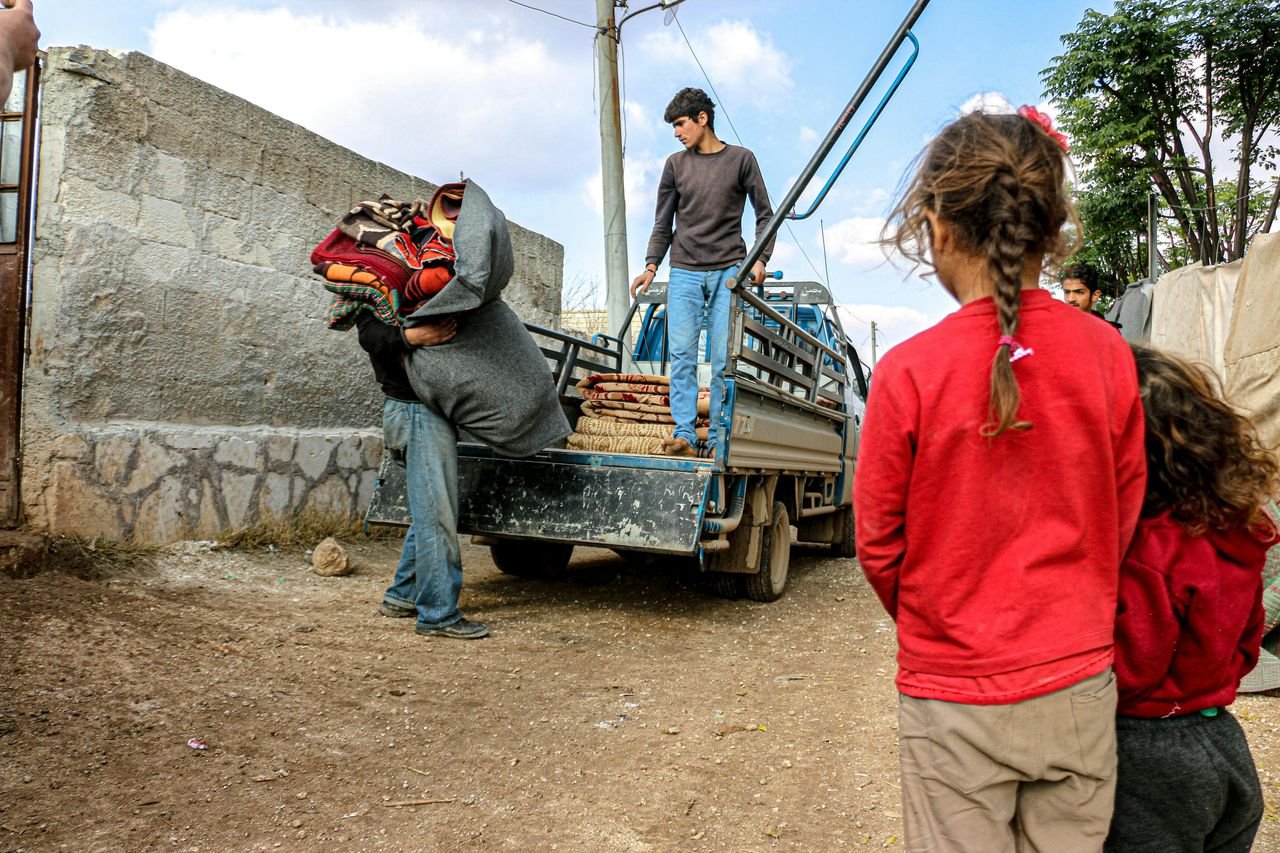
A second reason for fragility is that the humanitarian picture, while improved from the most catastrophic phases of the war, remains deeply unstable. UN and OCHA reporting shows that the ceasefire that took effect on October 10, 2025 enabled a large increase in aid entry, with hundreds of thousands of pallets of humanitarian cargo offloaded by late February 2026. Some public health and food indicators improved, and OCHA reported that food assistance in January 2026 met 100 percent of caloric needs for families receiving the adjusted ration package for the first time since October 2023. In narrow operational terms, that is significant.
But humanitarian gains have not translated into durable confidence. OCHA has repeatedly stressed that access remains unpredictable, operational crossings are limited, and so-called dual-use restrictions continue to slow or block critical items. In late April, the UN’s political affairs chief told the Security Council that the Gaza ceasefire was “increasingly fragile,” citing both continuing Israeli strikes and the constraints still burdening aid operations. The same UN briefing said that roughly 800 Palestinians, including more than 200 children, had been killed since the ceasefire began as a result of Israeli airstrikes, shelling, and gunfire, alongside seven humanitarian personnel. Those numbers underscore a brutal reality: even under ceasefire conditions, civilians continue to live inside an environment of lethal insecurity.
This matters politically as much as it matters morally. A ceasefire that does not clearly improve daily life risks losing legitimacy among the population living under it. AP reported in April that truck entries into Gaza fell sharply during the first two weeks of March 2026 and that prices for basic goods rose dramatically. Even when aid is entering, volatility in flows can quickly recreate panic economics: hoarding, price spikes, black-market arbitrage, and local anger. People do not experience “aid access” as a spreadsheet. They experience it as whether bread, medicine, fuel, and clean water are available this week, in this neighborhood, at a price they can pay.
The humanitarian system also remains overburdened by the sheer scale of need. OCHA has documented persistent problems with unsafe water, sanitation breakdown, and disease risk, particularly among children. UNRWA and other UN officials have warned that Israeli restrictions on humanitarian organizations and aid items continue to compromise delivery capacity. So the ceasefire sits atop a dangerous contradiction: it has opened more space for relief, but not enough to erase the fear that deprivation can return suddenly. In conflict zones, scarcity is not just a byproduct of instability. It is one of the engines that reproduces it.
The hardest questions are political, not procedural
The latest push is also fragile because negotiators are no longer arguing only about silence on the battlefield. They are arguing about Gaza’s future political order. That is a much harder problem. A ceasefire can be sketched in military language: halt fire, exchange captives, open crossings, define buffer zones. But once talks turn to governance, policing, disarmament, and reconstruction authority, every clause becomes a referendum on sovereignty and legitimacy.
Reuters reported in January that Washington and Egypt were advancing a model of technocratic governance for Gaza under a second-phase framework. AP similarly described an emerging committee of Palestinian experts intended to administer daily affairs. In abstract terms, this appears reasonable. A nonpartisan or quasi-nonpartisan body could stabilize public services, reassure donors, and reduce the international community’s fear that reconstruction money would strengthen Hamas militarily. Yet the proposal carries severe political ambiguity. A technocratic body can administer, but it cannot easily command consent if armed actors, local clans, external patrons, and rival Palestinian factions all retain veto power.
That ambiguity is why the question of Hamas disarmament sits at the center of the current impasse. For Israel, no postwar arrangement is credible if Hamas retains armed capacity. For Hamas, full disarmament is not simply a technical concession but a surrender of the instrument through which it has preserved relevance, deterrence, and bargaining power. Reuters reporting from January made clear that Hamas had agreed to hand over governance to a technocratic committee but still refused to lay down its weapons. That gap is enormous. It means the proposed political architecture separates civil administration from coercive power without answering who will actually control violence on the ground.
Nor is Palestinian politics internally settled enough to absorb that contradiction smoothly. A technocratic arrangement may appeal to outside mediators precisely because it postpones deeper questions of representation. But postponement is not resolution. Who appoints the technocrats? To whom are they accountable? Who commands security forces? What happens if Israel conducts raids during the transition? What role, if any, do the Palestinian Authority, local notables, or international stabilization forces play? Each unanswered question creates room for spoilers.
This is why ceasefire diplomacy can look deceptively advanced. Meetings happen. Frameworks are announced. New phases are launched. Yet the core political compact remains absent. A durable truce requires not just a pause in violence but an accepted hierarchy of authority. Gaza still does not have one. Until that changes, implementation disputes will keep masking a larger truth: the conflict’s most important arguments are not about procedure but about power.
Regional diplomacy can sustain talks, but it cannot eliminate the incentives for rupture
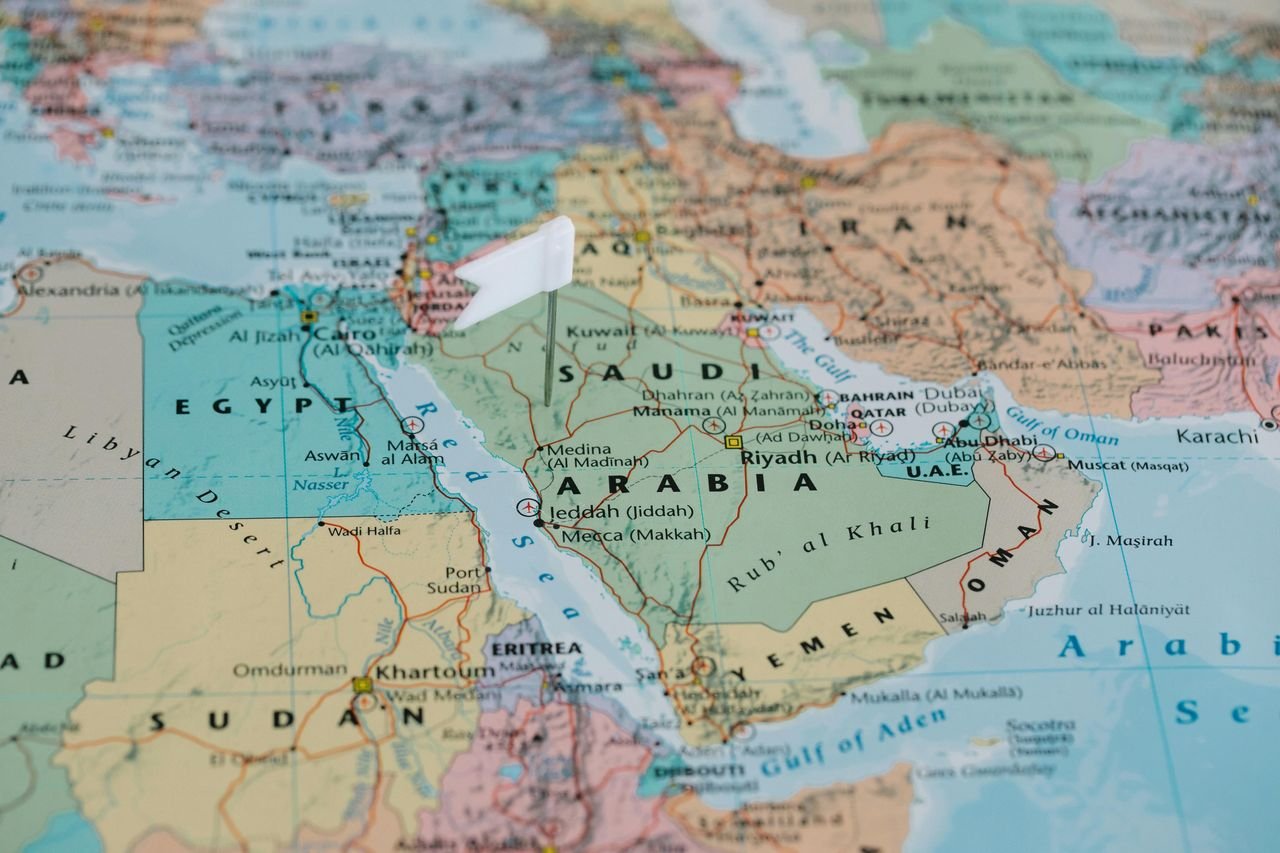
Much of the current ceasefire’s survival owes to outside mediation. Egypt and Qatar remain indispensable interlocutors, while the United States has tried to convert a truce into a broader political process. That external architecture matters. Without it, the ceasefire would almost certainly have collapsed earlier. Reuters reported on April 30 that Hamas leaders were in Cairo discussing ways to reinvigorate the truce, a sign that regional diplomacy still has channels, leverage, and urgency. But mediation can keep parties talking without being strong enough to change their strategic calculations.
The problem is that outside actors are trying to stabilize a conflict in which the local parties still see advantage in preserving military options. Israel continues to treat force as a legitimate instrument for degrading threats during the ceasefire period, especially where it argues that Hamas is reconstituting capabilities. Hamas, for its part, continues to draw leverage from its capacity to survive, obstruct, and retain coercive presence. So regional mediators are not arbitrating between two sides that have chosen peace. They are managing escalation among two sides that remain unconvinced the war’s objectives have been overtaken by diplomacy.
Broader regional shocks compound the difficulty. Reuters reported in late February that Gaza crossings were closed during the regional escalation linked to Israeli and U.S. attacks on Iran. That episode illustrated how Gaza’s humanitarian and diplomatic lifelines remain vulnerable to events well beyond Gaza itself. Even if negotiators make progress in Cairo, implementation can be disrupted by a wider Middle Eastern confrontation, by domestic pressures inside Israel, by shifts in U.S. policy emphasis, or by armed developments involving Iran-aligned networks. A ceasefire nested inside a volatile region is never just a bilateral arrangement.
There is also the issue of enforcement. No mediator can guarantee compliance at every checkpoint, in every airstrike decision cycle, or in every armed encounter on the ground. Diplomatic pressure works best when violations are costly and clearly attributable. In Gaza, attribution is often disputed, enforcement is uneven, and the political will to impose penalties on major actors is inconsistent. The result is a familiar pattern: each side accuses the other of violating understandings, mediators urge restraint, and the agreement survives in form while eroding in substance.
This helps explain why officials increasingly use the language of fragility even when they stop short of declaring failure. The truce is not imaginary. It has produced real openings. But it is being held together by constant diplomatic maintenance rather than by a self-sustaining alignment of interests. That is a precarious foundation for any ceasefire, especially one embedded in a war whose regional, ideological, and security dimensions remain unresolved.
Reconstruction, law, and accountability all weigh on the ceasefire’s future
The final reason the latest push looks fragile is that ceasefire implementation now intersects with questions of reconstruction, legality, and accountability that no simple battlefield pause can solve. In April 2026, the European Union, United Nations, and World Bank released a final Rapid Damage and Needs Assessment estimating Gaza’s recovery and reconstruction needs at about $71.4 billion. That figure is not merely an economic statistic. It is a measure of how enormous the postwar burden has become. Rebuilding at that scale requires long-term security guarantees, trusted institutions, access for materials, predictable funding, and an accepted governing authority. Gaza currently lacks all five.
Reconstruction is therefore politically explosive. Donors do not want to finance projects that can be destroyed in the next round of fighting. Israel does not want reconstruction materials diverted to militant use. Palestinians do not want rebuilding subordinated to an indefinite external control regime. And any governing arrangement that lacks legitimacy will struggle to prioritize neighborhoods, compensate losses, or police corruption. In other words, reconstruction is often spoken of as the reward for a successful ceasefire. In reality, disputes over reconstruction can themselves destabilize the ceasefire if the rules are not agreed in advance.
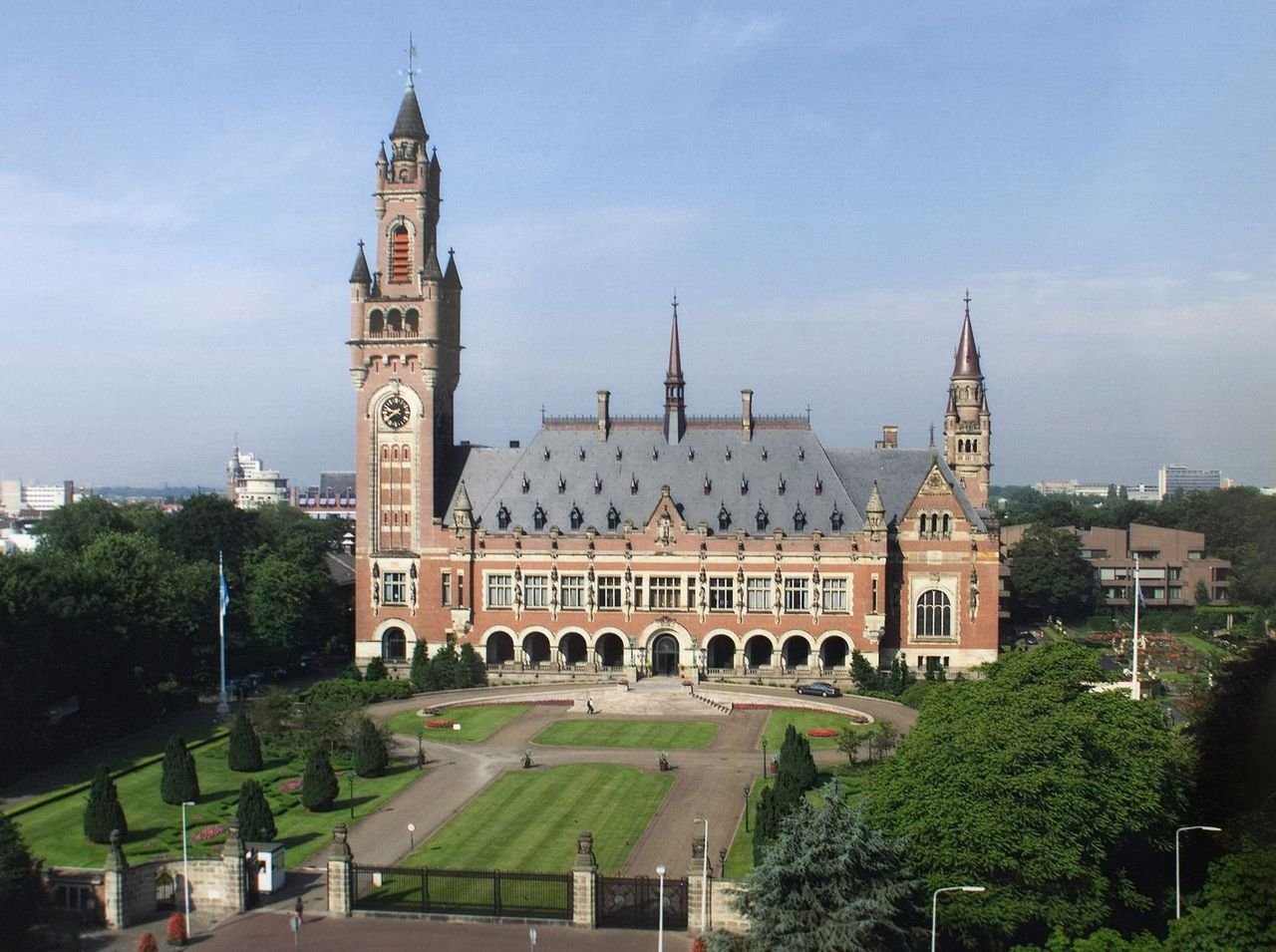
Legal pressures further complicate the landscape. The International Court of Justice issued provisional measures in the South Africa v. Israel case in January 2024, placing sustained international legal scrutiny on Israel’s conduct in Gaza. In November 2024, the International Criminal Court issued arrest warrants for Israeli Prime Minister Benjamin Netanyahu and former defense minister Yoav Gallant, as well as a Hamas commander, over alleged war crimes and crimes against humanity. These proceedings do not determine battlefield outcomes directly, but they alter the diplomatic environment. They harden narratives, raise reputational stakes, and make compromise harder for leaders who fear that concessions will be read domestically or internationally as admissions.
At the same time, humanitarian agencies continue to warn that operational restrictions are damaging the very civilian conditions any sustainable peace would need. UN officials have repeatedly argued that Gaza needs rapid, safe, and unimpeded aid delivery, not ad hoc access that can be tightened whenever tensions rise. This is not a secondary issue. A ceasefire that coexists with mass deprivation, unresolved command structures, and contested legal legitimacy is not moving from war to peace. It is moving from open warfare to managed instability.
That is why the latest ceasefire push still looks fragile. It is trying to do three jobs at once: stop violence, redesign governance, and prepare reconstruction. Any one of those would be difficult. Doing all three in a territory shattered by war, amid continuing strikes and deep mutual distrust, makes fragility not an accident but the default condition.