

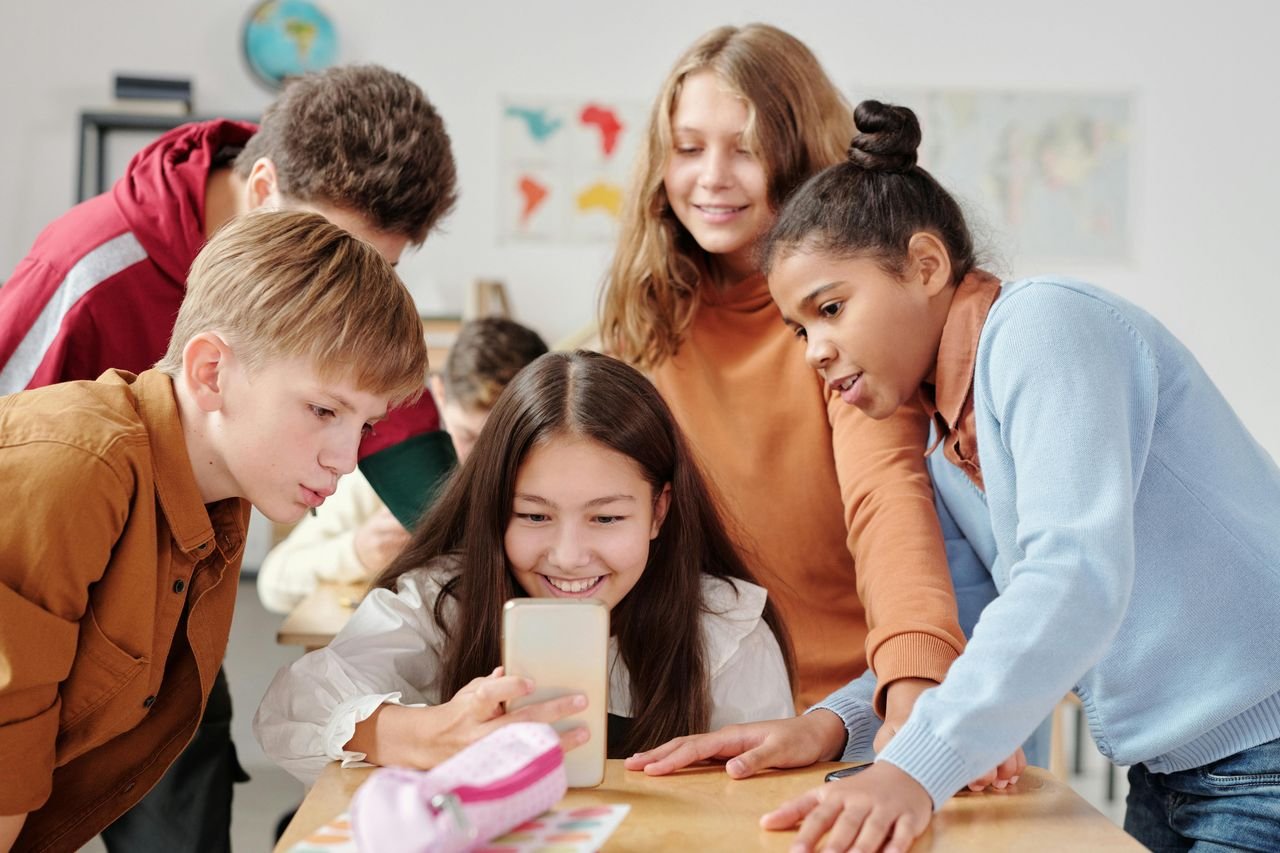
The news no longer arrives with a thud on the doorstep. For many teens, it appears as a swipe, a clip, a DM, or a chatbot reply.
The teen news map has moved from homepages to feeds

For teenagers, news is no longer a destination. It is part of the stream, mixed into entertainment, memes, group chats, creator commentary, sports highlights, and algorithmic recommendations. That helps explain why the platforms teens use most are now central to how they encounter current events, even when they were not looking for the news in the first place. Pew Research Center’s 2025 teen survey found that 97% of U.S. teens use the internet, while 40% say they are online almost constantly, creating the perfect conditions for news to arrive as ambient background rather than as an intentional habit. The same Pew report found that roughly 1 in 5 teens say they are on TikTok and YouTube almost constantly, underscoring how deeply platform life structures their daily attention.
The platform hierarchy matters. Pew’s 2024 report on teens and technology found that YouTube was used by about 90% of U.S. teens, with TikTok and Instagram each used by roughly six in 10 and Snapchat by 55%. Those are not just entertainment channels anymore; they are also information environments. Reuters Institute’s 2024 Digital News Report describes a wider global shift toward more visual, video-led platforms such as TikTok, Instagram, and YouTube, where news increasingly competes with creators, influencers, and personality-driven commentary. In that world, the old front page gives way to the recommendation engine.
The most important change is not simply that teens use social media. It is that social media changes the form of news itself. Reuters found that big platforms have increasingly favored creators and more engaging video formats, while news organizations are often eclipsed by influencers and other online personalities, especially on YouTube and TikTok. In the United States, Reuters noted that alternative voices received more citations from audiences than traditional media in its study of social and video news attention, even though large mainstream brands still retained substantial visibility. For teens, that means the messenger can matter as much as the message.
This also helps explain why younger audiences often define “news” more broadly than older ones do. Reuters reported that many younger users include updates on music, sport, food, fitness, fashion, and travel within their understanding of news. That broad definition matches how teens actually live online. A climate story, a celebrity legal dispute, a school safety alert, and a viral economic explainer can all appear in the same scroll. The result is not necessarily less engagement with public life, but a radically different route into it.
Why social media feels natural to teens as a news source

Social media fits teenage life because it is fast, social, and emotionally legible. News on these platforms often arrives with a face, a voice, a point of view, and a sense of urgency. It is clipped for attention, translated into plain language, and embedded in the spaces where teens already spend their time. For a generation raised on short-form video and mobile-first media, that convenience is not a side benefit. It is the basic expectation.
Pew Research Center found in a 2024 study of U.S. adults that one of the most commonly cited benefits of getting news on social media was convenience, while others said they valued speed and the quick, easy-to-digest format. Those are adult responses, but they illuminate the same structural appeal for teens. A 90-second explainer on a Supreme Court ruling or a stitched reaction to an election clip often feels more accessible than a long article or TV package. For young users, social news is not simply shorter. It is translated into the native language of the platform.
Creators also fill a trust and relevance gap. Reuters Institute’s work on news influencers found that mainstream media are significantly challenged on TikTok, Instagram, and YouTube by online personalities, alternative outlets, and creator-led news formats. Some creators succeed not because they possess traditional authority, but because they sound like real people rather than institutions. Their tone can feel less formal, less distant, and less coded for older audiences. That does not automatically make them more accurate, but it does make them more watchable.
Teens are also drawn to formats that collapse explanation and community into one experience. A creator can summarize a breaking event, add context, react emotionally, answer comments, and revisit the story later if facts change. That creates a loop of participation that traditional journalism often struggles to match. Reuters highlighted creator accounts aimed at younger audiences that package current events in more approachable ways, showing how news is being reshaped by performance, personality, and platform fluency.
There is another reason this shift feels durable: it does not require teens to decide, in advance, that they are “news people.” News appears because the algorithm thinks it belongs in the mix. A teenager who follows musicians, athletes, and comedians may still encounter election clips, war updates, or school policy debates through recommended content. The line between accidental exposure and intentional consumption has blurred. In practical terms, that means many teens are becoming informed in fragments, through repetition and social reinforcement rather than through a single authoritative outlet.
AI is becoming a second layer of teen news discovery

If social media changed where teens encounter news, AI is starting to change how they ask for it. Chatbots and AI-assisted search tools offer something social feeds do not: direct answers. For teens who want a quick summary of a conflict, a breakdown of a policy change, or an explanation of what happened overnight, AI can feel less like a newsroom and more like an on-demand tutor. That is a powerful shift because it turns news from something encountered into something queried.
Common Sense Media’s 2024 report found that 70% of teens ages 13 to 18 had used at least one type of generative AI tool. More specifically, 56% said they had used search engines with AI-generated results and 51% had used chatbots or text generators such as ChatGPT, Gemini, or Snap’s My AI. Those figures matter because they show AI is not a fringe behavior among teens. It is already normal enough to be folded into everyday information seeking, including the search for news and explanations.
Pew’s December 2025 report adds a second critical layer. It found that 64% of U.S. teens ages 13 to 17 said they use AI chatbots, and about 3 in 10 said they do so daily. ChatGPT was by far the most widely used named chatbot in that survey, at 59%, well ahead of Gemini, Meta AI, Copilot, Character.ai, and Claude. Even more revealing, Pew’s follow-up reporting in early 2026 noted that how teens use chatbots, including for getting news, varies across demographic groups. That suggests AI is not merely a tool for schoolwork anymore; it is becoming part of a broader information ecosystem.
The attraction is obvious. AI can compress a complicated event into a few lines, answer follow-up questions without embarrassment, and summarize multiple viewpoints in seconds. For teens navigating a flood of posts, clips, and conflicting claims, that feels useful. AI can also serve as a bridge between social content and deeper understanding. A teen might see a confusing headline on TikTok, then ask a chatbot to explain the backstory, define a term, or outline why the story matters.
But AI inherits the same information pressures that already trouble the social web. It can sound confident even when it is wrong, flatten disagreement into false balance, or summarize low-quality material with polished language. That is why the rise of AI in teen news habits is not just about adoption. It is about interpretation. When a chatbot becomes part explainer, part search engine, and part conversation partner, teens are not only consuming information. They are outsourcing some of the work of sorting, framing, and understanding it.
The biggest risk is not ignorance but misplaced confidence
The old fear was that young people would ignore the news. The newer fear is subtler: that they will feel informed while standing on shaky ground. Social media and AI are extremely effective at creating a sense of fluency. A user can watch five clips, skim a comment thread, ask a chatbot for a summary, and come away feeling current. Sometimes that feeling is deserved. Sometimes it is a mirage.
Pew’s research on social media news habits shows why caution is warranted. In its 2024 adult study, many Americans said the biggest drawback of getting news on social media was inaccuracy. Reuters Institute found similar unease around AI and journalism. Across countries in its 2024 research, only 36% of respondents said they were comfortable using news made by humans with the help of AI, and just 19% were comfortable with news made mostly by AI with human oversight. Reuters also found that audiences are most comfortable with AI used behind the scenes and least comfortable with AI generating entirely new content, especially realistic images and video.
That discomfort reflects a deeper truth: the more seamless the system, the easier it is to confuse clarity with credibility. A charismatic creator may package partial information as certainty. A chatbot may summarize a developing story before key facts are settled. A synthetic image or slick voice clone can make falsehood look polished. Teens, like adults, often use visual and verbal confidence as shortcuts for trust. Reuters noted that audiences rely heavily on images and video when deciding what to believe online, which helps explain why AI-generated visuals provoke particular concern.
The social architecture makes correction harder, too. False or misleading claims can be repeated through reactions, duets, screenshots, and reposts long before a newsroom update or expert clarification catches up. By the time more accurate information appears, the original framing may already be emotionally lodged. This is especially dangerous for high-stakes topics such as elections, public safety, health scares, or international conflict, where fast-moving misinformation can shape attitudes before facts stabilize.
And yet the answer is not to romanticize older media habits. Teenagers are not uniquely gullible, and traditional media have their own trust problems. The real issue is epistemic overconfidence: the belief that a fast answer equals a reliable one. In a world of creator news and AI summaries, the central literacy challenge is learning to pause between “I saw it” and “I know it.” That pause may become the most important media skill of the decade.
What a healthier teen news future could look like
A better future will not come from telling teens to abandon the platforms and tools they already use. That advice misunderstands both the scale of the shift and the reasons it happened. Social media and AI are not side channels anymore. They are now part of the main architecture of youth information. The task is to build stronger habits, clearer standards, and more trustworthy experiences inside that reality rather than outside it.
For news organizations, that means designing for the environments where teens actually are. Reuters’ reporting makes clear that younger audiences are increasingly drawn to video, creators, and more conversational formats. Journalism that refuses those formats may preserve its dignity while losing its audience. The challenge is to adapt without surrendering standards: shorter does not have to mean shallower, and creator-friendly presentation does not have to mean performative outrage. Some of the most promising work now blends strong reporting with approachable explanation, recurring personalities, and transparent sourcing practices.
Schools and families also need to update what media literacy means. The old checklist focused on websites, headlines, and search results. The new one has to include algorithmic feeds, creator incentives, AI summaries, synthetic media, and the emotional cues that drive sharing. Teens need practical routines: compare a viral claim with a reported source, treat chatbot answers as starting points not final verdicts, check whether a story is still developing, and notice when commentary is being mistaken for reporting. These are not abstract civics lessons. They are survival skills for everyday online life.
The technology companies have responsibilities as well. If platforms profit from news-adjacent engagement, they cannot shrug at the quality of what circulates. If AI tools present themselves as explainers, they need clearer guardrails, fresher sourcing, and more visible uncertainty when facts are unsettled. Reuters found that audiences want human supervision to remain in the loop, and that instinct is sound. Human judgment is still essential where context, sensitivity, and accountability matter most.
Teens are not turning away from the world. They are building new paths into it. The question is whether those paths will be lined with verification, transparency, and context, or with frictionless confidence and manufactured certainty. Social media and AI have already changed the doorway to the news. What happens next will determine whether that doorway leads to understanding or simply to the next scroll.