

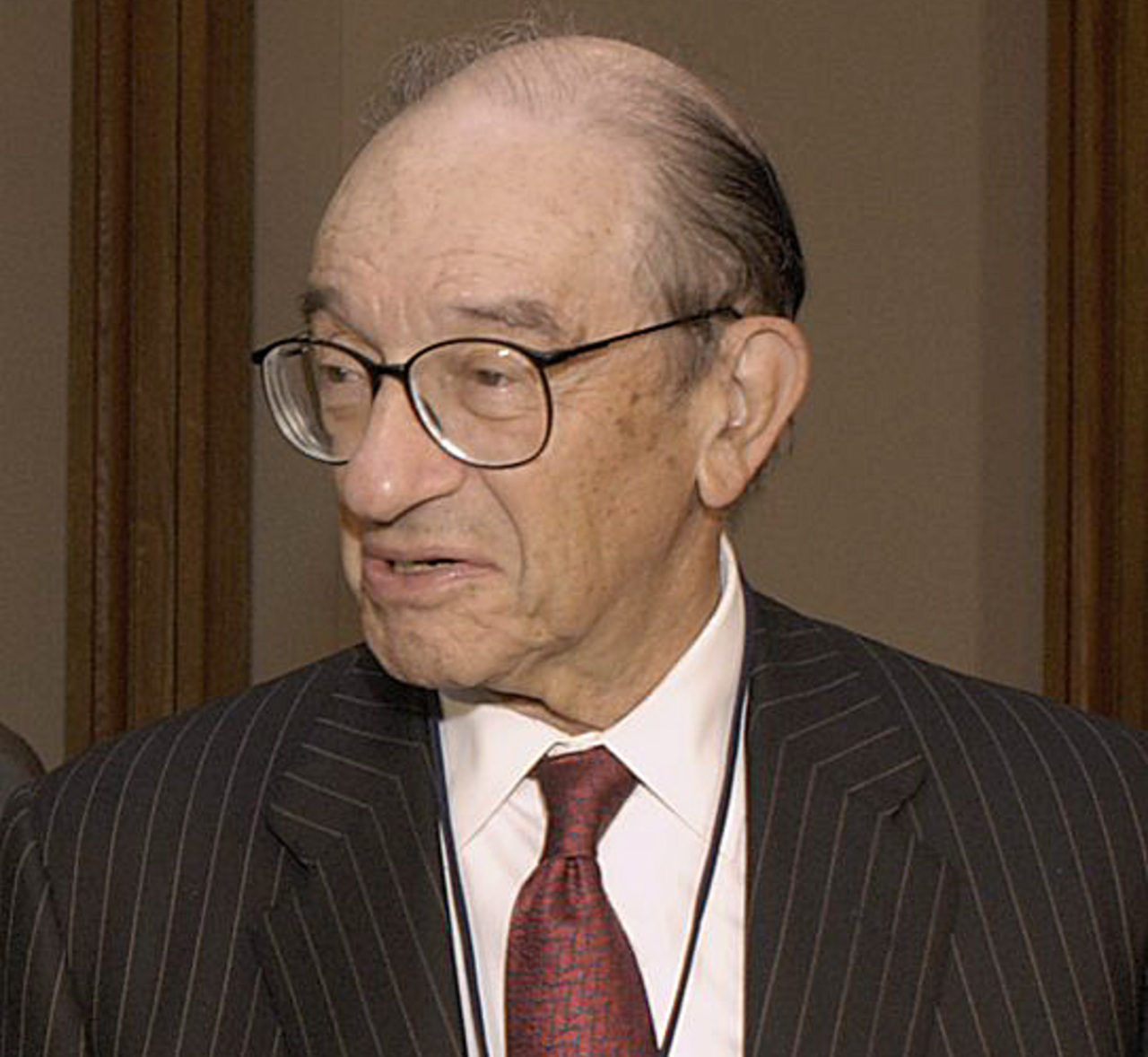
The death of a former Federal Reserve chair is national news because few unelected officials have shaped the U.S. economy, interest rates and financial markets as directly over as many years. Alan Greenspan, who led the central bank from 1987 to 2006 and advised multiple presidents before and after that tenure, died Monday, June 22, at age 100.
Alan Greenspan’s death ends an 18-year run atop the Federal Reserve
Alan Greenspan died at his home on June 22 from complications of Parkinson’s disease, according to a statement from his wife, NBC News correspondent Andrea Mitchell, as reported by AP and NBC News. He was 100, closing the life of a public figure who spent nearly two decades as chair of the Federal Reserve and remained a reference point in debates over inflation, interest rates and market regulation long after leaving office.
Federal Reserve history records show Greenspan served as chair from August 11, 1987, through January 31, 2006, a span that covered five terms and four presidencies. President Ronald Reagan appointed him in 1987, and he remained in the role under George H.W. Bush, Bill Clinton and George W. Bush. That made him one of the longest-serving Fed chairs in U.S. history and one of the most recognizable central bankers of the modern era.
During that stretch, Greenspan presided over the central bank through the 1987 stock market crash, the 1990s expansion, the Asian financial crisis, the dot-com boom and bust, and the early-2000s slowdown. He also became associated with the phrase “irrational exuberance,” which he used in 1996 to warn about overheated financial markets. His public remarks often moved Wall Street and Treasury markets because investors closely parsed even small shifts in his language.
Because Greenspan’s job was national, there is no single state-based closure list or local facility impact tied to this news. What is confirmed is that his decisions as Fed chair affected borrowing costs across the country, influencing mortgage rates, business lending, consumer credit and investor sentiment in every state. No public agency has described this death as affecting Federal Reserve operations, and the central bank’s leadership structure remains in place.
Greenspan’s reach extended beyond the Fed itself. Before taking the chairmanship, he served as chairman of President Gerald Ford’s Council of Economic Advisers and later sat on President Ronald Reagan’s Economic Policy Advisory Board, according to Federal Reserve history materials and major biographical accounts. That record helps explain the framing often used in obituary coverage: Greenspan was both a central banker and a presidential adviser whose influence crossed administrations and party lines.
For households, his name became shorthand for the Fed’s growing visibility in everyday economic life. Under Greenspan, central bank communication became more closely watched, and he later said the Fed should avoid surprising markets without a clear purpose. That shift helped cement the Fed chair as a national economic figure whose words could affect retirement accounts, homebuying decisions and business planning far beyond Washington.
Supporters long credited Greenspan with helping guide the U.S. through a period of relatively low inflation and long economic expansion that became known as the Great Moderation. Obituary coverage from AP and other outlets noted that his tenure coincided with years of strong growth and broad market gains, even as the economy also endured repeated shocks. His defenders argued that he brought analytical discipline and credibility to monetary policy during moments of uncertainty.
His record was also a subject of sustained criticism after the 2008 financial crisis, which unfolded after he left office in early 2006. Critics argued that his faith in market self-regulation and his low-rate policies helped fuel excesses in housing and finance, a debate revisited repeatedly in later profiles and retrospectives. Greenspan rejected parts of that argument, saying in later interviews that hindsight had distorted the record and that he had warned about risks building in the mortgage market.
For readers, what this means now is less about an immediate policy change than about the closing of a chapter in U.S. economic history. Greenspan’s death does not alter current Fed policy, but it renews attention to the questions that defined his career: how far central bankers should go in restraining bubbles, how transparent the Fed should be, and how much faith policymakers should place in markets to police themselves. Those debates remain active in Washington and on Wall Street.