

Tariffs are no longer a side issue in Trump-era politics. They are becoming a central measure of whether economic nationalism can survive contact with prices, markets, and voters.
Tariffs as the core of a governing philosophy
Donald Trump’s second-term tariff strategy is not a temporary maneuver or a bargaining gimmick. It is a governing philosophy built on the belief that the United States has spent decades tolerating unequal trade relationships, hollowed-out manufacturing capacity, and excessive dependence on foreign supply chains. The White House has framed the policy as a corrective to long-standing strategic and economic weakness, arguing that tariffs can restore bargaining power, revive industrial production, and force companies to invest in domestic capacity. Official fact sheets in 2025 and 2026 presented the tariff program as part of a larger “America First” restructuring of trade, with special emphasis on steel, aluminum, autos, and selected strategic inputs.
That framing matters politically because it gives tariffs a moral language, not just an economic one. Trump is not merely taxing imports; he is presenting tariffs as proof that Washington is finally willing to defend domestic production. This message resonates with parts of the Republican base, especially in manufacturing regions where trade liberalization has long been associated with plant closures, wage pressure, and civic decline. According to White House statements, the administration restored Section 232 tariffs on steel and aluminum in February 2025 and later hardened them further, while also broadening its use of tariff tools across autos and other sectors.
Yet the political test begins with the gap between theory and implementation. Tariffs work differently depending on sector, timing, exemptions, retaliation, and the ability of firms to shift sourcing. Even supporters who accept the strategic case often confront a more difficult short-run reality: American manufacturers also import components, retailers operate on thin margins, and consumers often absorb at least part of the cost. That means a policy designed to protect producers can also strain producers, especially those deeply integrated into global supply chains.
The scale of the 2025 tariff push also changed the political stakes. Yale’s Budget Lab estimated in April 2025 that the tariff measures enacted through early April lifted the average effective U.S. tariff rate to levels not seen in roughly a century, with short-run price effects large enough to impose meaningful household costs. Even where later revisions suggested realized inflation effects may have ended up lower than some early forecasts, the core finding remained politically significant: tariffs on this scale are not symbolic. They alter incentives, prices, supply relationships, and expectations. Once that happens, voters judge the policy less as patriotic theater and more as an economic reality.
The economic case collides with the consumer reality

The strongest political danger for Trump is not that tariffs are intellectually controversial. It is that they are easy for households to feel. A tariff may be collected at the border, but its downstream effects can show up in higher sticker prices, narrower product choices, delayed investment, or a business decision to pass along costs after existing inventory runs out. The Federal Reserve’s research notes from 2026 found that tariff changes in 2025 contributed measurably to higher goods prices, with estimates suggesting notable upward pressure in core goods inflation. Even though central bankers have emphasized that tariff inflation can be a one-time level effect rather than a permanently accelerating spiral, voters rarely distinguish between those concepts when bills rise.
This is especially potent because Trump returned to office promising relief from inflation. That promise created a tight political constraint around tariffs. If a president campaigns on making life more affordable, any policy associated with cost increases invites scrutiny from swing voters, suburban consumers, and business owners. Jerome Powell said in his May 7, 2025 press conference that tariffs could produce higher inflation, slower growth, and more unemployment, depending on how large and persistent the effects proved to be. For a president who wants to own the affordability issue, that is a difficult macroeconomic backdrop.
The auto sector illustrates the problem with unusual clarity. When Trump imposed 25% tariffs on imported autos in March 2025, the administration argued the move would strengthen domestic production and reduce dependence on foreign manufacturing. But the automotive supply chain is continental and global, not neatly national. AP reported at the time that if the costs were fully passed through, the price of an imported vehicle could rise sharply, while domestic producers also warned that policy design had to preserve the competitiveness of the integrated North American industry. In practice, the administration later offered relief and rebates to domestic automakers, an implicit recognition that even favored industries could struggle under the weight of tariff costs.
Retail spending patterns also revealed a political warning sign. Commerce Department data reported by AP showed consumers rushing purchases in March 2025 ahead of tariff implementation, followed by a much weaker retail performance in April. That front-running behavior signaled public awareness that import taxes could raise prices soon. When consumers begin timing major purchases around trade policy, tariffs stop being an abstract Washington debate. They become part of the everyday household calculus, and that is precisely when they start generating electoral risk.
Business support is real, but so is business unease
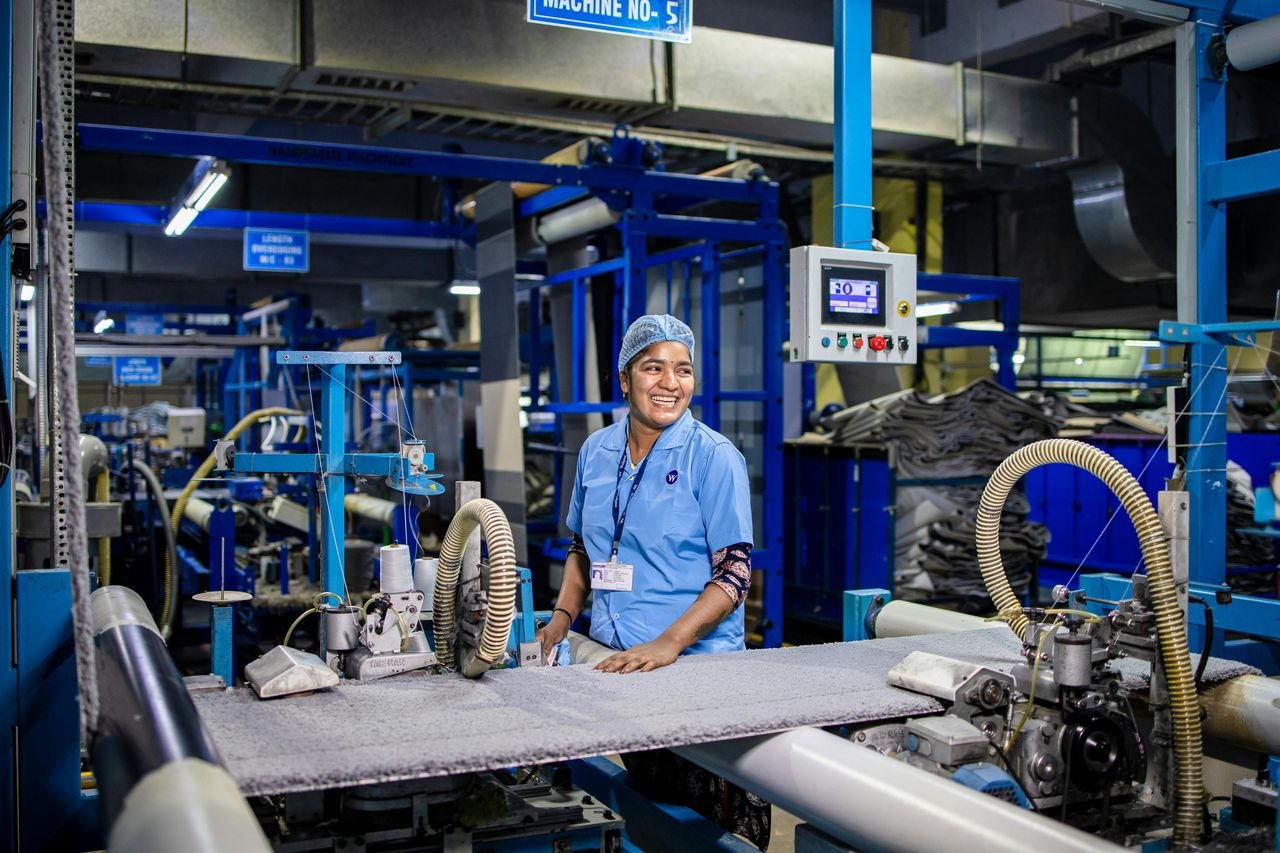
Trump’s defenders are correct about one important point: tariffs do have constituencies, and those constituencies are not trivial. Certain steel executives, union voices, and domestic manufacturers have publicly praised stronger barriers against foreign competition. White House releases in 2025 highlighted support from industry figures who argued that earlier tariff regimes had been weakened by loopholes, exemptions, and import surges. For companies producing directly in tariff-protected sectors, import barriers can create breathing room, improve pricing power, and justify new investment. In communities that have lived through industrial decline, that promise carries emotional and political force.
But the business community is not divided neatly into patriots and globalists, as campaign rhetoric often suggests. Many firms support selective protection while opposing broad tariff escalation. A manufacturer of metal products may welcome tougher steel enforcement but worry about more expensive machinery, components, or export retaliation. Automakers may support domestic production goals but resist tariffs that hit parts sourced through North American networks. Retailers may agree that Chinese overcapacity is a strategic issue while warning that abrupt trade actions destabilize inventory planning and consumer demand. The political problem for Trump is that tariffs often create a coalition of partial supporters rather than enthusiastic loyalists.
Uncertainty magnifies the cost. The Budget Lab noted that tariff rates shifted rapidly in 2025, sometimes in the same day, as announcements, revisions, exemptions, and retaliatory responses evolved. That volatility matters independently of the tariff level itself. Firms can adapt to a stable tax; they struggle with a moving target. A stop-and-go trade regime can freeze capital spending, complicate long-term contracts, and encourage defensive stockpiling rather than productive investment. In political terms, uncertainty is corrosive because it frustrates both business confidence and public messaging. It is hard for the administration to claim orderly industrial renewal when executives are publicly describing chaos.
That tension helps explain why the administration repeatedly paired hardline tariff announcements with carve-outs, transition aid, or implementation adjustments. Such steps may be sensible policy management, but they also expose a contradiction. If tariffs are straightforwardly beneficial, why do key sectors require relief? Every exemption signals that the policy’s burden is not confined to foreign rivals. It also falls on domestic firms that the White House wants to champion.
The result is a more complex political coalition than Trump’s rhetoric implies. Some workers and firms genuinely see tariffs as overdue protection. Others see them as a tax on inputs, a source of instability, or a bargaining tool whose collateral damage is too high. As that divergence becomes more visible, the tariff strategy begins to function less as a unifying populist message and more as a stress test for Republican economic discipline.
The legal and institutional fight raises the stakes
The tariff debate is no longer confined to economics. It has become a constitutional and institutional contest over presidential authority. That shift matters because it changes the political meaning of tariffs from a simple campaign promise to a broader argument about executive power. In 2025, the administration used emergency and trade authorities aggressively, presenting tariffs as both an economic instrument and a tool of geopolitical leverage. But later legal challenges forced a reconsideration of how far those authorities could reach.
By 2026, the Supreme Court had ruled against the administration’s use of the International Emergency Economic Powers Act as a basis for some broad tariffs, according to Federal Reserve research notes and AP reporting. That did not end Trump’s tariff agenda, but it forced the White House to look for alternate legal pathways, including Section 301 investigations and expanded use of Section 232 authorities. Politically, that creates two complications. First, it interrupts the image of total presidential control that Trump prefers to project. Second, it invites Congress, courts, business lobbies, and trading partners into what the administration wants voters to view as a decisive executive project.
Institutional conflict can cut both ways for Trump. On one hand, a legal setback can reinforce his preferred narrative that entrenched institutions obstruct policies meant to defend American workers. That argument has resonance among voters who already distrust elite legal and bureaucratic constraints. On the other hand, litigation and policy reversals generate practical confusion. Importers need to know which tariff schedule applies. Companies need confidence before making multiyear investment decisions. If the legal framework is unstable, the administration’s promise of industrial clarity starts to weaken.
There is also a revenue and budget dimension. Trump and his allies have frequently presented tariffs as a source of federal income as well as strategic leverage. Yet if large tariff actions are narrowed or struck down, the expected revenue stream becomes less reliable. AP reported in 2026 that congressional Democrats argued renewed tariff efforts could impose substantial household costs while the administration sought to replace revenue lost after legal setbacks. Once tariffs are sold partly as a fiscal instrument, they become vulnerable to the same scrutiny as any other tax: who pays, who benefits, and whether the burden is politically sustainable.
This institutional layer turns tariffs into a more durable political test than a single trade skirmish. The question is no longer just whether protectionism polls well in theory. It is whether a modern presidency can redesign trade relations through aggressive executive action without triggering legal defeat, economic blowback, or political fatigue. That is a much higher bar.
Why the 2026 midterm environment makes tariffs especially risky
The most consequential dimension of Trump’s tariff strategy is timing. Tariffs are being tested not in a vacuum, but in a politically fragile environment shaped by inflation fatigue, voter impatience, and the approach of the 2026 midterm elections. Midterms usually punish the party in power when affordability is strained, and tariff politics interact directly with that vulnerability. Even if the administration can point to future factory investment, voters often judge incumbents by near-term price levels, job security, and financial stress. Industrial policy may work on a multiyear horizon; elections do not.
This mismatch between political and economic time is central to the tariff gamble. The White House argues that tariffs are already generating investment and reshoring, and there is some evidence that protected sectors can attract new commitments. But broader economic adjustment is slower and less linear than campaign narratives imply. New plants take years, supply chains are costly to relocate, and firms often respond first by raising prices, reducing margins, or delaying decisions. That creates an interval in which the pain can be immediate while the gains remain largely promised.
The administration’s challenge is compounded by the fact that tariffs now touch everyday categories rather than isolated industrial niches. Yale’s Budget Lab estimated in spring 2025 that apparel and food were among the areas exposed to noticeable price pressure under the tariff regime then in place. Federal Reserve analysis later found meaningful pass-through from tariffs into consumer prices for goods. Even if subsequent policy changes softened the aggregate outcome compared with worst-case early estimates, the political damage can occur through perception as much as through final statistical totals. Voters need not read tariff schedules to conclude that costs feel higher and policy feels erratic.
That is why tariffs have become a major political test rather than merely a trade dispute. Trump is betting that voters will accept disruption if it is paired with a persuasive story about national renewal, industrial sovereignty, and strategic toughness. His critics are betting that households will ultimately treat tariffs as another cost burden disguised as patriotism. Both arguments contain elements of truth. Tariffs can help selected sectors and serve geopolitical aims, but they also redistribute costs in ways that are hard to hide.
In the end, the political verdict will likely turn on a simple question: do voters experience tariffs primarily as protection or as pressure? If they see factories, investment, and bargaining strength, Trump will claim vindication. If they see higher prices, legal turmoil, and economic uncertainty, the tariff strategy will become not the symbol of his governing strength, but one of its clearest limits.