

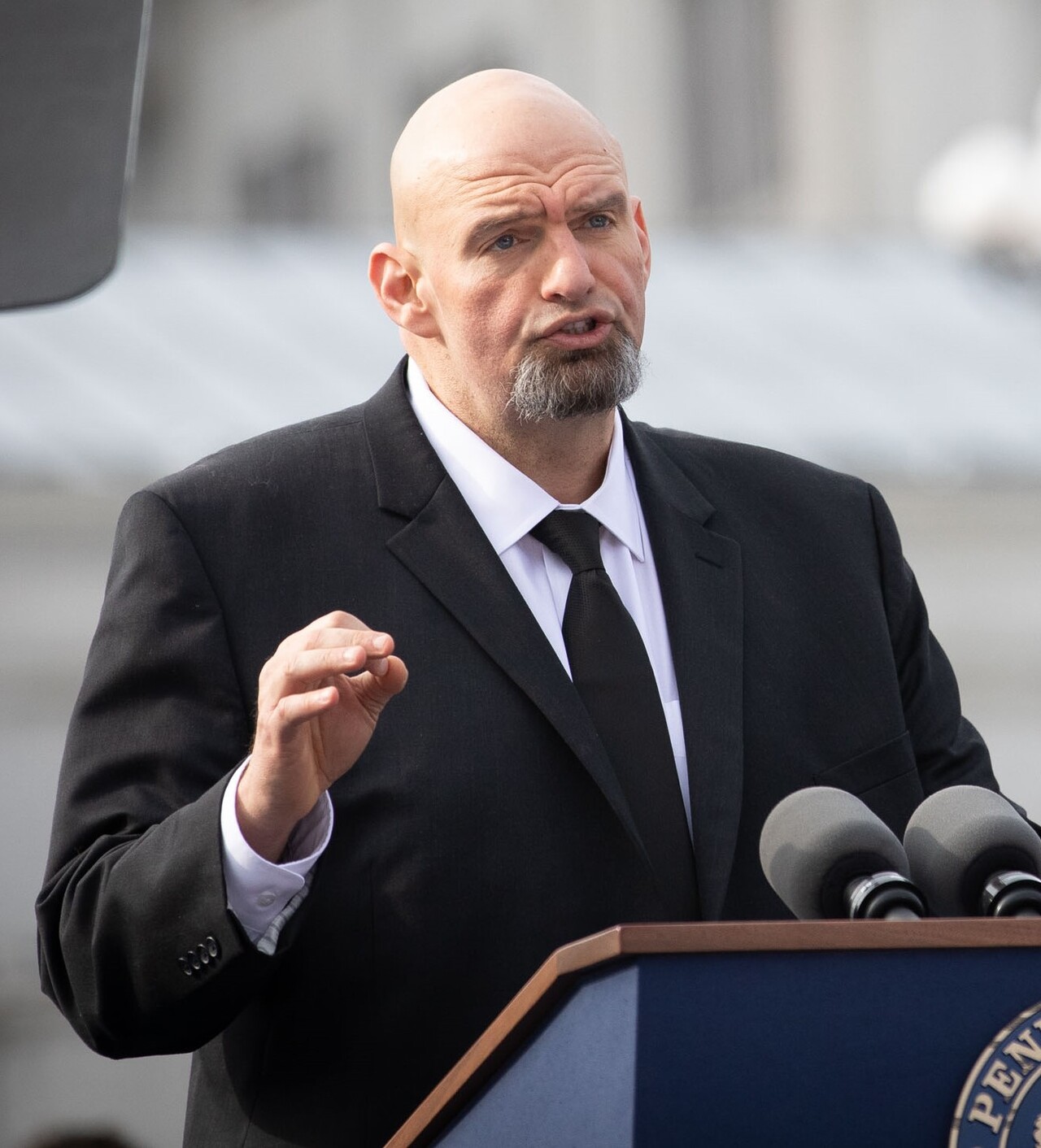
As divisions over Israel and Gaza continue to shape national Democratic politics, elected officials are increasingly debating whether criticism of the Israeli government has become a defining test inside party primaries. Sen. John Fetterman of Pennsylvania pushed that argument further on July 19, saying some recent Democratic primary winners built their campaigns around anti-Israel rhetoric and warning again that an officially anti-Israel party would be a red line for him.
Fetterman ties recent primary victories to party’s Israel debate
Fetterman made the remarks during a July 19 CNN interview, where he said “the kind of people that are winning our primaries” have made anti-Israel rhetoric a centerpiece of their campaigns. The Pennsylvania Democrat pointed specifically to contests in his home state, New York City and Colorado, according to the CNN transcript. In the same interview, he said he would consider leaving the Democratic Party if it became “official anti-Israel.”
The comments followed a week of heightened friction inside the party over U.S. support for Israel. During the interview, host Jake Tapper noted that 103 House Democrats had voted to cut off more than $3 billion in military aid to Israel, out of 212 Democrats in the chamber, a figure cited on air during the exchange. Fetterman said that if opposition to Israel aid became the party’s formal position, it would force a broader decision for him about remaining a Democrat.
He also drew a distinction between support for Palestinians and what he described as increasingly hostile rhetoric toward Israel. Fetterman said it is “entirely appropriate” to be pro-Palestinian and sympathetic to civilians, but argued that describing Israel as a genocidal or apartheid state marks a deeper break within the party. Those remarks were also reflected in the CNN transcript from the July 19 appearance.
For Pennsylvania readers, the immediate significance is that Fetterman explicitly included his own state when describing the primary results that concern him. He did not, however, identify a specific Pennsylvania candidate by name in the CNN interview, and his office had not publicly released a fuller explanation of which race or races he was referencing as of July 20. That leaves the scope of his criticism in Pennsylvania not yet fully defined.
What is confirmed is that Fetterman has been escalating this warning over several appearances. In earlier CNN remarks aired July 16 and July 17, he said the Democratic Party had continued to “turn their back on Israel” and repeated that an officially anti-Israel platform would be his “red line.” Those appearances showed that his July 19 comments were not isolated, but part of a broader message aimed at his party and at voters ahead of future primaries.
Pennsylvania matters politically because Fetterman is one of the state’s highest-profile Democrats and has taken a notably more outspoken pro-Israel position than many progressives. His comments could sharpen existing tensions among party activists, elected officials and primary voters in a battleground state, even as it remains unclear whether they will translate into any formal political break.
The larger context behind Fetterman’s comments is a rapidly widening debate inside the Democratic coalition over Israel, Gaza and U.S. military aid. CNN transcripts from multiple programs this past week framed the dispute around a measurable shift in congressional voting, including the jump from about 37 Democrats supporting a similar anti-aid position two years earlier to 103 this month. That increase has become part of Fetterman’s argument that the party base is moving in a different direction.
At the same time, critics of Fetterman’s view have argued that opposition to Israeli government policy should not automatically be treated as opposition to Israel itself. That distinction surfaced in recent televised discussion about his remarks, underscoring that the conflict is not only about foreign policy but also about language, coalition politics and what positions can win Democratic primaries in 2026.
For residents and voters, the practical takeaway is that this dispute is likely to remain visible in candidate messaging, especially in competitive Democratic contests. Fetterman has not announced any change in party affiliation, and he said his votes and views would not change immediately. For now, the clearest factual point is that one of Pennsylvania’s two U.S. senators is publicly warning that Israel policy is becoming a defining fault line inside his party.