

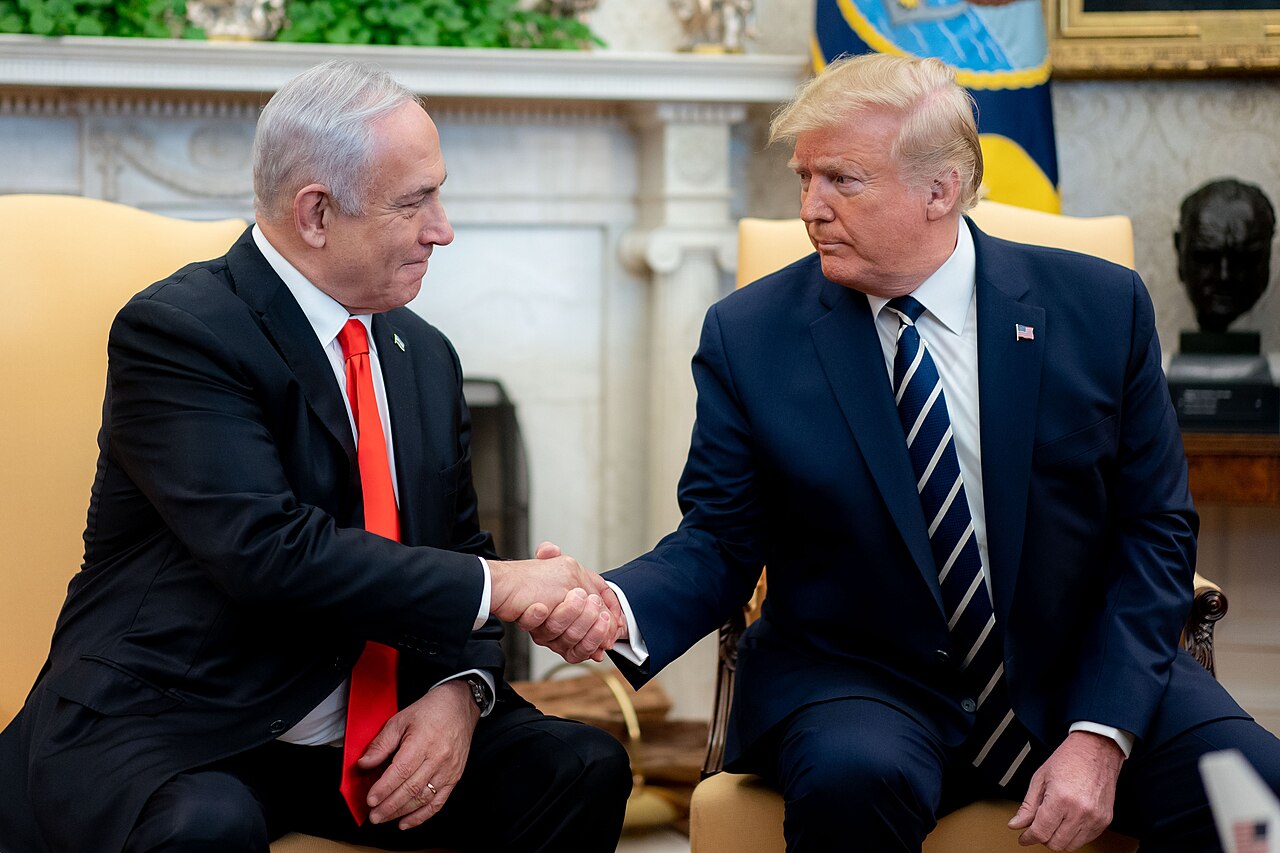
As U.S. policy in the Middle East remains closely tied to Israel’s military and diplomatic decisions, attention has turned to the relationship between President Donald Trump and Prime Minister Benjamin Netanyahu. That focus sharpened ahead of their Tuesday meeting in Washington, the first face-to-face session since a June phone call in which Trump reportedly berated Netanyahu over Israeli actions in Lebanon. The encounter is unfolding against a backdrop of recent U.S.-Israeli coordination on Iran and continued scrutiny of how far Washington will back Israeli operations elsewhere in the region.
Trump and Netanyahu return to the table after a reported June blowup
Trump and Netanyahu are scheduled to meet at the White House on Tuesday, July 28, according to statements cited by Axios and reporting from Reuters and the Associated Press. Reuters reported Monday that this would be Netanyahu’s eighth meeting with Trump since the president returned to office and their first since February, before the United States and Israel launched their joint aerial campaign against Iran. That makes Tuesday’s meeting the first in-person session since the June phone dispute became public.
The friction traces back to a call reported first by Axios on June 1, which said Trump angrily confronted Netanyahu over Israeli threats to resume strikes on Beirut’s southern suburbs. Reuters later reported that Trump publicly confirmed he had called Netanyahu “crazy” when asked in a June 3 interview about the exchange. Reuters said the episode exposed strains that had at times surfaced between the two leaders despite frequent coordination during the Iran conflict.
A senior Israeli official told Reuters at the time that Netanyahu had made clear any pause in planned strikes would depend on Hezbollah halting attacks on northern Israel. Trump, according to Reuters’ account of the public remarks, framed his criticism around the risk that Israel itself could be hit in a broader escalation. The White House has not released a transcript of that June call.
Tuesday’s meeting is taking place in Washington, where the practical outcome will be measured less by ceremony than by what the two governments confirm afterward. The Israeli prime minister’s office said last week that Netanyahu would meet Trump on Tuesday, while Axios reported the visit followed internal discussions after Netanyahu had sought an earlier appointment. What is confirmed, based on public reporting, is the timing of the meeting and the fact that it comes after a period of visible strain.
What is not yet known is whether the two leaders will announce any change in U.S. policy toward Israel’s operations in Lebanon, Gaza or the broader post-Iran-war regional posture. Public reports ahead of the meeting have pointed to Iran as a top agenda item, but no joint statement had been released in advance laying out deliverables. There also has been no public indication that either side plans to formally revisit the June dispute.
For Washington, the significance is institutional as much as personal. The meeting places the White House at the center of decisions involving military coordination, regional deterrence and ceasefire diplomacy. AP reported Tuesday that the session is also viewed as a chance for Netanyahu to smooth over strains in the relationship after the Iran war and other disagreements surrounding Israel’s regional strategy.
The underlying cause of the tension appears to be a familiar one: Israel’s desire to preserve military freedom of action and Trump’s effort to manage escalation while still backing a close ally. Reuters reported that the June argument centered on Israeli threats to strike Beirut again, while Israeli officials maintained that pressure on Hezbollah was tied to security conditions in northern Israel. Those competing priorities helped turn a private strategic disagreement into a public political story.
At the same time, the two leaders remain deeply linked by the recent war with Iran. Reuters reported that Netanyahu had said during that conflict that he spoke with Trump almost daily, often presenting the relationship to Israelis as one in which major decisions were coordinated. AP reported that, despite a long history of ups and downs between the two men, their alliance had appeared stronger after Trump’s return to the White House.
For readers watching Tuesday’s meeting, the practical takeaway is that no formal rupture has been announced, but neither has the June episode been erased. The most immediate expectation is a closely watched White House discussion on Iran, regional security and next steps in U.S.-Israel coordination, with any shift likely to become clear only through official statements after the meeting. For now, the facts on record show a relationship still intact, but tested in public.