

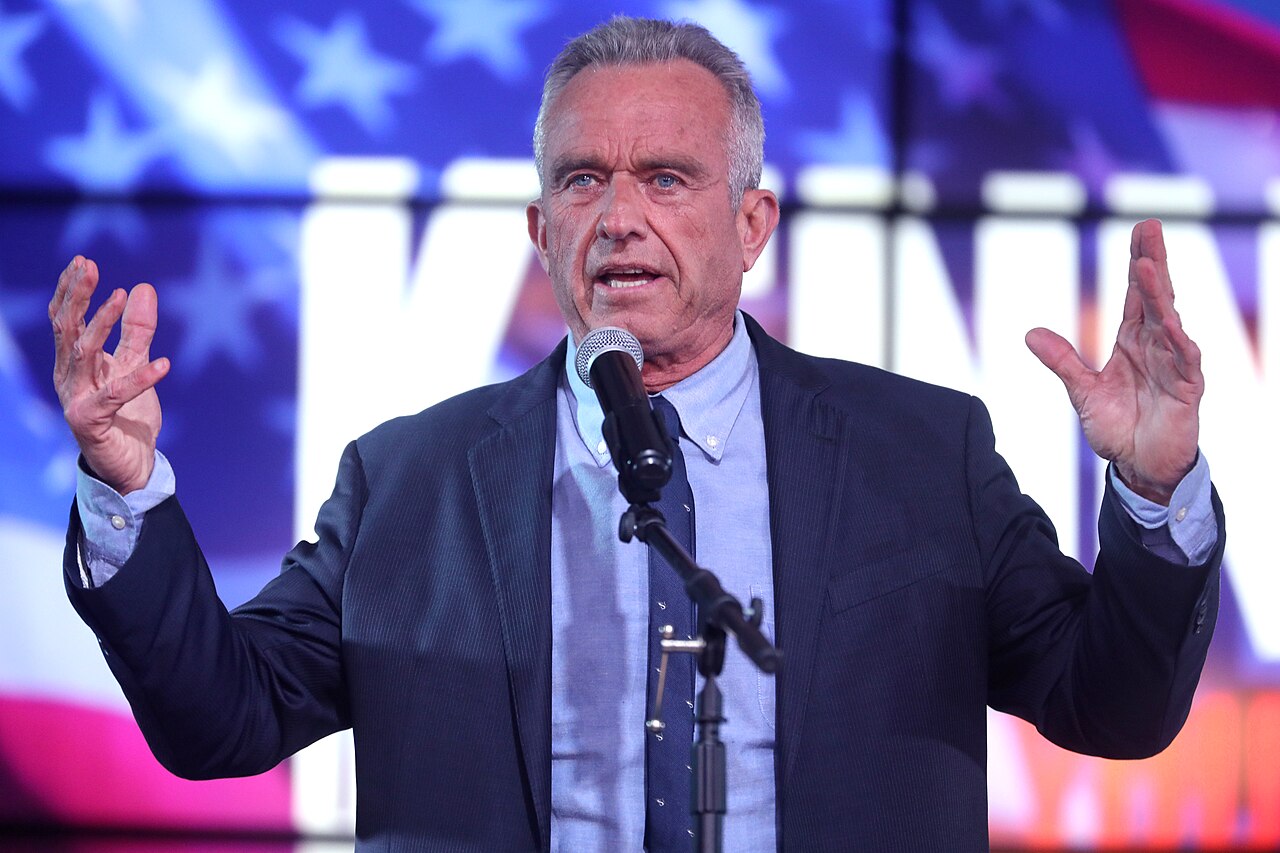
As the Trump administration reshapes federal health policy, childhood vaccine guidance has become one of the most closely watched areas of change. That debate has centered on Health and Human Services Secretary Robert F. Kennedy Jr., who has defended a rollback of long-standing recommendations for children while invoking the legacy of his uncle, President John F. Kennedy. Medical groups, vaccine researchers and legal scholars say the historical comparison does not hold up under scrutiny.
Kennedy’s policy changes and the disputed comparison
Kennedy has advanced a series of changes to federal vaccine policy affecting children, including support for delaying some routine shots and narrowing recommendations that had long applied broadly. Reuters reported on July 16, 2026, that Kennedy and allies discussed proposals reaching as far as eliminating the federal immunization schedule for American children, while a separate CDC action already changed the hepatitis B birth-dose recommendation for some newborns. HHS and CDC documents show that, as of December 2025 and January 2026, infants born to mothers who test negative for hepatitis B no longer automatically fall under a universal birth-dose recommendation and may instead receive the shot later through shared clinical decision-making.
Kennedy has framed parts of his vaccine agenda as a return to more rigorous safety oversight, and Reuters reported that he cited earlier vaccine leadership associated with his family’s political era. But the policies now under review involve a modern immunization system that covers 17 diseases, according to Reuters reporting and current federal schedule materials, and critics say the evidence used to justify change is a central point of dispute. The BMJ reported in June 2026 that three studies used by Kennedy and allies to support claims about vaccine harms had been retracted or placed under investigation.
Medical groups have also challenged how the administration has altered decision-making structures around vaccines. Reuters reported in April that Kennedy issued a new charter for a CDC vaccine advisory panel emphasizing vaccine risks and possible evidence gaps, a move critics said could weaken expertise standards. HHS has said the department is pursuing what Kennedy described as “radical transparency” and restoring public trust.
For families across the country, including in local hospitals and pediatric practices, the most concrete confirmed change has been the shift in how some newborn hepatitis B vaccinations are recommended. CDC and HHS fact sheets state that babies born to mothers who test positive for hepatitis B, or whose status is unknown, should still receive the vaccine within 12 hours of birth. For babies born to mothers who test negative, parents and clinicians may now decide whether to vaccinate at birth or start later in infancy.
That means the effect is national, but it is experienced locally in delivery rooms, pediatric clinics and public health programs. HHS has stated that vaccines recommended on the schedule remain covered through Affordable Care Act plans, Medicaid, the Children’s Health Insurance Program and the Vaccines for Children program. The federal government has not released a state-by-state breakdown showing how many hospitals or pediatric offices have changed their birth-dose practices since the revised recommendation took effect.
What is also not yet known is whether additional proposals discussed inside the administration will become binding policy. Reuters reported that more sweeping plans, including broader changes to the childhood schedule, faced internal resistance and legal challenges. A federal judge also put one major effort to remove vaccines for several diseases from the recommended childhood schedule on hold, according to Reuters.
The core criticism from researchers is not only about policy outcomes but about the evidence behind them. Reuters reported that leading health experts said comparisons between vaccinated and unvaccinated children, used by Kennedy and some allies to suggest broad vaccine harms, are methodologically weak because vaccinated children generally have more contact with the health care system and therefore receive more diagnoses. That makes simple side-by-side comparisons unreliable without stronger controls.
The historical analogy to President Kennedy’s era also breaks down because John F. Kennedy’s administration operated during a period of expanding public confidence in mass immunization, not one centered on reducing routine childhood recommendations. Current HHS materials still say there is no benefit to spreading out vaccinations and that the recommended schedule protects children early in life. That language sits in tension with policy moves that shift some decisions away from universal recommendations and toward case-by-case choice.
Medical organizations have argued that this matters because routine schedules are designed to create consistency for clinicians and families. Reuters reported that pediatric and public health groups said Kennedy’s repeated focus on vaccine safety risks has created confusion about which immunizations parents should choose for their children. For now, the administration says recommended vaccines remain available and covered, while the larger fight over how childhood vaccine policy should be set is continuing inside agencies, in court and in pediatric care settings nationwide.