

More than 150 years after the 14th Amendment established birthright citizenship in the aftermath of slavery, that constitutional guarantee is again at the center of a national legal and political fight. This time, the Trump administration is pursuing a narrower approach aimed at wealthy foreign visitors who travel to the United States to give birth. The new orders, signed August 6, 2026, come weeks after the Supreme Court rejected a broader attempt to restrict citizenship for children born on U.S. soil.
Trump signs a narrower set of citizenship and birth tourism orders
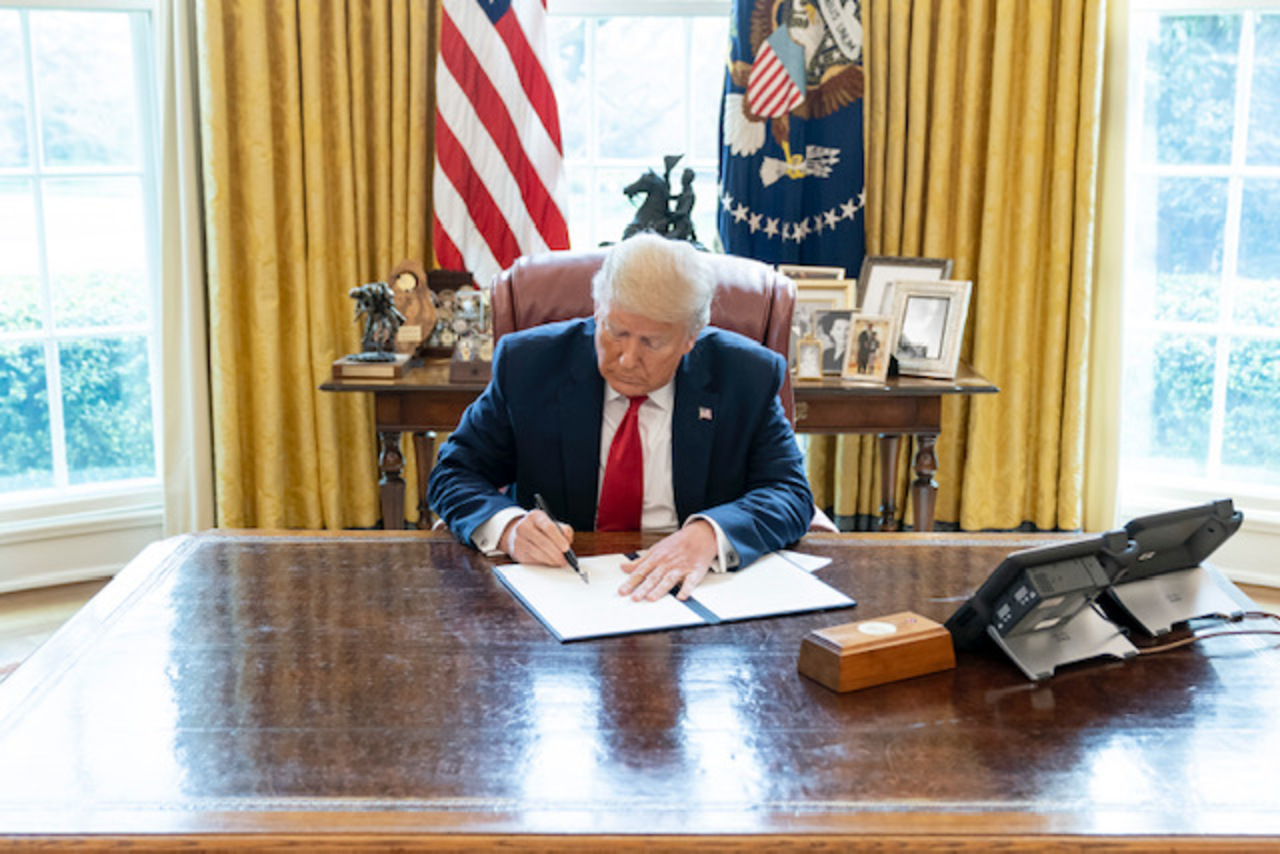
President Donald Trump signed two executive orders on August 6 seeking to narrow birthright citizenship in specific circumstances and expand a federal crackdown on commercial birth tourism, according to the Associated Press and Axios. One order targets children born to mothers who officials say entered the country deceptively for the primary purpose of giving birth, while a second directs the State Department and Department of Homeland Security to issue new rules and guidance aimed at stopping the industry. Axios reported that the administration is also attempting to expand other long-recognized exceptions involving foreign diplomatic staff and enemy forces.
The move follows a June 30 Supreme Court ruling that rejected Trump’s earlier executive order, which had sought to deny automatic citizenship more broadly to children born in the United States to some noncitizen parents. AP reported that the court struck down that earlier order after lower courts blocked it, and that only five justices explicitly said birthright citizenship is protected by the Constitution, while Justice Brett Kavanaugh relied on federal statute instead. That narrower legal split has become part of the administration’s new strategy.
In a dissent in the June 30 case, Justice Clarence Thomas wrote that the original purpose of the rule was to grant citizenship to recently freed slaves, while also referencing modern birth tourism companies that collect large fees from wealthy foreigners, according to the Supreme Court opinion. That framing mirrors arguments now being made by the administration as it tries to distinguish commercial birth tourism from the broader principle of citizenship at birth.
The new orders are national in scope, but their real-world impact remains unclear because federal agencies have not yet released full implementation guidance. AP reported that immigration advocates expect immediate legal challenges, and the administration has not publicly detailed how officials would determine when a pregnant visitor entered the country deceptively for childbirth rather than for another lawful reason. That leaves unanswered questions for hospitals, consular officials, airlines and families seeking visas.
What is confirmed is that federal policy already treats some birth tourism activity as visa fraud. Reuters reported that a 2020 federal regulation bars the use of temporary tourist and business visas when the primary purpose is obtaining U.S. citizenship for a child by giving birth in the United States. U.S. Customs and Border Protection separately states that a traveler can be denied entry if an officer concludes the person is likely seeking entry for that purpose or may become dependent on public medical care.
The scale of the issue is also still debated. AP, citing the Migration Policy Institute, reported that there is no official estimate of birth tourism births, though MPI estimated about 26,000 such births annually out of roughly 3.5 million births in the United States. Reuters similarly reported there are no official government figures tallying how many foreign nationals come specifically to give birth, even as Republicans have used the practice as a central argument for tightening citizenship rules.
The core legal and historical tension is that the Citizenship Clause was ratified in 1868 to overturn the exclusion of Black Americans from citizenship after slavery, yet modern opponents of broad birthright citizenship argue the amendment should not protect children linked to fraudulent entry schemes. Reuters reported that the 14th Amendment was adopted after the Civil War and later interpreted by the Supreme Court in United States v. Wong Kim Ark to extend citizenship to children born on U.S. soil, including those of foreign nationals. That long-standing reading has shaped American law for more than a century.
The administration’s narrower approach appears designed to build on fraud-based exceptions rather than directly relitigate the entire meaning of the 14th Amendment. Axios reported that officials argue the birth tourism exception can be justified because of deceptive conduct in gaining entry, while Reuters reported that Homeland Security Investigations has already launched a separate effort to identify fraud, financial crimes and organized facilitation networks tied to birth tourism schemes. Federal prosecutors have previously brought criminal cases against operators of “birth houses” in Southern California serving wealthy Chinese clients, according to Reuters.
For residents, the immediate effect is more likely to show up in visa screening, immigration enforcement and litigation than in any overnight change to citizenship records. AP reported that the American Civil Liberties Union has already signaled that any new executive order attempting to rewrite birthright citizenship will face court challenges. For now, the administration has announced a narrower target, but the broader constitutional question remains active in the courts and in national immigration policy.