

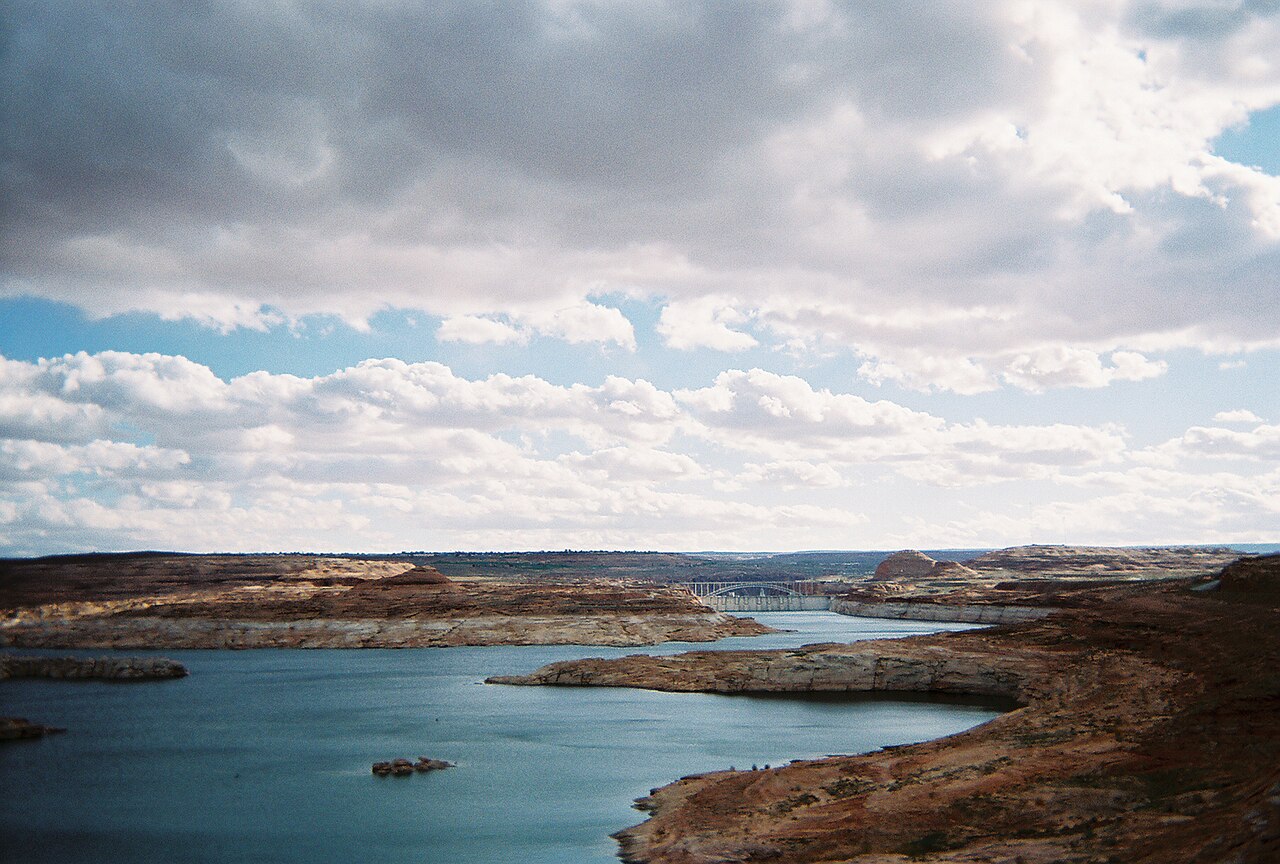
The Colorado River system remains under pressure after years of drought, warming temperatures and declining runoff across the American West. That strain is now centered on Lake Mead in Nevada and Arizona and Lake Powell on the Utah-Arizona line, where federal data showed historically low storage levels in April 2026. The declines matter far beyond the shoreline because the two reservoirs help supply water and electricity across seven Western states and parts of Mexico.
Lake Mead sets the low-water mark, and Lake Powell nears a critical line
Lake Mead, the nation’s largest reservoir by storage capacity, fell to a pool elevation of 1,040.50 feet on April 24, 2026, according to U.S. Bureau of Reclamation data cited by ABC News and Reclamation’s own reservoir records. That edged below the previous record low of 1,040.58 feet set in July 2022. Reclamation’s annual elevation tables also show 1,040.50 feet as the new low-water mark for the reservoir.
At nearly the same time, Lake Powell was measuring about 3,521.43 feet, according to Bureau of Reclamation data reported by ABC News. That left Powell just above its previous record low of 3,519.92 feet, set in April 2023, and close to the level that threatens hydropower operations at Glen Canyon Dam. In an April 2026 federal release, Reclamation said Powell could drop below 3,490 feet, the minimum power pool level, by August 2026 without intervention.
The scale of the loss is substantial. Federal and academic records show Lake Mead and Lake Powell together have lost tens of millions of acre-feet of stored water since 2000, reflecting a long-running collapse in Colorado River reserves. A 2023 U.S. Geological Survey-backed paper found the two reservoirs lost 33.5 million acre-feet between January 2000 and April 2023, underscoring how sharply the system has contracted over time.
For residents in Nevada and Arizona, Lake Mead’s decline is significant because the reservoir, formed by Hoover Dam, is a core water source for major metro areas including Las Vegas, Phoenix and Southern California service regions. The Bureau of Reclamation says the broader Colorado River basin provides water to up to 40 million people and supports hydropower generation across the seven basin states. That makes the April 2026 low more than a reservoir record; it is a signal about the condition of a regional supply system.
Lake Powell’s status matters directly in Utah and Arizona, where Glen Canyon Dam operations are tied to the lake’s elevation. Reclamation confirmed in April 2026 that it was preparing emergency actions to protect the system, including releases from Flaming Gorge Reservoir and reduced releases from Powell to Mead through September 2026. Those steps were designed to keep Powell above the level where hydropower production becomes impossible.
What is not yet fully known is how any additional operational changes would be distributed among individual communities, utilities or water users if dry conditions persist. Federal agencies have outlined systemwide actions and modeling, but they have not released a comprehensive location-by-location list of future impacts tied specifically to the April 2026 lows.
Reclamation and other federal water managers have tied the 2026 declines to exceptionally poor hydrology. In its April 2026 announcements, Reclamation said a very dry winter and low runoff projections sharply increased the risk to Lake Powell. A Western Area Power Administration monthly hydropower report for April 2026 also showed snow water equivalent lagging well below median levels during the winter, reinforcing the weak inflow outlook.
The losses also reflect a longer trend. The U.S. Geological Survey-backed 2023 paper on the Colorado River water crisis found river flows have been reduced by a combination of overuse and climate-driven aridification, with warming temperatures playing a major role in shrinking runoff. That broader pattern has left the system more vulnerable when a single bad snow year arrives.
For residents, the practical takeaway is that federal water managers are already operating in emergency mode rather than waiting for later summer conditions. Reclamation stated in April 2026 that it would move additional water from Flaming Gorge and cut planned releases from Powell to Mead in an effort to stabilize storage and protect dam operations through 2027, a sign that the basin’s low-water problems remain active and unresolved.