

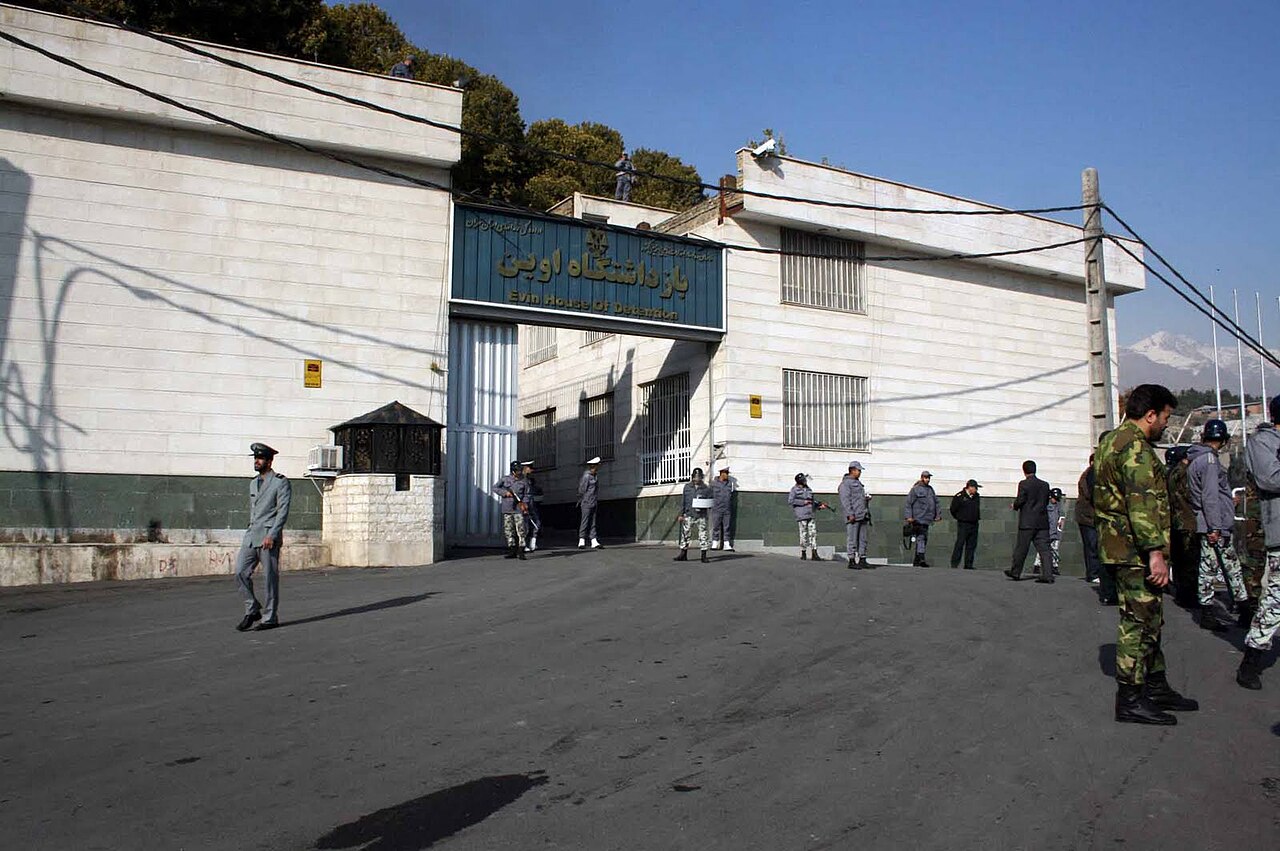
As tensions between Washington and Tehran continue to shape diplomacy, the fate of Americans detained in Iran remains a recurring point of concern in U.S. foreign policy. That concern sharpened on June 5, 2026, when Iranian-American journalist Reza Valizadeh sent a recorded message from Tehran’s Evin Prison describing poor medical conditions and warning that a fellow American detainee may have cancer. The message offered a rare firsthand account from inside one of Iran’s most closely watched prisons.
Valizadeh describes prison conditions and a medical warning
Valizadeh, a former Radio Farda journalist and dual U.S.-Iranian citizen, used the recording obtained by CBS News to ask the U.S. government to seek medical help for Americans held in Evin Prison. In the message, he said four Americans there were suffering from “various diseases” and were being denied meaningful medical treatment, according to CBS News. CBS reported that it could not independently confirm all of the details he provided.
The June 5 recording marked one of the first direct messages to emerge after Iran eased a near-total internet blackout that followed U.S. and Israeli strikes on Iran earlier in 2026, according to CBS News. Valizadeh’s lawyer, Ryan Fayhee, told the network that the journalist has struggled with coughing since fires linked to a 2025 strike on Evin Prison and also suffers from back pain and dental problems. The Committee to Protect Journalists said the recording raised urgent concerns about his health and treatment.
Valizadeh has been imprisoned since September 2024, according to the Committee to Protect Journalists and Radio Free Europe/Radio Liberty. He was sentenced in December 2024 to 10 years in prison on charges tied to “collaborating with a hostile government,” according to Reuters, the Associated Press and RFE/RL. The U.S. State Department formally designated him as wrongfully detained in May 2025, CBS News reported.
The fellow American at the center of the cancer concern appears to be Kamran Hekmati, a 61-year-old Iranian-American businessman from Great Neck, New York. Reuters reported in March 2026 that Secretary of State Marco Rubio had designated Hekmati as wrongfully detained and that he was suffering from bladder cancer. CBS News has reported that Hekmati was among the Americans held in Evin Prison before the latest regional fighting.
That New York connection gives the case a direct local dimension, even though much remains unclear. Public reporting has not established the full medical status of Hekmati inside Iranian custody, and U.S. officials have not released a comprehensive public accounting of all Americans currently detained in Iran. CBS News reported that the State Department believes six Americans are detained there, but only some cases have been publicly detailed.
Congressman Tom Suozzi said in March 2026 that Hekmati, his constituent from Great Neck, had been imprisoned by Iran for more than 300 days when the wrongful-detention designation was announced. CBS News separately reported that Hekmati had been arrested in July 2025 while visiting family in Iran. Those details place a Long Island resident at the center of an international detention case that is now also raising medical concerns.
Human rights groups and U.S. officials have long said Iran uses foreign and dual nationals as leverage in broader geopolitical disputes. CBS News reported that Secretary Rubio designated Iran a state sponsor of wrongful detention in 2026, describing the country’s detention of Americans as a coercive practice. That assessment forms the backdrop for Valizadeh’s message, which linked the prisoners’ medical concerns to the wider failure to secure their release.
The current diplomatic picture appears to be complicating efforts to bring detainees home. CBS News reported that U.S. officials were pursuing a phased approach to talks with Iran, first focused on reducing violence and reopening shipping lanes, with detainee issues handled on a separate track. According to the same report, detained Americans were not expected to be released as part of the initial truce discussions.
For U.S. residents with relatives or ties to the detainees, the immediate outlook remains defined by limited verified information. What is confirmed is that Valizadeh sent a June 5 plea from Evin Prison, that he described inadequate medical care, and that public reporting has identified Hekmati as a New Yorker with bladder cancer. What remains unresolved is whether medical treatment has improved, whether additional detainees face similar conditions, and when any release effort might move forward.