

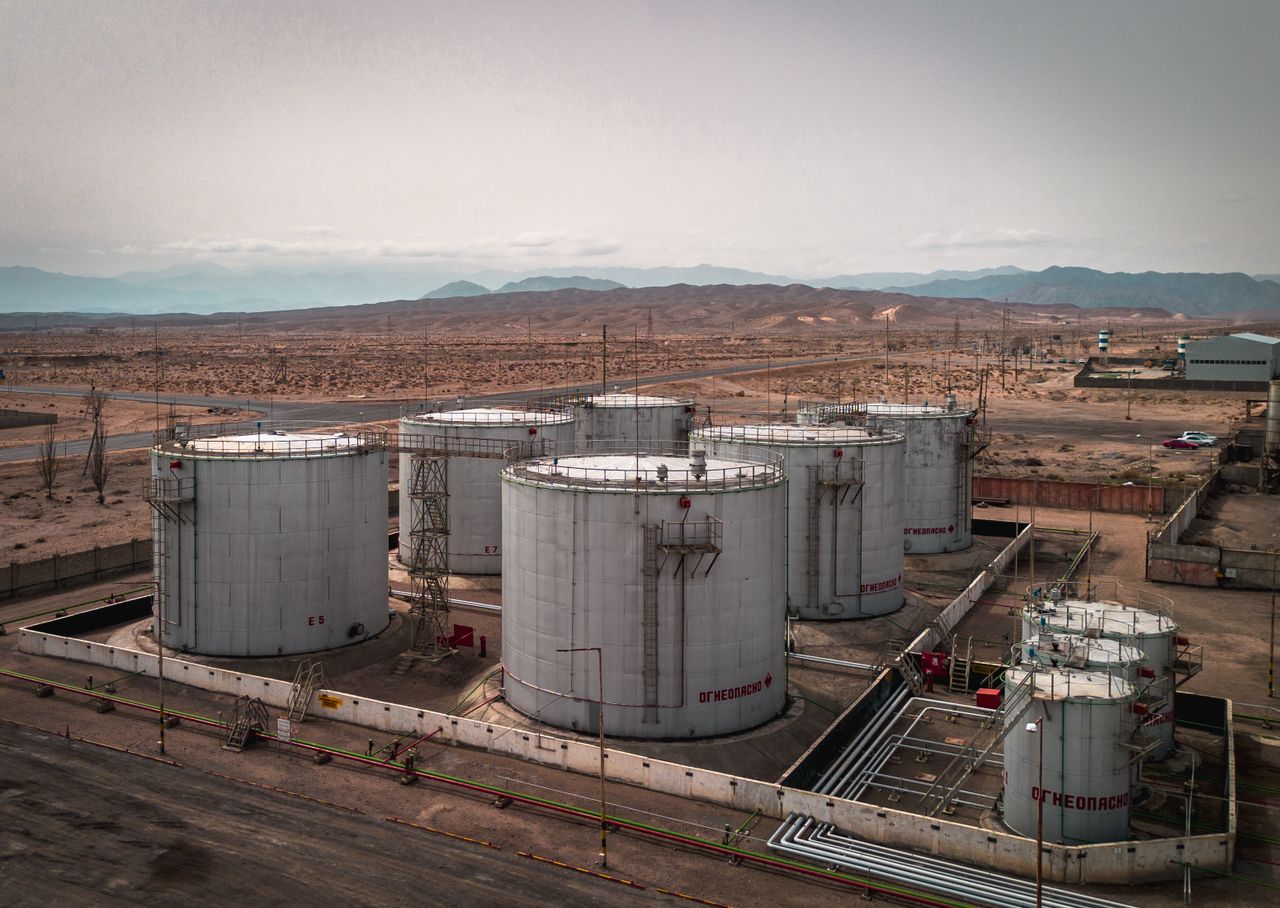
Global oil markets are being reshaped by an unusually large supply disruption tied to conflict in the Middle East and the uneven recovery of export routes. Within that broader shock, China has emerged as a central player because it entered 2026 with one of the world’s largest estimated crude stockpiles, giving refiners and policymakers more room to absorb market stress. That combination matters far beyond Asia because it affects prices, shipping flows and the amount of oil available to major importing economies, including the United States.
IEA projects a steep supply drop as conflict disrupts exports
The International Energy Agency said in its May 13, 2026 oil market report that global oil supply is set to fall by about 3.9 million barrels a day across 2026, reversing earlier expectations for a surplus. Reuters, citing that IEA report, said the agency concluded that supply would not meet total demand this year as the Iran war disrupted Middle East production and accelerated inventory declines. In its June 2026 update, the IEA kept that forecast broadly intact and said global supply was expected to fall to 102.4 million barrels a day this year.
The June report also said May output had dropped to 94.5 million barrels a day, down 13.6 million barrels a day from pre-conflict levels. The IEA attributed the weaker outlook to slower recovery in Gulf exports, shipping constraints and continued operational risks in the region, including the need to restore normal transit arrangements. Those factors have turned inventories into a critical buffer for consuming countries.
For U.S. readers, the immediate consequence is not a confirmed shortage at the pump, but a market that remains more exposed to price swings than it was earlier in the year. The IEA said Atlantic Basin exports and releases from strategic stocks have helped offset part of the disruption, but it also made clear that a full recovery in supply chains will take time.
China’s role has become unusually important because it has not needed to buy as aggressively into the disrupted market as many analysts expected. The U.S. Energy Information Administration said in an August 2026 analysis that China does not publicly report its oil inventories, but EIA estimates them using production, imports, exports, refining and third-party storage data. In that assessment, the agency treated both government-held and commercial inventories as part of China’s strategic cushion.
Separate market reporting has put that stockpile near 1.4 billion barrels by the end of 2025. Dow Jones Newswires, citing EIA estimates in July 2026, said China added an average of 1.1 million barrels a day to strategic reserves in 2025, pushing stockpiles to nearly 1.4 billion barrels. Reuters analysis published in July also described China’s holdings in a range of roughly 1.3 billion to 1.5 billion barrels, equal to more than 100 days of average imports.
That reserve has already changed buying behavior. Reuters reported that China’s June crude imports fell 41.3% from a year earlier to 7.12 million barrels a day, the lowest level since October 2016. Analysts said those lower imports eased competition for cargoes that otherwise would have gone to Europe and other Asian buyers during the supply shock.
China’s stockpile helps explain why the global market response has looked different from earlier oil crises. Reuters reported in March that China raised domestic production to a record 4.32 million barrels a day in 2025 after a multi-year drilling campaign, while Beijing’s 2026-2030 plan called for output to be maintained at around 4 million barrels a day. That domestic supply, combined with large stored inventories, has reduced the urgency of fresh crude purchases during periods of disrupted trade.
Even so, analysts do not view China as insulated from global conditions. Reuters reported that experts expect Chinese output to plateau near current levels and said the country will remain heavily reliant on imports because last year’s import volumes still totaled 11.55 million barrels a day. The EIA also noted that China’s inventory estimates include commercial stocks because national oil companies have effectively been directed to maintain emergency barrels in storage.
What that means for consumers is that China’s reserves may slow some price spikes by temporarily reducing its call on the export market, but they do not eliminate the underlying shortage created by lost Middle East supply. The IEA’s latest view remains that the oil market is tighter in 2026 because supply recovery is lagging behind demand needs and because inventories, while still useful, are finite.