

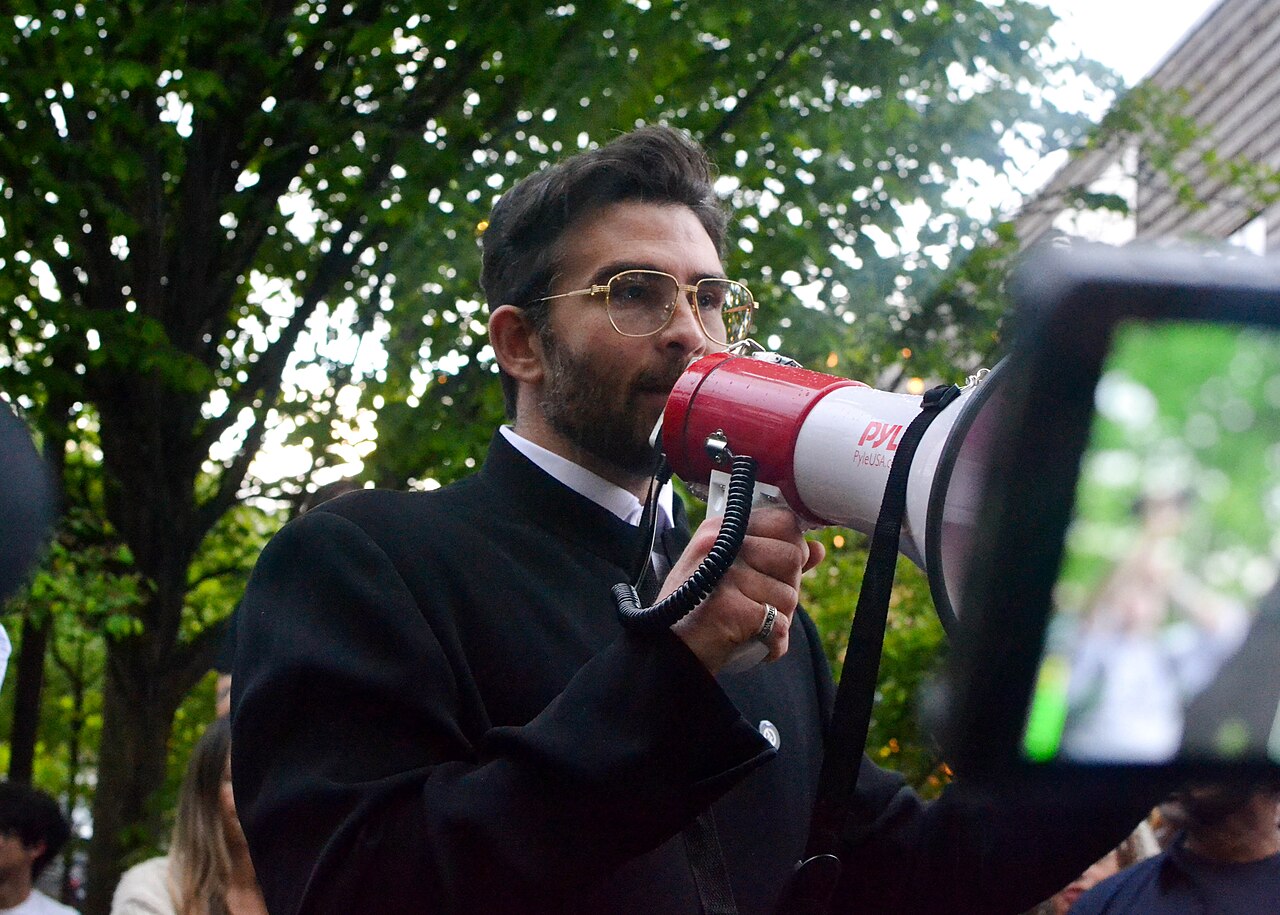
National Democrats have spent much of the past year trying to contain internal divisions over Israel, antisemitism and the influence of online political personalities. That debate sharpened in Michigan this week after commentator Hasan Piker drew criticism from fellow Democrats over remarks made during a livestream that showed Jewish state Sen. Jeremy Moss, a Democratic candidate for U.S. House. The backlash also put new attention on Democratic Senate nominee Abdul El-Sayed, who had campaigned with Piker earlier this month.
Democrats denounce remarks tied to Jeremy Moss
The immediate controversy centered on comments Piker made last week during a livestream while an X post featuring Moss was visible on screen, according to the Associated Press. AP reported that Piker suggested some pro-Israel rhetoric could contribute to backlash against American Jews, a formulation that drew condemnation from Democratic officials by Monday, August 24, 2026. Moss, who represents part of Oakland County and is running in a Democratic primary for Congress, responded publicly that he would not be lectured about what Michigan’s Jewish community should believe.
The criticism spread beyond Michigan within hours. CNN transcripts from August 25 show House Democratic Leader Hakeem Jeffries condemning Piker’s comments about the Jewish community, while Michigan Rep. Hillary Scholten also issued a statement after Moss’ image appeared in the segment. The dispute became notable not only because of what Piker said, but because it involved an elected Michigan Democrat who is one of the state’s most prominent Jewish lawmakers.
The scale of the response remains political rather than procedural. No formal Democratic Party sanction against Piker was announced as of Tuesday, but AP reported that some Democrats pressed El-Sayed to go further than distancing himself generally from the remarks. That left the episode as a public rebuke from elected Democrats rather than a party disciplinary action.
The sharpest state-level impact is in Michigan, where Democrats are trying to unify after a hard-fought Senate primary. El-Sayed, the party’s nominee for the open U.S. Senate seat, said Monday that he rejected antisemitism and sought distance from the comments, according to AP. The issue matters locally because Michigan has large Arab American and Jewish communities, and both blocs have become central to Democratic coalition politics in the state.
What remains unconfirmed is how much the controversy will alter campaign operations on the ground. Neither El-Sayed’s campaign nor state party officials had released any broader Michigan strategy changes tied to the episode in the reporting reviewed Tuesday. There is also no public evidence yet of a full list of elected Democrats reconsidering appearances with Piker or other progressive streamers.
Still, the political sensitivity is clear. Washington Post reporting earlier this month described concerns inside Democratic circles about whether El-Sayed could unite pro-Israel Democrats after the primary, especially in communities such as Oakland County. Moss’ response gave those concerns a local face, because he directly framed the remarks as harmful to Michigan Jews rather than as an abstract online argument.
The broader context is a Democratic Party argument that predates this week’s backlash. AP and Washington Post reporting describe El-Sayed as a progressive Democrat who has criticized Israeli policy and appealed to voters angered by the Gaza war, while also insisting that Jewish safety is nonnegotiable. That balancing act has become more difficult as online commentators with large followings play a bigger role in shaping campaign attention.
Piker’s prominence is part of that larger trend. CNN transcripts this month described him as an influential left-wing streamer with growing reach among younger Democratic voters, but also as a figure whose rhetoric has repeatedly drawn accusations of antisemitism from critics in both parties. Earlier reporting also showed some moderate Democrats warning that highly visible alliances with polarizing online figures can complicate post-primary unity efforts.
For Michigan residents, the practical meaning is that the controversy is now part of the state’s Senate campaign narrative, even though it began on a livestream. No election agency action or formal legislative proceeding has resulted from the comments. What voters can expect next is continued pressure on candidates to state clearly where they stand on antisemitism, Israel and the role of digital influencers in Democratic politics as the general election campaign moves forward.