

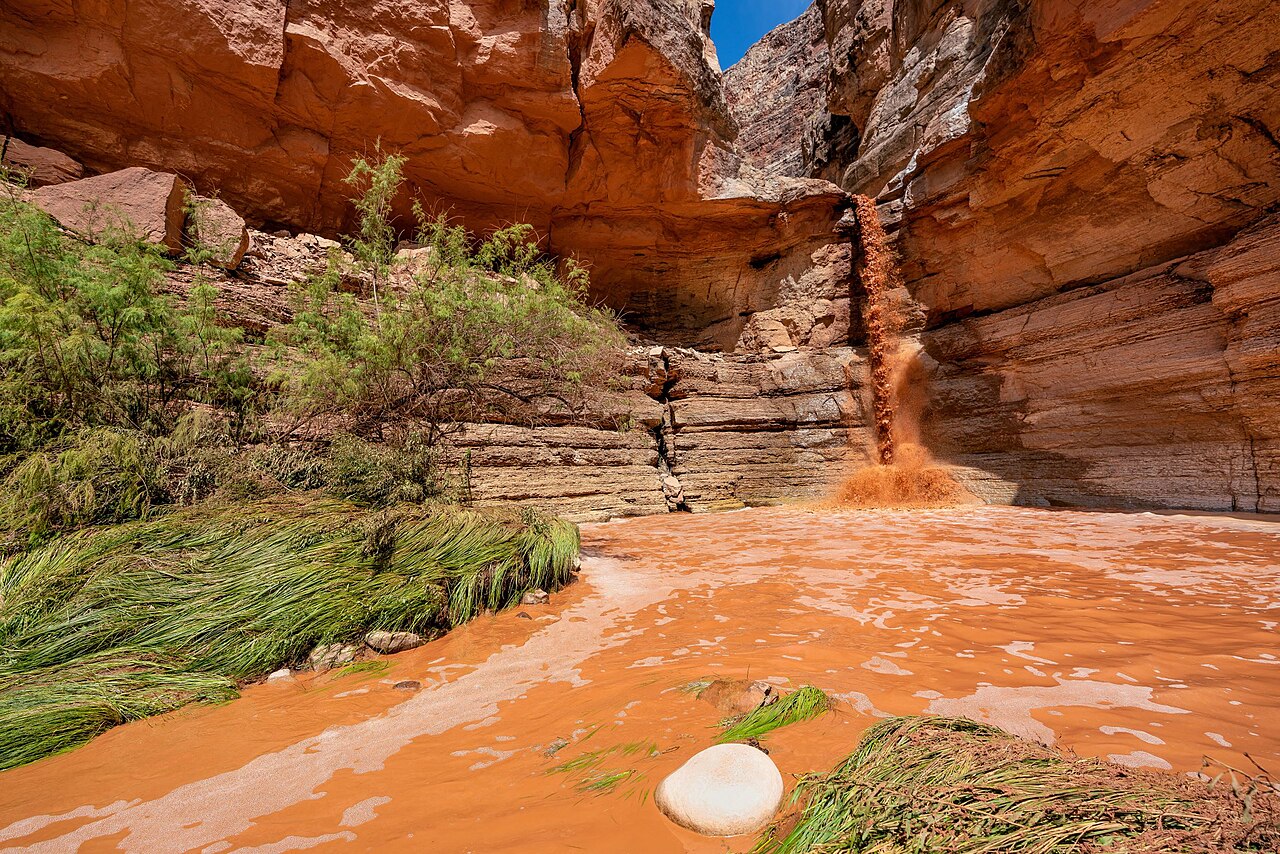
Late-summer flash flooding routinely disrupts travel and outdoor recreation across the Southwest, where monsoon storms can turn narrow desert drainages dangerous within minutes. At Grand Canyon National Park in Arizona, that risk became a major rescue and infrastructure emergency after a powerful flood swept through Bright Angel Canyon and the Phantom Ranch area on August 29, days before Labor Day weekend. Federal park officials said the flooding left one person dead, about 15 people missing or unaccounted for, and key trails, bridges and water infrastructure heavily damaged.
Grand Canyon National Park confirms missing hikers, evacuations and major damage
Grand Canyon National Park said Sunday that a significant flash flood on August 29 struck Bright Angel Canyon and the Phantom Ranch area, leaving about 15 people missing or unaccounted for after earlier public notices had referenced more than 20 individuals. The National Park Service also confirmed one death, according to updates released August 30, as search and accountability efforts continued in the inner canyon. Associated Press and other national outlets reported that dozens of people were evacuated as conditions cut off access in some of the park’s most heavily visited backcountry corridors.
The park said nearly all footbridges spanning Bright Angel Creek were destroyed, eliminating hiker access across the creek in the affected area. Park officials also said the flood pushed large boulders, debris and damaged structures into the Colorado River and altered the terrain enough to affect river travel. The National Park Service separately announced that Phantom Ranch and the North Kaibab Trail were closed while crews assessed trails, utilities, bridges and other infrastructure.
Those closures came at the start of one of the busiest late-summer travel periods in northern Arizona. Park officials have not published a full public list of the people still missing or unaccounted for, and they said they were asking anyone who knew of hikers or backpackers in the Bright Angel Creek corridor on August 29, or who held campground reservations there, to contact investigators. No reopening date had been announced for the damaged inner-canyon areas as of Monday.
The most immediate impact is concentrated in Arizona’s inner canyon, where the flood disrupted one of the park’s core hiking, lodging and river access zones. Phantom Ranch, Bright Angel Campground and adjoining trail corridors serve overnight hikers, mule users and river runners, and the National Park Service said the damaged crossings and closures have cut off normal movement through the area. The Black Bridge and Silver Bridge crossings over the Colorado River were also reported closed while damage is evaluated, further restricting access patterns inside the canyon.
For Arizona residents and Labor Day visitors, what is confirmed is that several major inner-canyon routes are not available and that emergency operations are still shaping park access. What is not yet known is how many reservations will ultimately be canceled beyond the initial closures, how long utility repairs will take, and when damaged bridges can be replaced. The park has also not released a comprehensive public accounting of every affected trail segment, campsite booking or river itinerary.
The flood also knocked out the sole water pipeline serving tourists and residents in the area, according to the Associated Press, adding another layer to the park’s operational problems. That means the disruption is not limited to hiking routes; it also affects basic services that support overnight stays and staff operations. As of August 31, officials were still assessing the full extent of infrastructure losses in Bright Angel Canyon.
Park officials attributed the disaster to a significant flash-flood event tied to storm activity over the North Rim on August 29. National Park Service messages said the flood raced down Bright Angel Creek, a drainage that can rise rapidly when intense rain falls upstream, even if conditions lower in the canyon appear less severe. That pattern is well known during Arizona’s monsoon season, when localized storms can send sudden surges through tributary canyons and camp areas.
The cause of the broad infrastructure damage is also tied to the geography of the corridor itself. According to the park, the flood carried boulders, debris and heavy sediment through narrow canyon passages, destroying crossings and reshaping parts of the creek bed. News reports citing park officials said the event may have widened the creek channel and even altered or extended an existing rapid where Bright Angel Creek meets the Colorado River, underscoring how a single storm can change both trail conditions and river hazards.
For travelers and Arizona residents, the practical effect is straightforward: inner-canyon access remains limited, damage assessments are ongoing, and there is no announced reopening date for Phantom Ranch, the North Kaibab Trail or several affected crossings. The National Park Service said additional inner-canyon closures may still be necessary as inspections continue. Going into Labor Day, the park’s public guidance remains focused on closures, accountability efforts for missing visitors and repairs to trails, bridges, utilities and water service.