

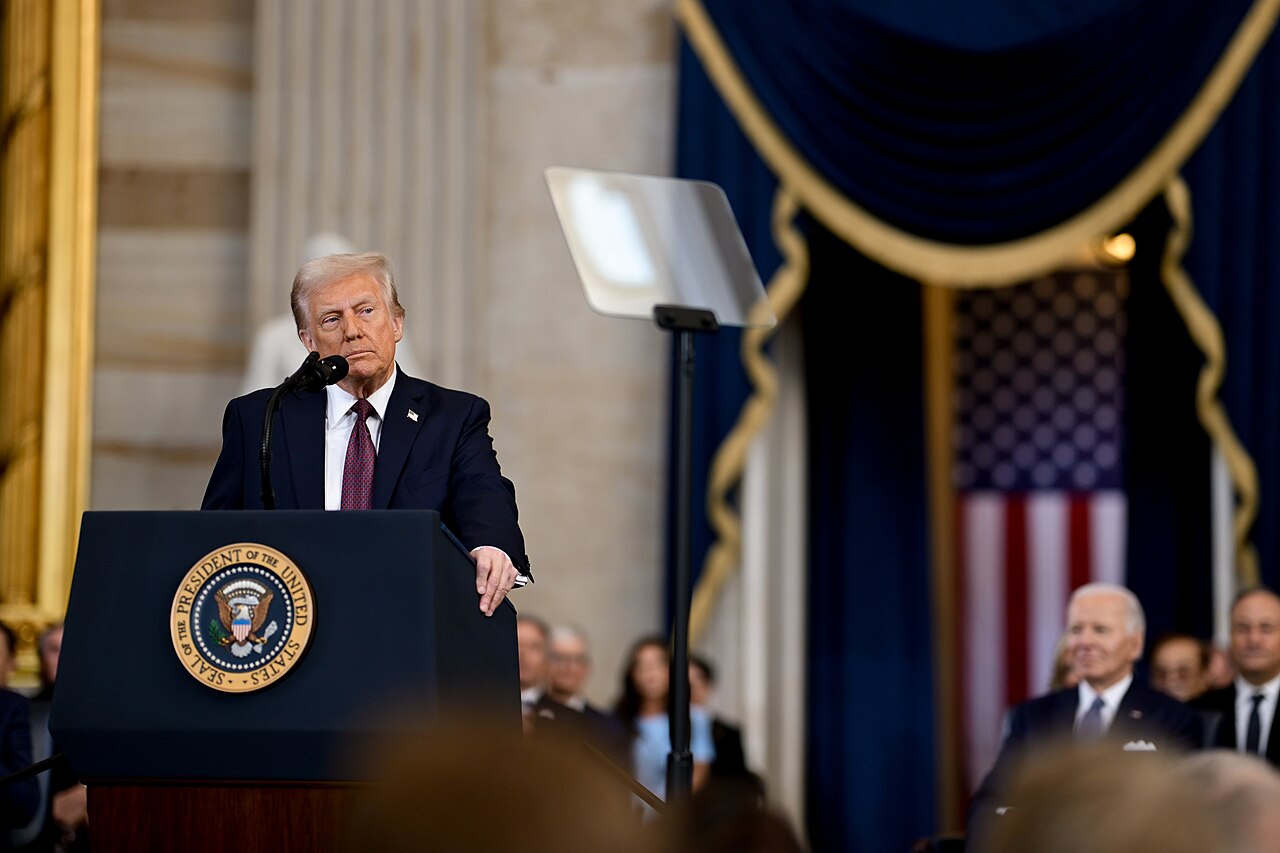
National political coverage often turns to off-script moments that overshadow a broader appearance. That happened again this week when President Donald Trump’s comments about his hair at a Republican event in Dallas drew attention back to a wig denial he delivered days earlier in Washington. The exchange did not involve policy, but it quickly spread across national media because Trump’s own words became the focus.
Trump’s latest remarks put the spotlight back on an earlier denial
President Donald Trump reignited discussion about his appearance on September 10, 2026, when he commented on his hair during a Republican National Committee midterm convention event in Dallas, according to coverage from The Daily Beast that described the moment from the live appearance. Looking up at a large screen, Trump said he needed to do “a little bit better in the back” and added that he was “not happy with it,” referring to a visible area near the crown of his head. The remarks came in front of a live audience and were followed by laughter in the room, turning a passing observation into a national political clip.
The comments landed only days after Trump publicly rejected the idea that he wears a wig. At a White House Rose Garden dinner on September 2, Trump told attendees, “I don’t wear a wig,” according to published transcript excerpts carried by Yahoo and other outlets, and he pointed to a windy 2024 Ohio campaign rally as proof that his hair was real. Reports on that Rose Garden appearance said he referenced severe weather at the rally and argued that a wig would not have stayed in place under those conditions.
The sequence of events is what gave the latest moment its traction. Trump first issued a direct denial, then drew fresh scrutiny by publicly criticizing how his hair looked on the overhead screen. That contrast, rather than any new evidence about his grooming, is what pushed the exchange into broader news coverage this week.
The first half of the episode unfolded in Washington, where Trump used a White House Rose Garden event on September 2 to address long-running speculation about his hair. According to published pool reporting collected by The American Presidency Project, the dinner took place at the White House that evening, giving the president an official setting and a national audience for remarks that were not central to the event’s stated purpose. That setting helped transform a brief aside into a widely repeated headline.
What remains unconfirmed is any factual basis beyond Trump’s own account. No White House document or independent medical or grooming record has been released to substantiate or disprove the president’s remarks about his hair. The White House also has not issued any formal follow-up statement clarifying whether Trump intended the Rose Garden denial as a joke, an aside, or a literal response to online speculation.
The local impact in Washington was therefore less about policy and more about visibility. Because the denial happened on White House grounds, a routine presidential event became part of a cultural and political media cycle, with coverage extending from political reporters to entertainment and tabloid outlets.
The reason this story traveled is straightforward: Trump’s public image has long been a subject of media attention, and his own remarks supplied both sides of the narrative. In one appearance, he denied wearing a wig. In another, he openly complained about how his hair looked on camera. News organizations framed that contrast as the core development because it was based on Trump’s own recorded words, not anonymous sourcing.
That pattern also fits a broader media reality around Trump coverage. Reuters reporting from recent campaign and White House events has shown that unscripted moments often compete with or eclipse the official subject of a speech. Once the president raises a personal aside in a nationally covered setting, it can quickly become the dominant takeaway, especially when video circulates beyond the original audience.
For viewers and readers, the practical takeaway is limited but clear. There is still no independently verified evidence in the public record establishing that Trump wears a wig, and recent fact-check coverage has noted that manipulated images and online rumors have fueled confusion. What is verified is narrower: on September 2, 2026, Trump said he does not wear a wig, and on September 10, 2026, he said of a visible spot in back, “I’m not happy with it.” Those two statements are what made the moment newsworthy.