

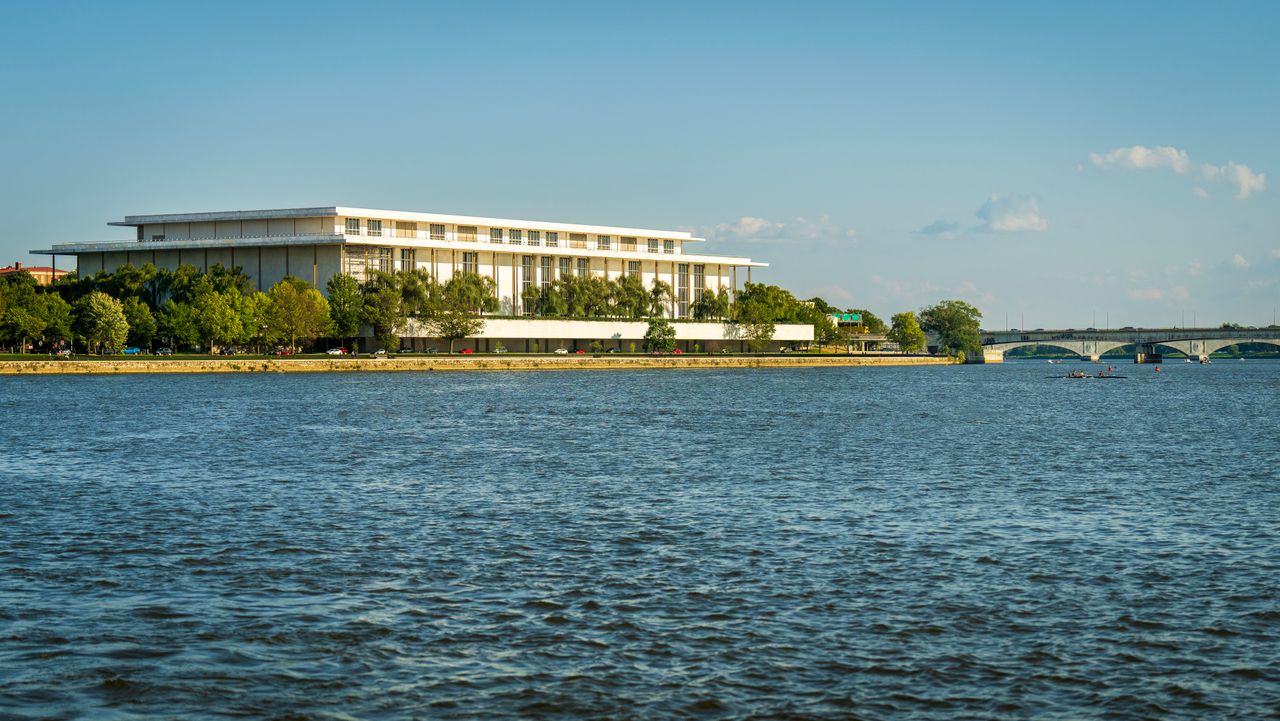
The Kennedy Center has become a flashpoint in a broader national debate over presidential influence on public institutions and the stewardship of major cultural landmarks. In Washington, that debate sharpened on September 15, 2026, when a federal judge rejected a new plan to honor President Donald Trump at the center and the board moved the same day to close most of the building for renovations. The rapid sequence of legal and operational decisions put one of the nation’s best-known arts venues at the center of a high-stakes dispute over naming, safety and control.
Judge blocks tribute plan as board approves closure
The John F. Kennedy Center for the Performing Arts moved into closure on September 15 after its Trump-aligned board voted to shut most of the main building for what it described as urgent renovations, according to reporting from the Associated Press, CBS News and Axios. The action came just hours after U.S. District Judge Christopher Cooper blocked the board from restoring Trump’s name to the building exterior or creating another public-facing tribute on the grounds. In his ruling, Cooper wrote that “linguistic gymnastics” could not overcome either the court’s earlier order or the federal statute governing the center, according to the New York Times and Axios.
Court filings described one proposal to add Trump’s name below the center’s formal title on the exterior marble as recognition for planned renovation efforts. Another proposal, also described in court proceedings, would have sought to designate part of the grounds in Trump’s honor. Cooper said those efforts still ran afoul of the law establishing the Kennedy Center as a memorial to President John F. Kennedy and barring additional memorial-style designations in public areas, according to the Associated Press.
The board’s closure vote covered most of the main building and was tied to an estimated two-year renovation timeline described in court filings and news reports. The exact scope of all interior shutdowns was not fully detailed publicly on Tuesday, but multiple outlets reported that leaders said the building faced significant physical deterioration, including water intrusion and ceiling damage.
For the District of Columbia, the confirmed impact is immediate: one of the city’s central performing arts venues is closing most of its primary facility while legal disputes continue. The Kennedy Center said the shutdown was tied to safety and repair needs, and President Trump said publicly that the closure was necessary for renovation work. Public reporting has described concerns about deteriorating infrastructure, including damage in the Grand Foyer ceiling after severe weather earlier this month.
What remains unclear is the full schedule of cancellations, relocations or alternative venues for performances, rehearsals and public events in Washington. The Kennedy Center has not released a comprehensive public list of all affected programming, and reporting available Tuesday did not establish how many employees, resident arts groups or ticket holders will face immediate disruption. That leaves open key local questions about season schedules, visitor access and the timeline for reopening individual spaces.
The closure also carries symbolic weight in the capital, where the Kennedy Center functions not only as a performance complex but also as a federally chartered memorial and a major tourism anchor. Unlike a private venue closure, this one sits at the intersection of federal law, presidential politics and Washington’s cultural economy, with the practical effects likely to be felt across downtown arts programming and visitor traffic.
The underlying dispute is rooted in a months-long legal fight over whether the board can attach Trump’s name to the Kennedy Center in recognition of financial or renovation efforts. Judge Cooper had already ruled earlier in 2026 that the center could not legally bear Trump’s name, and the new September ruling found that revised wording and alternate tribute concepts did not meaningfully change the legal problem, according to the Associated Press, Axios and the New York Times.
Board members and Trump allies have argued in court filings and public statements that the center is in serious financial and physical condition and needs large-scale intervention. Reuters reported that trustees framed the proposed exterior inscription as a way to credit Trump for managing or enabling a rescue of the institution. Opponents, including Rep. Joyce Beatty, whose lawsuit helped prompt the rulings, argued that the naming effort was an unlawful workaround to both the statute and prior court orders.
For Washington residents, patrons and visitors, the near-term reality is a landmark venue entering a period of uncertainty with litigation still active. The board has said renovations are urgently needed, but the legal record shows the court is continuing to scrutinize how those plans are tied to naming and governance decisions. As of September 15, the factual bottom line is that the tribute plan is blocked, the closure vote has been taken, and the future of the Kennedy Center will be shaped by both construction decisions and the next round of court action.