

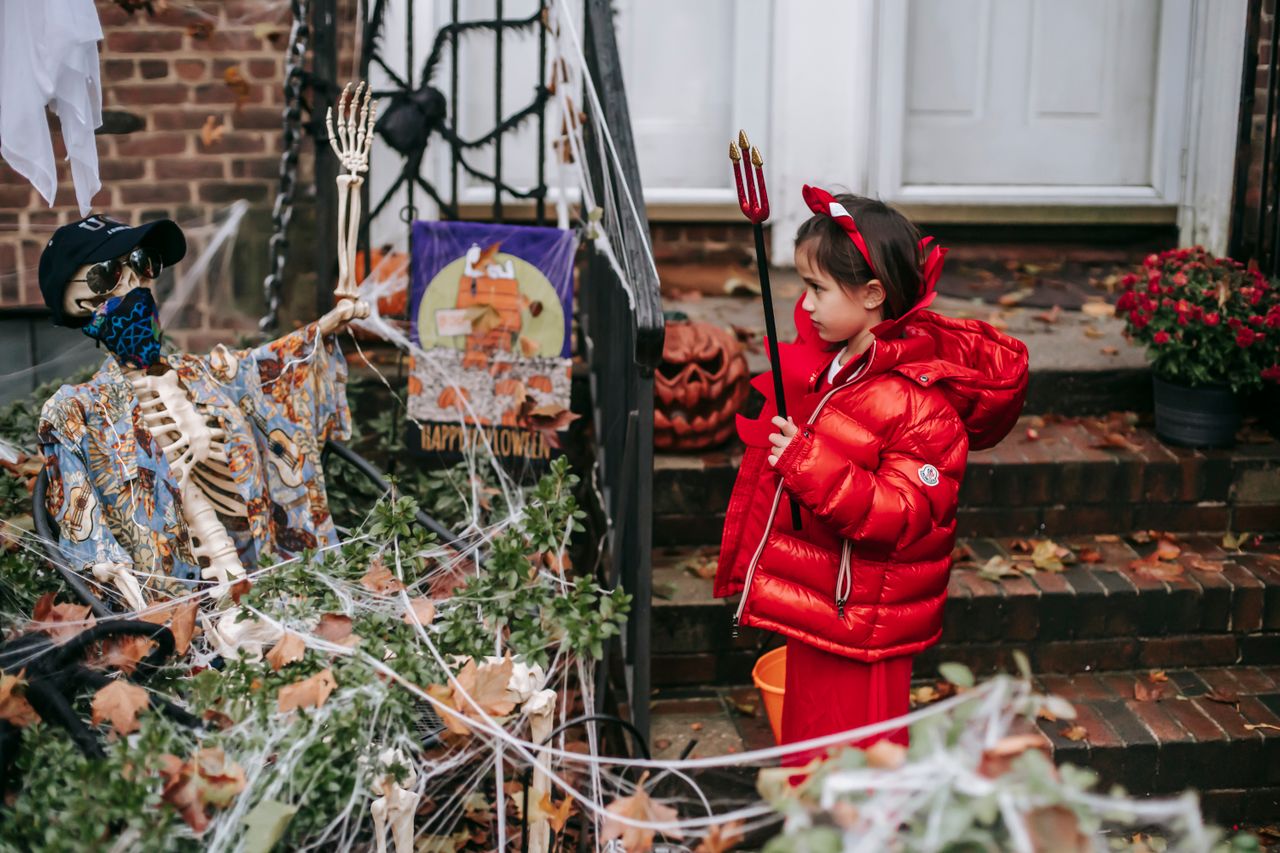
Halloween remains a popular American tradition, but the holiday has also become a major retail event. Recent surveys show millions of Americans plan to decorate, hand out candy, dress up or participate in other Halloween activities, while retail spending is projected to reach another record in 2026. At the same time, older polling suggests some Americans have viewed commercial pressure as an important part of the holiday.
Recent Polls Show Halloween Remains Popular
A YouGov survey published in October 2026 found that 43% of Americans planned to display Halloween decorations, while 39% planned to hand out Halloween candy. Another 29% planned to carve a pumpkin, 25% planned to dress in costume and 23% planned to take a child trick-or-treating. The findings show that Halloween traditions remain part of the season for a substantial share of Americans.
Older YouGov research also provides context for the holiday’s commercial reputation. In a 2022 international survey, 51% of U.S. respondents said Halloween was celebrated more because of pressure from commercial entities, such as greetings card companies, while 34% viewed it as a proper special occasion. That finding reflects perceptions at the time rather than a current measure of American opinion, but it helps explain why commercialization has become part of the conversation around Halloween.
The retail side of the holiday is particularly strong in 2026. The National Retail Federation projects that U.S. Halloween spending will reach $13.5 billion, surpassing the previous record of $13.1 billion in 2025. Planned spending averages $115.14 per person, compared with $114.45 last year.
Candy remains the most common Halloween purchase, with 96% of consumers planning to buy it. Decorations follow at 78%, while 71% plan to purchase costumes. NRF projects spending of approximately $4.1 billion on candy, $4.3 billion on decorations, $4.4 billion on costumes and $800 million on greeting cards.
Consumers are also paying attention to prices. NRF reports that 31% plan to comparison-shop if prices are higher than expected, 26% plan to look for coupons or sales, and 34% plan to seek items they can reuse in future years. These shopping habits suggest that consumers continue to participate in Halloween while looking for ways to control their budgets.
Halloween shopping is also starting earlier. NRF’s 2026 survey found that 49% of consumers began or planned to begin their Halloween shopping in September or earlier, reinforcing the idea that the holiday now extends beyond October 31 into a broader shopping season.
That trend is not entirely new. NRF reported in 2024 that 47% of consumers planned to shop for Halloween items before October, compared with 32% a decade earlier and 37% five years earlier. NRF also found that Halloween decoration spending rose 42%, from $2.6 billion in 2019 to $3.8 billion in 2024, while total Halloween spending increased 32% during the same period.
Consumers are increasingly looking for lower-cost shopping options as well. Discount stores were the leading Halloween shopping destination in NRF’s 2026 survey, chosen by 39% of shoppers, followed by specialty Halloween or costume stores at 32% and online shopping at 27%.
The data does not prove that rising spending or earlier shopping causes Americans to view Halloween as more commercial. But together, the polling and retail figures show how the holiday combines long-standing traditions with an increasingly substantial shopping season.