

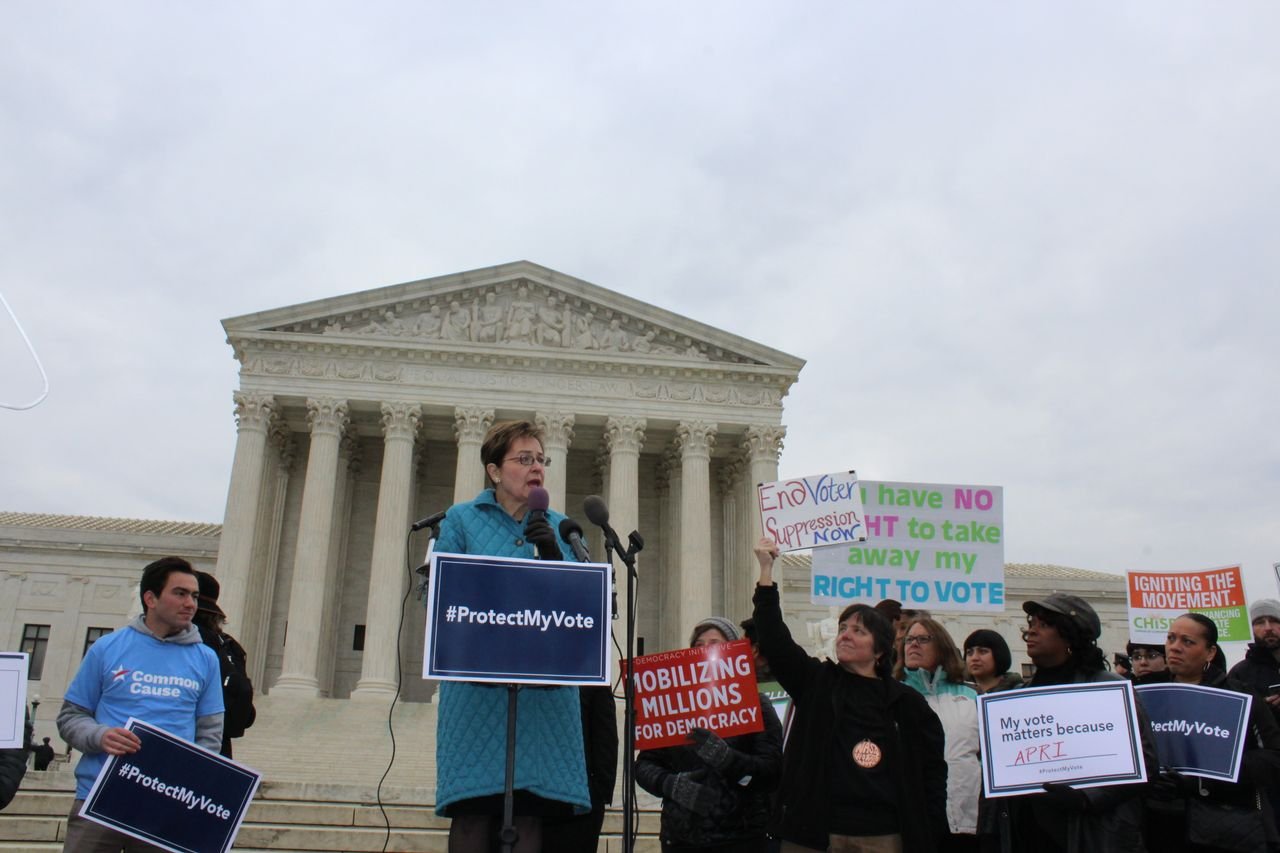
The rules of democracy are once again being treated as political stakes, not background procedure. In the United States, voting rights and redistricting have returned to the center of public life because they now help determine not only who wins power, but also how legitimate that power appears.
Why these issues have returned with such force
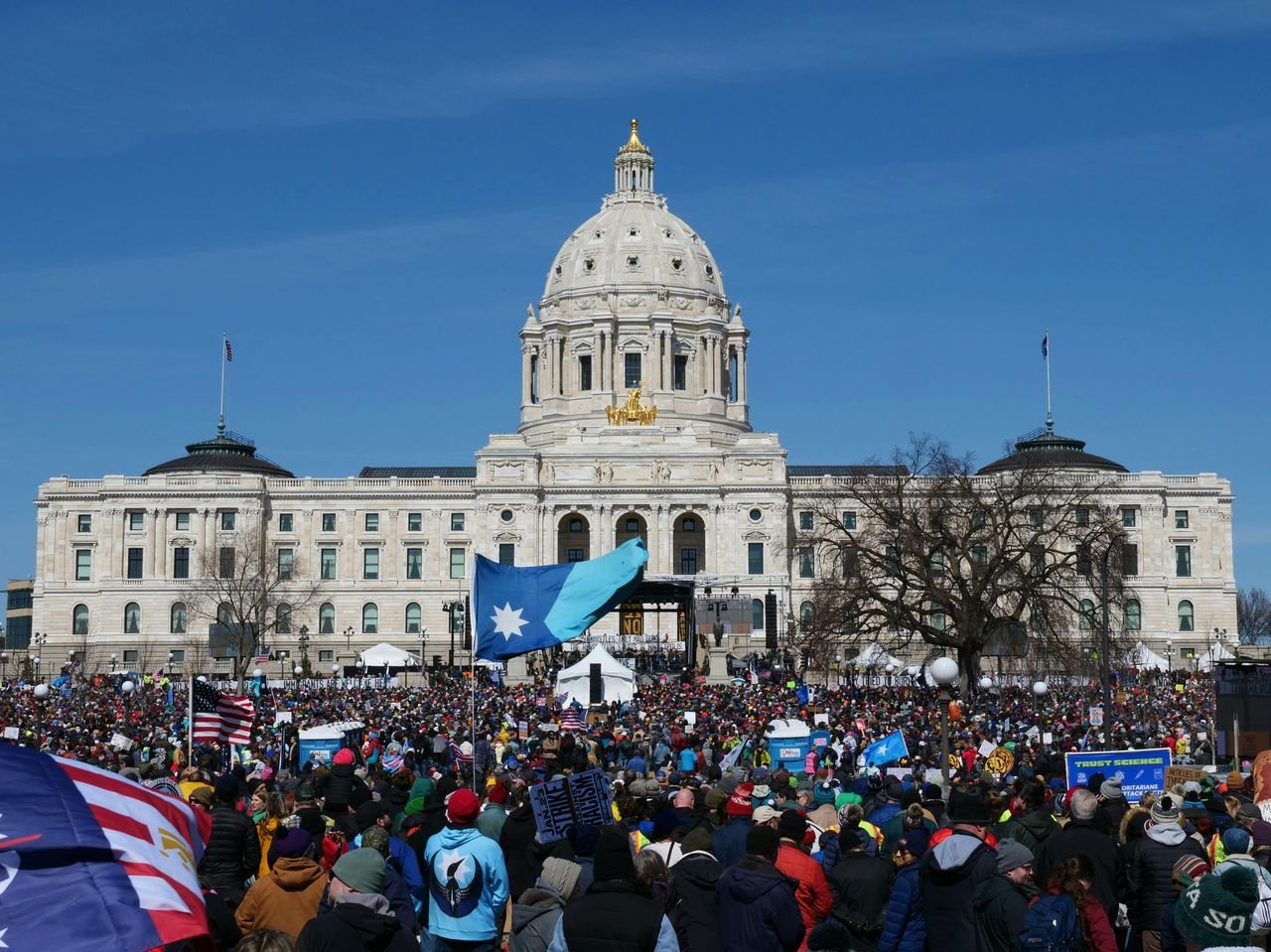
Voting rights and redistricting never truly disappeared from American politics, but for a time they were often discussed as technical matters handled by courts, legislatures, and election officials. That changed as partisan competition tightened and electoral margins shrank. When a handful of seats can determine control of the House of Representatives, the design of districts and the administration of elections stop looking procedural and start looking existential.
The legal backdrop is crucial. In 2013, the Supreme Court’s decision in Shelby County v. Holder invalidated the coverage formula that determined which jurisdictions had to obtain federal preclearance before changing voting rules. The Justice Department explains that, after Shelby County, those formerly covered jurisdictions no longer needed advance federal approval unless a separate court order applied. That decision shifted the system from prevention to after-the-fact litigation, making challenges slower, costlier, and often less effective in the middle of active election cycles.
A decade later, the Court sent a different signal in Allen v. Milligan. In June 2023, the justices upheld the use of Section 2 of the Voting Rights Act in a challenge to Alabama’s congressional map, preserving a major pathway for contesting district lines that dilute minority voting strength. According to legal analyses and court summaries, the ruling reaffirmed the framework that plaintiffs had relied on for decades in vote-dilution cases. For many voting-rights advocates, it suggested that the law retained real force even after years of retrenchment.
At nearly the same moment, the Court rejected the so-called independent state legislature theory in Moore v. Harper. That mattered because the theory would have sharply limited the role of state courts and state constitutions in policing federal election rules. By rejecting it, the Court preserved an important avenue for state-level review of election laws and maps. Taken together, these rulings left the country in an unstable middle ground: federal protections were weaker than they once were, but still potent enough to shape the map wars that followed.
Redistricting is now a permanent, not once-a-decade, conflict

Many Americans still think of redistricting as something that happens quietly after the census and then disappears for ten years. That picture is outdated. The current era is defined by continuous map conflict, in which legislatures, commissions, litigants, and courts revisit district lines far more often than the traditional decennial schedule would suggest.
The National Conference of State Legislatures has documented a broad wave of post-2020 redistricting litigation and mid-decade map changes. Its recent tracking shows that disputes over race, partisanship, population shifts, and institutional authority remain active well after the first set of post-census maps took effect. This is not simply a legal aftershock from the 2020 census. It reflects a strategic recognition by both parties that a revised map can be as consequential as a strong candidate or a well-funded campaign.
Louisiana offers one of the clearest examples. After prolonged litigation over whether Black voters had a fair opportunity to elect candidates of choice, the state adopted a congressional map with a second majority-Black district, only to see that map itself become the subject of new constitutional challenge. SCOTUSblog’s case materials on Louisiana v. Callais show how the dispute moved from a Section 2 remedy question into a broader confrontation over whether race was used lawfully or impermissibly in drawing the revised map. By 2025 and 2026, the case had come to symbolize the unresolved tension between complying with the Voting Rights Act and avoiding racial predominance in redistricting.
Alabama has been equally central. Allen v. Milligan did not end the controversy there; instead, it triggered further rounds of remedial mapping, judicial review, and appeals. Court filings and reporting connected to the case show how a state can lose a map challenge, redraw districts under court supervision, and still continue litigating the terms of compliance. In practical political terms, that means representation itself can remain unsettled for years.
This emerging pattern has changed incentives nationwide. Parties now treat mapmaking as an ongoing campaign front. Legislatures test the limits of what courts will allow, advocacy groups look for favorable state constitutional claims, and judges increasingly become managers of electoral timing. The result is a democracy in which redistricting is no longer an occasional administrative task. It is a recurring contest over political geography, racial representation, and institutional power.
The fight is about race, party, and the meaning of fair representation
Redistricting disputes are often framed as a choice between racial fairness and partisan hardball, but in practice those categories overlap. In much of the United States, race and party are strongly correlated, especially in the South. That overlap makes it difficult to distinguish a map drawn for partisan advantage from one that dilutes minority voting power, and it gives mapmakers a powerful defense: they can argue they were pursuing politics, not race.
This problem sits at the heart of the modern Voting Rights Act debate. Section 2 prohibits voting rules and district plans that discriminate on the basis of race or language minority status, and the Justice Department continues to describe redistricting as squarely within that protection. Yet modern jurisprudence asks courts to separate race from politics even when the two are tightly intertwined on the ground. That can make enforcement highly fact-specific and heavily dependent on expert testimony, demographic modeling, and historical analysis.
The practical stakes are not abstract. A district line can decide whether a cohesive Black, Latino, or Native voting population has a realistic chance to elect a preferred candidate, or whether that group is split apart among several districts in a way that weakens its influence. It can also determine whether urban voters are packed into a small number of districts while surrounding suburbs and exurbs are arranged to produce durable partisan advantage. The legal language may revolve around compactness, communities of interest, and racial polarization, but the lived outcome is straightforward: some groups gain representation and others lose it.
Partisan gerrymandering remains a parallel problem. Federal courts largely stepped back from policing partisan gerrymanders in 2019, leaving many of those disputes to state courts, state constitutions, and political reform efforts. That shift elevated the importance of state-level institutions. In some states, reformers turned to commissions as a way to reduce legislative self-dealing. According to NCSL, commissions now play primary roles in congressional redistricting in ten states, though their structure and independence vary widely.
Even commissions are not a universal cure. Their effectiveness depends on design, transparency, deadlock rules, and the political culture surrounding them. Some reduce overt manipulation; others simply relocate conflict into appointment battles and procedural disputes. The broader lesson is that fair representation is not secured by one institutional form. It requires enforceable rules, credible oversight, and a public willing to treat district lines as a democratic issue rather than a niche legal specialty.
Statehouses, courts, and Congress are all testing their power
The renewed centrality of voting rights and redistricting reflects a larger institutional struggle. State legislatures want more room to set election rules and draw maps. Governors, secretaries of state, and election administrators are asserting their own authority. State courts remain vital referees. Federal courts are selectively interventionist. Congress, meanwhile, has debated sweeping voting-rights legislation for years without enacting a new national framework.
That vacuum matters. Since Congress has not restored the preclearance regime weakened by Shelby County, most fights now unfold in fragmented fashion through case-by-case litigation. The Brennan Center and other legal advocates have argued that this piecemeal model is inherently reactive, because harmful rules or maps can influence elections before courts reach a final judgment. From the standpoint of democratic administration, timing is often as important as doctrine. A right vindicated after an election may still leave voters effectively unprotected when it matters most.
The Justice Department continues to play an important, though narrower, role. Its Voting Section says it enforces the civil provisions of the Voting Rights Act and related federal election laws, and its case docket shows active involvement in Section 2 and election-administration disputes. But the post-Shelby landscape means federal officials cannot systematically block many changes before implementation. That alters bargaining power. States know that challengers must now sue, assemble factual records, and often race against the election calendar.
States are also experimenting with structure. NCSL’s recent materials on redistricting commissions and mid-decade map battles show that some jurisdictions are reconsidering who should draw districts at all. In 2026, for example, Virginia voters moved to return congressional redistricting authority to the legislature ahead of the midterms, a sign that institutional design itself remains politically unsettled. Elsewhere, ballot fights and lawsuits have tested whether commissions should be strengthened, bypassed, or replaced.
These conflicts reveal an uncomfortable truth about American federalism. Elections are national in consequence but decentralized in administration. That arrangement can encourage innovation, but it also produces uneven protections and recurring conflict over the rules of competition. Voting rights and redistricting are therefore not isolated controversies. They are the front line of a broader contest over which institutions get to define democracy, and under what constraints.
What the next phase of the struggle will likely look like
The next chapter will not be decided by one Supreme Court ruling or one federal statute alone. It will emerge from the interaction of litigation, state reform, demographic change, and partisan pressure. Because the House remains closely divided and presidential elections remain intensely polarized, every fight over district design and voter access now carries amplified national consequences.
One key question is the future of Section 2 itself. The Louisiana litigation drew intense attention because court watchers and analysts warned that the justices could use the case to narrow, or potentially destabilize, one of the last major tools left for challenging racially discriminatory district maps. SCOTUSblog coverage in 2025 and 2026 highlighted exactly that concern, noting the possibility that the Court could further curtail vote-dilution claims. Even if the Court stops short of a sweeping doctrinal break, repeated uncertainty can change behavior by encouraging aggressive mapmaking and discouraging resource-intensive lawsuits.
Another important development is the normalization of mid-decade redistricting. NCSL has described the current moment as the biggest wave of such remapping since the 1800s. That is a remarkable indicator of how unstable representation has become. If mid-cycle revisions continue, election maps may increasingly resemble ordinary legislation: changeable whenever political conditions permit rather than settled for a census decade. Such a shift would deepen the sense that electoral rules are contingent weapons in partisan conflict.
At the same time, reform pressure is unlikely to disappear. Public input rules, transparency requirements, state constitutional provisions, and commission models will remain central to reform debates. Civic groups have learned to combine statistical evidence, community testimony, and state-level claims in sophisticated ways. That does not guarantee success, but it ensures that mapmaking will remain visible and contested rather than hidden and technocratic.
The deepest issue is legitimacy. Democracies depend not only on winners and losers, but also on broadly accepted rules for translating votes into power. When those rules are continuously disputed, citizens begin to doubt whether elections reflect public choice or strategic design. That is why voting rights and redistricting have moved back to the center of U.S. politics. They are no longer peripheral procedural questions. They are the arena in which Americans are deciding what equal citizenship, representative government, and democratic fairness should mean in the twenty-first century.