


Economic anxiety rarely arrives all at once. More often, it settles into household budgets quietly, until families begin postponing the purchases that usually signal confidence in the future.
Why big-ticket spending is softening now

Americans are not retreating from consumption altogether, but they are becoming far more cautious about purchases that require financing, long-term commitment, or a large cash outlay. That distinction matters. Everyday spending on necessities and many services has held up better than demand for homes, vehicles, appliances, and other durable goods, yet the hesitation around major purchases is becoming a revealing indicator of economic stress. The change is visible not only in sales patterns, but also in survey data measuring how households feel about prices, income, and financial security.
Recent confidence readings illustrate the shift. The Conference Board said its Consumer Confidence Index edged up to 92.8 in April 2026 from 92.2 in March, but it also reported that consumers’ plans to buy big-ticket items over the next six months continued to move away from “yes” or “maybe” and toward “no.” The same report noted only a mild recovery in homebuying expectations, suggesting that a slight improvement in headline confidence has not restored willingness to make major commitments. That gap between sentiment and action is important because households can feel somewhat less pessimistic while still deciding that now is a bad moment to take on debt or deplete savings.
A second warning comes from the University of Michigan’s long-running consumer survey. Its final April 2026 sentiment reading was 49.8 after a preliminary 47.6, an extraordinarily weak level by historical standards, while one-year inflation expectations rose sharply from 3.8% in March to 4.7% in April. The New York Fed’s April 2026 Survey of Consumer Expectations also found that households raised their short-term inflation expectations, even as medium- and longer-term expectations remained stable. When people think prices may keep rising in the near term, they do not always rush to buy more. Often, they instead become wary that their paycheck will not stretch as far as expected.
This is the core of the present moment: households are navigating contradictory signals. Labor markets have not collapsed, and some wage measures still show gains in purchasing power. The Bureau of Labor Statistics reported that real average hourly earnings in March 2026 were up 0.3% from a year earlier. But modest real wage growth does not erase the cumulative effect of several years of elevated prices, especially for rent, food, insurance, and borrowing costs. Major purchases are therefore becoming the place where caution shows up first, because those decisions are easiest to defer and hardest to reverse.
The pressure of debt, rates, and monthly payments
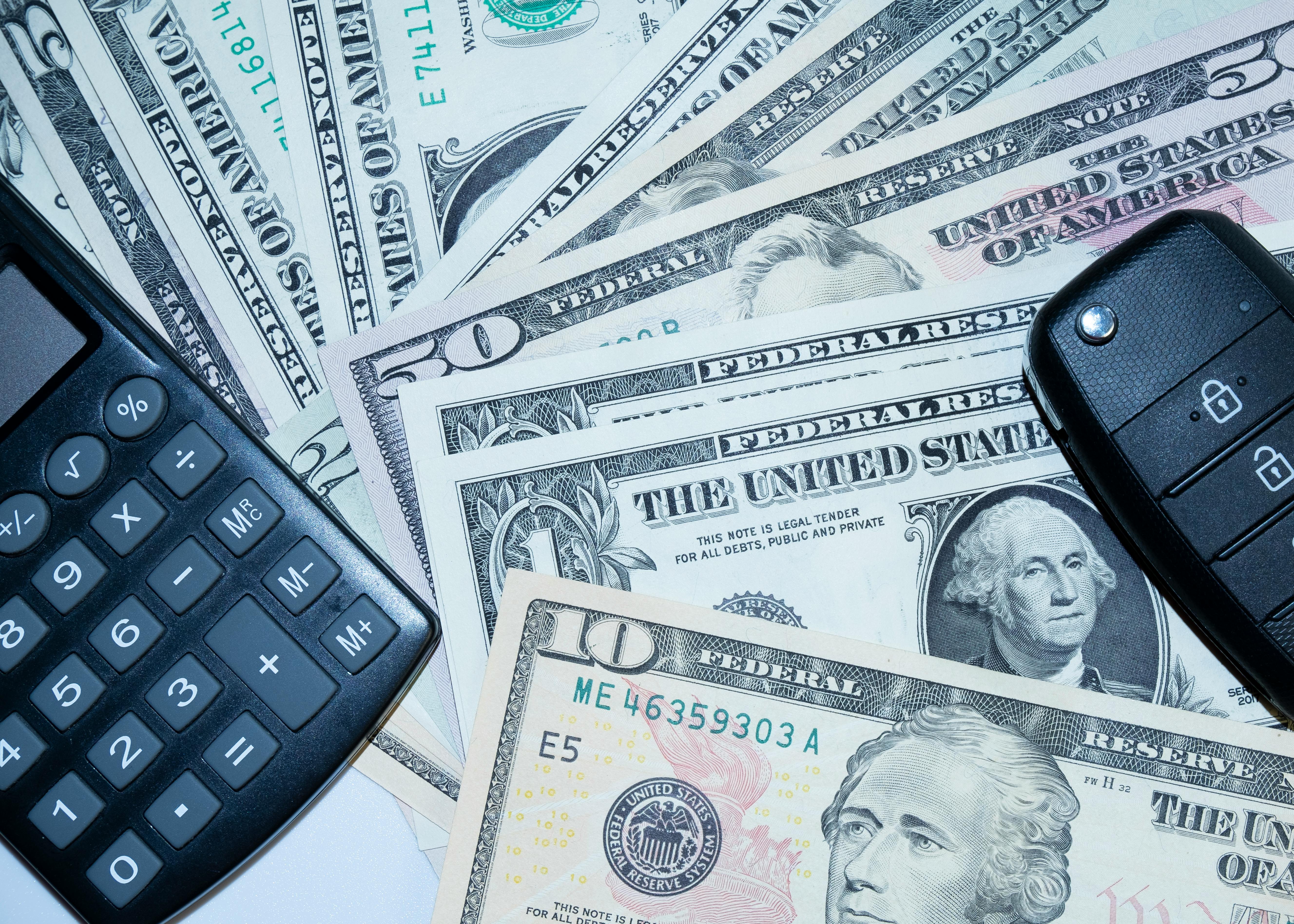
Large purchases depend less on sticker prices than on monthly affordability. That is why interest rates and debt burdens have become central to the pullback. A household might still want a car, a kitchen remodel, or a first home, yet decide against it once the loan payment is calculated. In the current environment, financing costs have turned many aspirations into budget risks. Consumers may tolerate higher prices for groceries or utilities because they must, but they can postpone a vehicle upgrade or a home purchase when the math no longer works.
The auto market offers a clear example. According to reporting by Reuters in February 2026, Americans have increasingly shifted away from premium trims and toward entry-level vehicles as affordability has deteriorated. Automakers have responded by emphasizing lower-cost models and cutting prices on selected vehicles, but even those adjustments have not fully solved the payment problem. NerdWallet, citing Experian and Edmunds data, reported that average monthly car payments reached $748 for new vehicles and $532 for used vehicles for loans originated in late 2025, with Edmunds placing the average new-car payment even higher at $772 in the fourth quarter. Those are not merely large expenses; they are recurring obligations that compete with housing, childcare, healthcare, and credit card bills.
Housing presents the same issue on a larger scale. Reuters reported in March 2026 that existing home sales rose in February as mortgage rates eased, with Freddie Mac’s 30-year fixed rate averaging 6%. Yet a small decline in mortgage rates does not mean housing has become broadly affordable. The National Association of Home Builders said in a February 2026 analysis that 65% of U.S. households could not afford a median-priced new home. Even where affordability has improved modestly, the bar remains high because buyers still face elevated prices, insurance costs, taxes, and down payment requirements.
Debt data reinforce the picture of a consumer under strain. The New York Fed said household debt stood at roughly $18.8 trillion in the first quarter of 2026, with student loan delinquency rising to 10.3% of balances that were 90 or more days delinquent. Earlier Fed reporting also showed elevated stress in credit cards, student loans, and some lower-income geographies. Even when aggregate delinquency rates appear manageable, the distribution matters. Consumers with thinner margins are the first to retreat from discretionary borrowing, and their caution can spread outward as broader uncertainty grows.
The result is a consumer economy increasingly governed by payment sensitivity. Shoppers are not simply asking whether an item is desirable. They are asking whether it is financeable without compromising resilience. In periods of confidence, people often stretch for bigger homes, newer cars, and upgraded appliances. In periods of anxiety, they keep the old car another year, repair instead of replace, and wait for rates, prices, or their own sense of security to improve.
Which purchases households are delaying first

The pullback is not evenly distributed across all categories. Americans tend to cut back first on the purchases that are expensive, deferrable, and symbolically tied to optimism about the future. Homes are the most obvious case because buying one requires confidence in income, job stability, credit access, and neighborhood-level prices. Cars follow closely because they often involve financing at high rates and because many households can extend the life of an existing vehicle. Furniture, appliances, electronics, and home improvement projects also sit squarely in this vulnerable zone: necessary eventually, but often delayable for months or even years.
Survey evidence supports that pattern. The Conference Board’s April 2026 findings showed weakening intentions to buy big-ticket items over the coming six months, even as some overall confidence measures improved slightly. That divergence suggests households are not abandoning the economy in the abstract; rather, they are becoming more selective about where risk enters the family balance sheet. Consumers may still spend on lower-cost treats, travel segments, or services that feel emotionally rewarding, while refusing to commit to a $35,000 car or a 30-year mortgage. Such behavior is typical of defensive consumption, where spending persists but confidence-dependent spending fades.
Automobiles illustrate how quickly consumer priorities adjust under pressure. Reuters reported that buyers have been moving toward simpler, lower-priced trims, while Axios reported in May 2026 that affordability is reshaping car choices and pushing many households toward used vehicles. This is not only a matter of thrift; it is evidence of households recalibrating necessity. A car remains essential for many Americans, especially outside dense urban areas, but the definition of an acceptable purchase has narrowed. Consumers are increasingly willing to sacrifice features, status, and even convenience in exchange for a payment they believe they can manage.
Home-related purchases are also vulnerable because they cluster together. When families postpone buying a house, they often also postpone buying new furniture, large appliances, renovation materials, and décor. That creates secondary effects across multiple industries. A slower housing market therefore does more than reduce home sales; it dampens a network of follow-on expenditures that usually accompany moves, upgrades, and household formation. Even households staying put may defer remodeling projects if they worry that financing costs or job insecurity could make the expense regrettable later.
This selective retreat explains why the economy can look stable from a distance while important stress signals accumulate underneath. Aggregate retail spending may continue to grow, as the National Retail Federation forecasts for 2026, yet the composition of that spending matters greatly. Growth supported by essentials, modest discretionary purchases, and services is different from growth powered by robust appetite for durable goods. When Americans pull back on big purchases, they are expressing not only budget discipline but also diminished confidence in the durability of their own financial future.
What this behavior says about the wider economy

Consumer caution around major purchases matters because household spending is the largest component of U.S. economic activity. The Bureau of Economic Analysis continues to show substantial consumption overall, and March 2026 data indicated increases in spending on both goods and services. But the composition and quality of spending can reveal more than the topline. If consumers continue to spend while becoming more defensive, that pattern may preserve growth in the short term while weakening the sectors most sensitive to financing, confidence, and long planning horizons. In other words, the economy may still move forward, but with less momentum and less breadth.
This kind of pullback is especially important because big-ticket purchases carry multiplier effects. A vehicle sale supports dealers, lenders, insurers, repair networks, and manufacturers. A home purchase supports brokers, movers, contractors, furniture retailers, mortgage providers, and local tax bases. When consumers hesitate in these categories, the economic slowdown is not confined to a single checkout moment. It ripples outward through employment, inventories, credit formation, and business investment decisions. Firms noticing softer demand for high-value items often respond by discounting, reducing production, or delaying expansion plans.
At the same time, anxiety-driven restraint can become self-reinforcing. If households pull back because they fear weaker growth, their reduced demand can help produce exactly the softer conditions they worry about. This dynamic does not guarantee recession, but it raises fragility. The New York Fed’s April 2026 Survey of Consumer Expectations found labor market expectations were largely stable, which is a reassuring sign. Yet stability in expectations is not the same as confidence. Households can believe layoffs are not imminent and still decide that this is not the moment to finance a new SUV or stretch for a larger mortgage.
There is also a distributional story beneath the averages. Middle- and lower-income households feel affordability pressure first because a larger share of income goes to essentials. Higher-income households can often keep spending longer, which helps explain why parts of the consumer economy remain resilient. But that resilience can mask deterioration in the broader base of demand. If mass-market consumers retreat while affluent consumers continue selective spending, businesses may misread the economy as healthier than it is. The weakness appears first in downgraded choices, delayed replacements, and rising sensitivity to promotions rather than in a sudden collapse of all expenditures.
For policymakers and businesses, the key lesson is that caution around big purchases is not a trivial mood swing. It is a structured response to inflation memory, expensive credit, elevated debt, and uncertainty about future income. These are conditions that rarely vanish quickly. Even if rates fall somewhat or confidence indexes improve modestly, households may need a longer period of stability before they resume the kinds of purchases that require faith in the next five or ten years, not merely in the next paycheck.
How consumers and businesses are adapting to a more defensive era

Neither households nor companies are standing still in response to these pressures. Consumers are adapting by trading down, extending replacement cycles, relying more on the used market, and prioritizing liquidity. The car buyer chooses the base trim instead of the premium package. The homeowner repairs an aging appliance rather than replacing the full kitchen. The renter postpones a home search for another lease cycle. These are not isolated examples of penny-pinching. They represent a broader shift toward preserving optionality in an economy that feels less predictable than headline growth figures alone would suggest.
Businesses, in turn, are adjusting product mixes and pricing strategies. Reuters reported that automakers have leaned more heavily into affordability, with some lowering entry prices and emphasizing less expensive configurations. That response acknowledges a basic truth: in a payment-constrained environment, even willing buyers need products that fit tighter monthly budgets. Retailers and manufacturers in other durable-goods categories face a similar challenge. They must decide whether to protect margins, stimulate volume through discounts, or redesign offerings around value. In many sectors, the era of easy upselling has given way to a more pragmatic consumer calculus.
There are limits to how much adaptation can solve. Lower prices or promotional financing can help at the margin, but they cannot fully offset a public that feels worn down by cumulative inflation and uncertain about future costs. Even households whose wages have kept up in narrow statistical terms may still feel poorer because essential bills consume more of their attention and mental bandwidth. Economic behavior is shaped not just by spreadsheets but by memory. A family that has spent several years watching rent, groceries, insurance, and debt service rise will not quickly return to carefree borrowing merely because one survey improves or one rate dips.
Still, the current pullback should not be misunderstood as a simple collapse of consumer demand. It is better understood as a repricing of confidence. Americans are still spending, but they are reserving their strongest scrutiny for purchases that lock them into long commitments. That distinction helps explain why forecasts such as the National Retail Federation’s still project retail growth in 2026 even as sentiment surveys and big-ticket intentions flash caution. The consumer has not disappeared; the consumer has become more conditional.
Whether that caution deepens or fades will depend on several factors over the remainder of 2026: the trajectory of inflation, the stability of employment, the behavior of interest rates, and whether households begin to feel that the worst of the affordability shock is truly behind them. Until then, the retreat from major purchases is likely to remain one of the clearest expressions of economic anxiety in American life. When families stop making the purchases that assume a stable future, they are telling us something essential about how secure that future feels.