

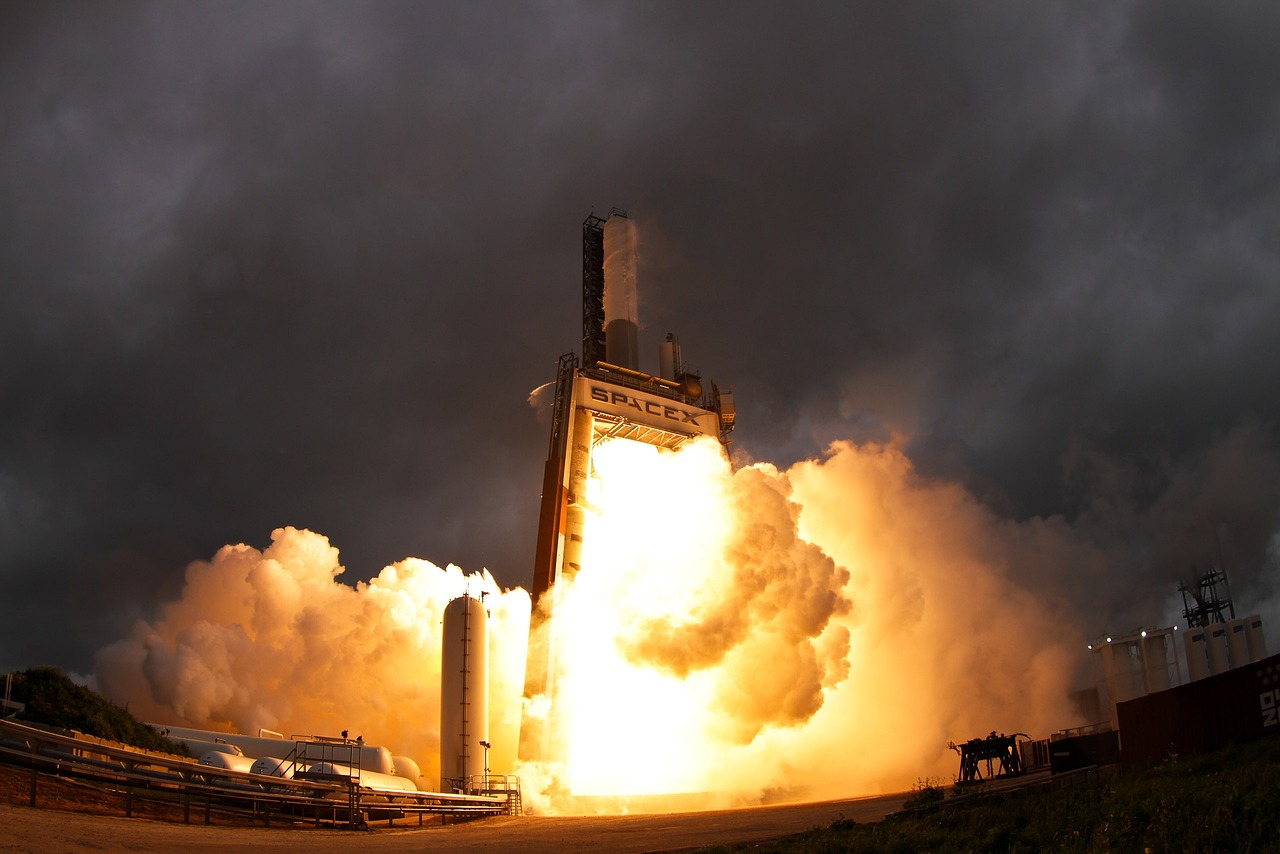
SpaceX can usually turn setbacks into spectacle. This time, the setback may be harder to spin.
The FAA’s latest move to ground Starship lands at an especially awkward moment for Elon Musk, because Starship is no longer just a moonshot engineering project. It has become part of the financial story that could underpin one of the biggest public offerings in market history.
Why the FAA grounded Starship now

The latest grounding followed another Starship mishap, and the FAA has made clear that SpaceX cannot simply fly again on its own timetable. According to the agency and multiple news reports, Starship remains grounded pending a mishap investigation overseen by the FAA after the most recent failure during testing. The regulator’s role is not to certify ambition or speed; it is to protect public safety, surrounding property, and the national airspace. That distinction matters, because Starship’s test program has repeatedly produced debris risks and operational disruption well beyond the launch site.
This is not a theoretical concern. Reuters previously reported that one Starship breakup in March 2025 disrupted about 240 flights, with more than two dozen aircraft forced to divert because of debris concerns. In that same episode, temporary ground stops affected major Florida airports, showing how a rocket failure in Texas can ripple into commercial aviation hundreds of miles away. For the FAA, that turns every Starship mishap into more than a SpaceX engineering problem. It becomes a national transportation and public-safety issue, which naturally triggers a slower, more formal response from regulators.
The agency’s recent public statements show a pattern: it has been willing to let SpaceX continue flying only after corrective actions, license reviews, and environmental obligations are addressed. The FAA has also emphasized in prior Starship investigations that closure of a mishap probe does not automatically mean an immediate return to flight. SpaceX must still satisfy safety-related corrective actions and licensing requirements before another launch is approved. That process can be faster than a full redesign, but it is rarely as quick as Musk’s most aggressive schedules suggest.
The practical effect is that Starship is not grounded merely because it failed. It is grounded because it failed inside a tightly regulated system that now has years of evidence showing Starship problems can affect other aircraft, nearby communities, and sensitive environmental review processes. That is a very different backdrop from the early days of Silicon Valley-style “move fast and break things.” Rockets that break in public airspace invite federal oversight, and the FAA has shown that it is willing to use it.
Why Starship matters so much to SpaceX’s valuation

It would be easy to assume that Starship’s troubles matter less because SpaceX already has a successful launch business built around Falcon 9. But investors do not value SpaceX only for what works today. They value it for what could dominate tomorrow, and Starship is central to that narrative. The vehicle is supposed to lower launch costs, deploy larger payloads, support NASA’s lunar ambitions, and eventually make possible a much larger version of SpaceX’s satellite business. When Starship stumbles, the market is reminded that the future case for SpaceX is still deeply dependent on unproven technology.
That future case is especially important because the company’s likely IPO story is not just “we launch rockets.” It is “we own a growing space-based communications platform and are building the transportation system to scale it dramatically.” Reuters has reported that SpaceX’s move toward a public listing has been driven largely by the rapid expansion of Starlink, including direct-to-mobile ambitions, alongside progress in Starship. That pairing is crucial. Starlink delivers recurring revenue and a telecom-style growth story, while Starship provides the vision of cheaper deployment, more satellites, heavier payloads, and ultimately wider margins.
Recent reporting has also suggested just how big the financial ambitions have become. Reuters reported in late 2025 that SpaceX was looking at a 2026 IPO that could raise more than $25 billion and potentially push the company’s valuation above $1 trillion. Earlier reporting also described insider transactions valuing SpaceX around $800 billion. Even allowing for the usual uncertainty around private-company fundraising and pre-IPO chatter, those numbers place SpaceX in a category where execution risk is scrutinized relentlessly. When a company seeks that kind of valuation, investors stop treating failures as colorful parts of the founder myth and start treating them as variables in a discounted-cash-flow model.
Starship, in other words, is not just a prototype. It is embedded in the premium multiple. If Falcon 9 and Starlink alone were the whole story, SpaceX would still be a remarkable company. But what makes the valuation potentially historic is the promise that Starship unlocks a vastly larger economic moat. Any grounding that delays that promise can directly affect how investors think about timing, capital intensity, and risk.
How a Starship delay could hurt the IPO narrative

The biggest danger for a blockbuster IPO is not bad headlines by themselves. It is narrative drift. IPO investors want a clean story with visible momentum, credible milestones, and few messy unknowns right before pricing. A grounded Starship introduces exactly the opposite. It invites new questions about engineering reliability, regulatory friction, launch cadence, insurance exposure, and whether Musk’s timeline discipline is any better in space than it has been in some of his other ventures.
There is also the issue of timing. If SpaceX or Starlink were to come to market while Starship is in a prolonged investigative or redesign phase, prospective investors would have to price around uncertainty rather than progress. That can reduce enthusiasm among institutional buyers who might otherwise pay top-of-range multiples. A soaring market can forgive a lot, but big IPOs depend on confidence that the next 12 to 24 months will bring catalysts, not bottlenecks. A grounded flagship program makes it harder to present near-term milestones as dependable.
Another complication is that Starship affects more than symbolism. NASA is counting on a version of Starship for future Artemis lunar missions, and the vehicle’s development path influences perceptions of SpaceX’s government relationships and execution credibility. Space reports have noted that the newest Starship version is intended to support deeper-space capabilities, while broader FAA and NASA-linked planning still assumes Starship will play a major role later in the decade. If the vehicle continues to suffer mishaps, investors may start discounting not just timelines but strategic optionality. The dream of Mars is financially distant; the fear of delay is immediate.
That does not necessarily mean an IPO would be derailed. In fact, scarcity and hype can sometimes make troubled but dominant companies even more attractive, especially when revenue growth elsewhere looks strong. But the valuation ceiling could change. Instead of asking how high the offering can go, investors may start asking how much discount they need to absorb regulatory and technical uncertainty. For a company that could be seeking one of the largest offerings ever, even a modest haircut translates into enormous sums.
Why Starlink may still be the real center of gravity

For all the drama around giant rockets, the core commercial engine remains Starlink. That is why many observers still see any eventual flotation of SpaceX or a Starlink-related listing as fundamentally a telecom and infrastructure story wrapped in a space narrative. Starlink’s appeal is obvious: recurring subscription revenue, global reach, strategic relevance, and expansion into direct-to-device connectivity. Those are qualities public investors tend to reward more predictably than hardware moonshots.
This is also why Musk has historically been cautious, or at least selective, about IPO timing for Starlink. Reuters reported in 2023 that Musk denied an imminent Starlink IPO after reports suggested one could come as soon as 2024. Even then, the broader assumption among analysts was that a listing would make more sense once cash flows became more stable and easier to forecast. That logic has not changed. If anything, the larger and more ambitious the deal becomes, the more management needs to show that the listing is not dependent on perfect execution in an adjacent rocket program.
Still, Starship and Starlink are not cleanly separable in investors’ minds. SpaceX has spent years selling a vertically integrated vision in which launch capability, satellite deployment, and long-term planetary logistics reinforce one another. When Starship is grounded, it chips away at that integrated story. It suggests that Starlink may continue growing, but perhaps without the same future cost advantages, deployment flexibility, or strategic dominance that the company has implied. Investors can tolerate a delay; what they dislike is discovering that synergies may arrive later and cost more than expected.
The counterargument is that Starlink may now be strong enough to carry the valuation on its own, especially if public markets remain hungry for rare scale assets. If SpaceX can show robust subscriber growth, improving margins, and sustained demand from consumers, enterprises, militaries, and mobile partners, the business may still command extraordinary interest. But even in that scenario, the grounded Starship hangs over the roadshow as the unavoidable question every portfolio manager will ask.
What happens next for Musk, regulators, and investors

The next phase will be determined by documents, engineering fixes, and regulator confidence, not social-media bravado. The FAA has shown repeatedly that Starship mishap closures require identified causes, corrective actions, and updated licensing steps before launches resume. It is also balancing those safety decisions against wider environmental and airspace obligations at both Texas and Florida launch infrastructure. In parallel, the agency has continued refining its broader commercial-space framework, including streamlined licensing under Part 450 for some operators, but that streamlining does not amount to a free pass after a mishap.
SpaceX’s best-case outcome is still clear. It completes the investigation quickly, satisfies the FAA, demonstrates credible technical fixes, and returns Starship to flight before any formal IPO process gathers speed. In that scenario, the grounding becomes a temporary bruise rather than a thesis-breaking event. Investors are often willing to forgive test failures when a company can show fast learning loops and a regulator willing to sign off on the next step. That has been the rhythm of modern SpaceX for years.
The more difficult outcome is a drawn-out pause accompanied by fresh environmental disputes, additional hardware problems, or a perception that Starship’s roadmap is slipping faster than management admits. The FAA’s current Starship project pages show how much of the program now sits inside environmental assessments, license modifications, and site-specific federal review. That process does not kill innovation, but it does impose calendar reality. A company can promise a revolution; the government still controls whether it gets to launch the next test.
For Musk, this creates a familiar tension. He wants investors to believe in a future so large that conventional valuation methods seem too small. Regulators want evidence that each step toward that future can be taken safely. As long as Starship is grounded, the regulator’s framework is temporarily winning. And if SpaceX really is moving toward the biggest IPO in Musk’s orbit, the market will notice that the rocket at the heart of the dream is once again waiting for permission to fly.