

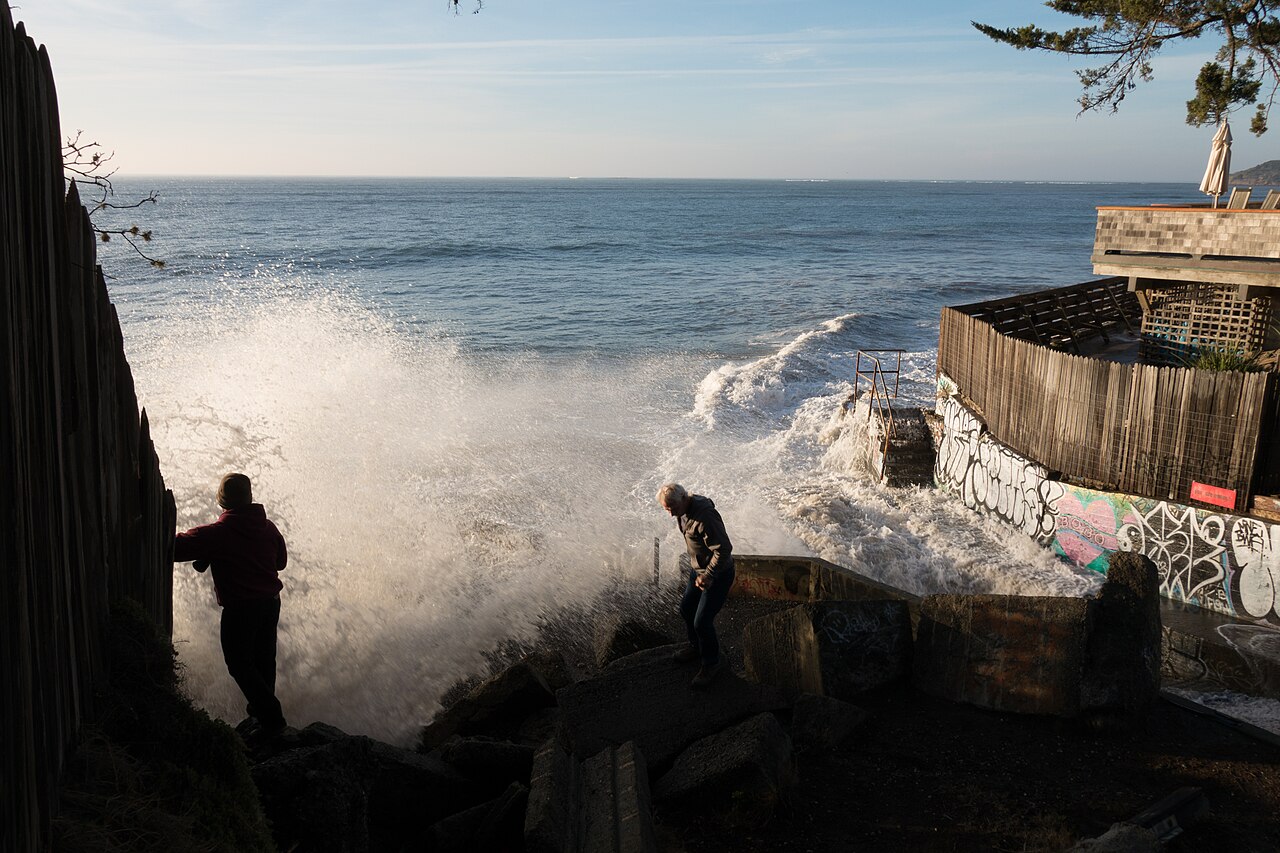
West Coast beach hazards are rising again as summer crowds head to the shoreline during a stretch of active surf conditions. In California, Oregon and Washington, weather officials are warning that sneaker waves can surge far higher than beachgoers expect and, in some places, breaking waves are forecast to reach 10 feet. The alerts come from National Weather Service offices that said the danger can persist even during long lulls between sets.
California beaches face the highest verified surf in this round of alerts
The National Weather Service extended a Beach Hazards Statement on Monday, July 27, for parts of the California coast, warning that long-period southerly swell would increase the risk of sneaker waves and strong rip currents through Saturday afternoon. In the San Francisco Bay Area and Central Coast forecast zones, the agency said breaking waves could reach up to 10 feet along some south- and southwest-facing beaches. That is the highest specific wave height confirmed in the current advisory language.
The California statement covers Pacific Coast beaches including the San Francisco shoreline, Point Reyes National Seashore, the San Francisco Peninsula coast, Northern Monterey Bay and the Big Sur coast, according to the weather service. Separate Southern California advisories issued by the Los Angeles/Oxnard and San Diego offices describe hazardous surf and beach conditions as well, though those products list lower surf ranges than the 10-foot peaks cited farther north. The National Weather Service said the impacts include sneaker waves, strong rip currents and large breaking waves along the shoreline.
Forecasters also identified the source of the swell in Northern and Central California. An updated Beach Hazards Statement from the San Francisco office said the swell was being generated by tropical cyclones in the eastern Pacific, a pattern that can send longer-period energy toward the coast even when local weather appears relatively quiet. The agency has kept that hazard messaging in place across several recent forecast updates.
In Oregon and Washington, National Weather Service products describe sneaker waves as a recurring life-threatening risk for visitors on the coast, even when surf does not look extreme at first glance. A Portland office surf-zone forecast issued July 26 said there is a daily threat to life for visitors on the Oregon and Washington coast and urged people to remain vigilant around the waterline. The office’s coastal hazard criteria also states that a Beach Hazard Statement for sneaker waves is issued when a long-period swell has the potential to run farther up the beach than expected.
What is confirmed is that forecasters in the Pacific Northwest are warning about the same type of hazard now affecting California: long-period swell that can produce sudden run-up on beaches. What is not yet clear from the public-facing products is a comprehensive beach-by-beach list of every Oregon and Washington shoreline where the risk is elevated in this event. The National Weather Service has not released one combined statewide list covering all affected beaches in both states.
That means local hazard details can vary by forecast office and stretch of coast. Public safety messaging in the Northwest continues to emphasize shoreline awareness rather than a single surf-height figure for every beach. Unlike the California advisories that specifically cite waves up to 10 feet in some locations, the Oregon and Washington materials reviewed here focus more on the nature of sneaker waves and the danger they pose than on one uniform peak height.
The National Weather Service defines sneaker waves as waves that run significantly farther up the beach than preceding waves, often after 10 to 20 minutes of relatively smaller surf. That timing is central to the danger: beachgoers may move closer to the water during a lull and then be caught off guard by a much larger surge. Federal safety guidance says sneaker waves can run at least 150 feet into the dry beach.
In the Northwest, the weather service has repeatedly emphasized that cold water adds to the risk once someone is knocked down or swept in. The agency’s public safety page says victims can lose control of their limbs in a matter of seconds in frigid water, which helps explain why warnings focus not only on wave size but also on positioning near logs, rocks, jetties and steep beaches. Oregon hazard criteria similarly describe sneaker waves as surges that can arrive without warning and catch inattentive people off guard.
For residents and visitors, the practical meaning is that dangerous beach conditions may continue even when skies are clear and the ocean seems briefly calm. The current California statement remains in effect through Saturday afternoon, while Oregon and Washington forecast messaging indicates an ongoing elevated hazard tied to long-period swell. Across all three states, the official guidance remains consistent: the shoreline risk is real even before the biggest wave arrives.