

The warning was blunt, and it was meant to be. When health officials said Ebola cases could surge past 20,000 without immediate action, they were not trying to provoke panic so much as force the world to confront how badly the outbreak was outrunning the response.
That message, delivered during the 2014 West African Ebola epidemic, marked one of the most important turning points in modern outbreak communication.
Why the 20,000-case warning mattered so much

By September 2014, the Ebola epidemic in West Africa had already become unlike anything the world had seen before. The outbreak began in Guinea and quickly spread into Liberia and Sierra Leone, exposing weak surveillance systems, limited laboratory capacity, poor infection control, and health services that were already under strain. According to the CDC, the official case count and death toll had already exceeded the combined totals from all previous Ebola outbreaks, even as those official numbers still underestimated the true scale of transmission.
The warning that cases could surpass 20,000 by early November came from a World Health Organization study reported widely at the time and echoed the broader concern of U.S. and international health officials. Reuters reported that without a rapid scale-up in response, West Africa could hit 20,000 cases within roughly six weeks, with Liberia expected to bear about half the burden. WHO leaders had already said earlier in September that the outbreak was the largest, most complex, and most severe Ebola emergency they had ever seen, and that stopping it in 6 to 9 months would require a massive international response.
What made the warning so significant was not just the number itself. It was the recognition that the epidemic curve was moving faster than governments and aid systems could react. WHO officials said they lacked enough doctors, nurses, drivers, contact tracers, ambulances, and beds. Families were often caring for the sick at home because treatment units were full or too far away, creating ideal conditions for the virus to keep spreading through households and communities.
The CDC’s own public posture reflected the same urgency. In early September 2014, CDC Director Tom Frieden warned that the epidemic was outpacing the current response. That phrasing mattered. It signaled that the problem was no longer simply a dangerous outbreak, but a race the world was losing. The 20,000-case threshold became a vivid way to explain that delay itself had become one of the epidemic’s most powerful accelerants.
What was driving the outbreak out of control
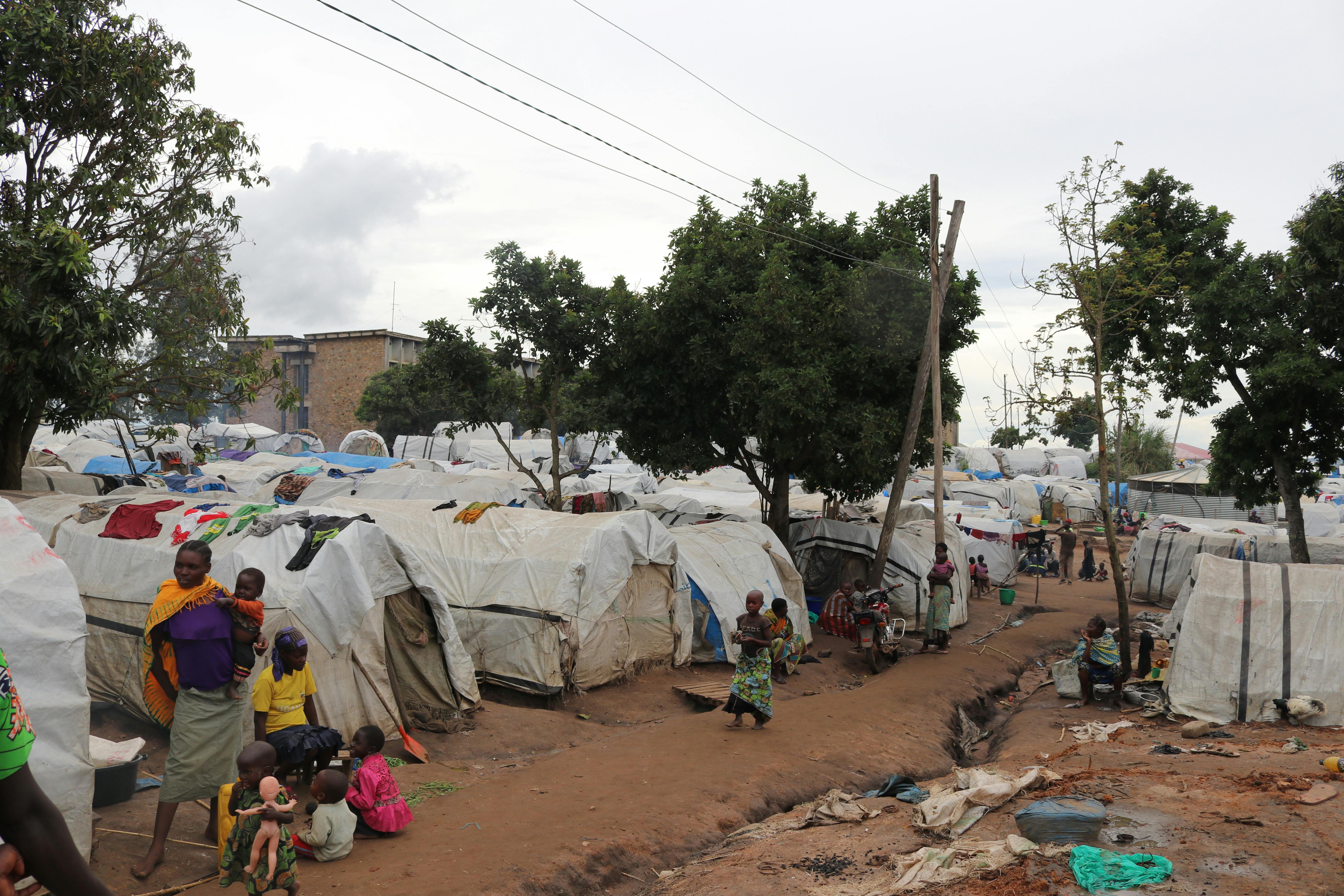
Ebola spreads through direct contact with the bodily fluids of an infected person, which means outbreaks can often be contained when cases are identified quickly, patients are isolated, contacts are traced, and burials are handled safely. In West Africa in 2014, each one of those control points was under pressure. The affected countries faced fragile public health infrastructure, limited staffing, and communities where the sudden appearance of outside responders could trigger fear, distrust, or avoidance.
Liberia emerged as the hardest-hit country in the most explosive phase of the outbreak. Reuters reporting from September 23, 2014, described a severe shortage of foreign medical staff and a dangerous gap between existing treatment capacity and actual need. Monrovia had only about 350 to 400 Ebola bed spaces at the time, far below the target of 2,000. That shortfall meant infectious people could remain in neighborhoods, be cared for by relatives, and continue transmitting the virus long before receiving formal care.
Another factor was undercounting. Public health officials repeatedly cautioned that the official totals lagged reality. The CDC said case and death figures greatly underestimated the actual scale of the crisis, while later CDC modeling explored far worse scenarios if transmission continued unchecked. In late September 2014, CDC projections suggested that if trends continued without aggressive intervention, reported cases could reach 550,000, and the true number of infections could be as high as 1.4 million by January 2015 once underreporting was considered. The 20,000 warning, alarming as it was, now looks almost conservative compared with those worst-case estimates.
Community practices also played a major role. Ebola can spread during traditional funeral and burial rituals when mourners come into close contact with the body. At the same time, fear of treatment centers, stigma toward patients and survivors, and rumors about the disease sometimes led families to hide sick relatives. WHO officials stressed that many infections were occurring in the community and that some people were unwilling to identify themselves as ill, while response teams lacked the ambulances and personnel needed to move suspected patients safely.
This was why the outbreak seemed to expand faster than conventional aid efforts. The virus itself was deadly, but the deeper danger came from the interaction of biology, mistrust, weak systems, and delay. Once those forces aligned across multiple countries at once, each missed case created more contacts, more funerals, more household exposure, and more pressure on a health system already nearing collapse.
How the CDC and global responders tried to change the trajectory

The CDC response quickly became the largest in the agency’s history. In its later review of the epidemic, the agency said approximately 1,450 CDC responders were deployed to Guinea, Liberia, and Sierra Leone between July 2014 and the end of March 2016. Staff supported ministries of health with surveillance, case investigation, laboratory work, infection control, transport systems, community engagement, and safe-burial operations. The scale of that effort reflected how thoroughly the outbreak had changed the expectations for international epidemic response.
During the peak emergency period, CDC officials also worked to strengthen preparedness beyond West Africa. The agency said it was educating U.S. health care providers to consider Ebola in patients with compatible symptoms who had returned from West Africa within 3 weeks. It updated infection-control guidance for hospitals, strengthened lab networks and surveillance systems, and enhanced entry screening capacities. Those domestic measures became especially important as concern rose over imported cases, including the first Ebola diagnosis made in the United States on September 30, 2014.
At the international level, WHO and the United Nations argued that containment was still possible, but only with a much larger surge. WHO leaders said in Washington on September 3, 2014, that the outbreak could be stopped in 6 to 9 months if a massive response was implemented. They estimated the effort would require several thousand people, a response scaled up by 3 to 4 times, and at least $600 million. The urgent needs ranged from contact tracing and case management to transport, communications, logistics, payment of health workers, and maintaining air and sea access for supplies.
One of the key lessons from the period was that outbreak control is not only a medical challenge. It is also an operational one. Treatment units have to exist before they are overwhelmed. Laboratories must return results fast enough to drive isolation decisions. Burial teams have to be trained, equipped, and trusted. Community leaders need to be involved in communication so messages are not dismissed as foreign interference. The response that eventually took shape was broader and more integrated than many earlier Ebola interventions because the epidemic had already shown that narrow tactics were not enough.
That more aggressive strategy ultimately helped change the direction of the crisis. But the delay before the surge was costly. The 20,000-case warning was, in effect, a public admission that the response architecture had to be rebuilt while the epidemic was already accelerating.
What the world learned from the countries that contained spread

Not every country that saw Ebola importation experienced sustained transmission. Nigeria became one of the clearest examples of what rapid, organized containment could accomplish. According to the CDC’s outbreak history, an infected traveler arriving from Monrovia introduced Ebola into Lagos, one of Africa’s largest cities. Some responders were infected, raising fears of explosive urban spread. Yet emergency measures focused quickly on establishing an Ebola treatment unit, training caregivers, and identifying and monitoring contacts.
The outcome was striking. Nigeria recorded 20 cases and 8 deaths during the West Africa epidemic, and the outbreak was confined to two cities. CDC says that rapid response prevented wider spread through Nigeria and into other parts of Africa. Senegal saw a similarly limited episode, with a single imported case and no additional spread after contacts were identified and monitored promptly. Mali also prevented broader transmission after an infected traveler entered from Guinea.
These examples matter because they show that Ebola is not unstoppable when the public health basics are strong. The contrast with Guinea, Liberia, and Sierra Leone was not about the virus behaving differently. It was about whether authorities could find cases fast, trace contacts thoroughly, isolate patients safely, and communicate clearly enough to win public cooperation. Where those capacities existed or were built quickly, chains of transmission could be broken.
The same principle applied inside the hardest-hit countries, though often more unevenly. As the response matured, international agencies and national governments built more treatment capacity, expanded testing, increased surveillance, and improved training for local response teams. CDC later reported that its laboratory in Bo, Sierra Leone processed more than one third of all specimens during the epidemic and tested roughly 26,000 specimens before closing in October 2015. That kind of capacity mattered because an outbreak cannot be managed effectively if suspected cases wait too long for confirmation.
The lesson was sobering but practical. The world did not lack knowledge of how to stop Ebola. It lacked enough people, equipment, money, trust, and speed in the places that needed them most. The countries that avoided major spread offered a proof of concept: decisive public health action works. The tragedy in West Africa showed what happens when that action arrives late.
The lasting legacy of the warning and the outbreak
In the end, the West Africa epidemic became the largest Ebola outbreak in history. CDC records list 28,610 reported cases and 11,308 deaths across the epidemic in Guinea, Liberia, and Sierra Leone. WHO declared the outbreak a Public Health Emergency of International Concern in August 2014, and the broader epidemic was eventually declared over in June 2016, though sporadic flare-ups occurred after main transmission had been interrupted.
Seen in hindsight, the 20,000-case warning served several purposes at once. It was a forecast, a policy tool, and a moral alarm. It translated exponential growth into a number broad audiences could grasp. It told donor governments that incremental aid would fail. And it highlighted a central truth of epidemic control: when response lags behind transmission, every day of hesitation expands the eventual human cost.
The warning also changed how many institutions talk about outbreaks. Public health agencies became more willing to discuss scenario modeling openly, including worst-case possibilities, when trying to mobilize urgent action. That approach carries risks because large numbers can be misunderstood as destiny. But the Ebola crisis showed the opposite danger as well: underplaying a fast-moving epidemic can delay the very actions needed to prevent catastrophic outcomes.
Perhaps the most enduring lesson is that preparedness cannot begin after a crisis has already reached international headlines. The CDC’s later review makes clear how much had to be built during the emergency itself, from surveillance systems to lab capacity to trained field teams. Once an outbreak is doubling faster than beds, ambulances, burial teams, and lab results can be scaled, authorities are no longer simply managing disease. They are trying to catch up with it.
That is why the original warning still resonates. It was not just about 20,000 cases. It was about the narrow window in which decisive action can still bend an epidemic’s trajectory. In West Africa, that window nearly closed. The fact that the world eventually forced it back open came at an immense cost, and it remains one of the clearest reminders that in public health, urgency is often the difference between containment and catastrophe.