

As the White House expands its efforts to influence how American history is presented during the nation’s 250th anniversary period, the Smithsonian has become a new flashpoint in that debate. In Washington, the latest step is not a change inside the museum itself, but an order to place federal warning signs on sidewalks outside the Smithsonian’s National Museum of American History. The action underscores the legal and operational line between the federally supported Smithsonian and the public land around it.
Trump’s order targets the space outside the museum
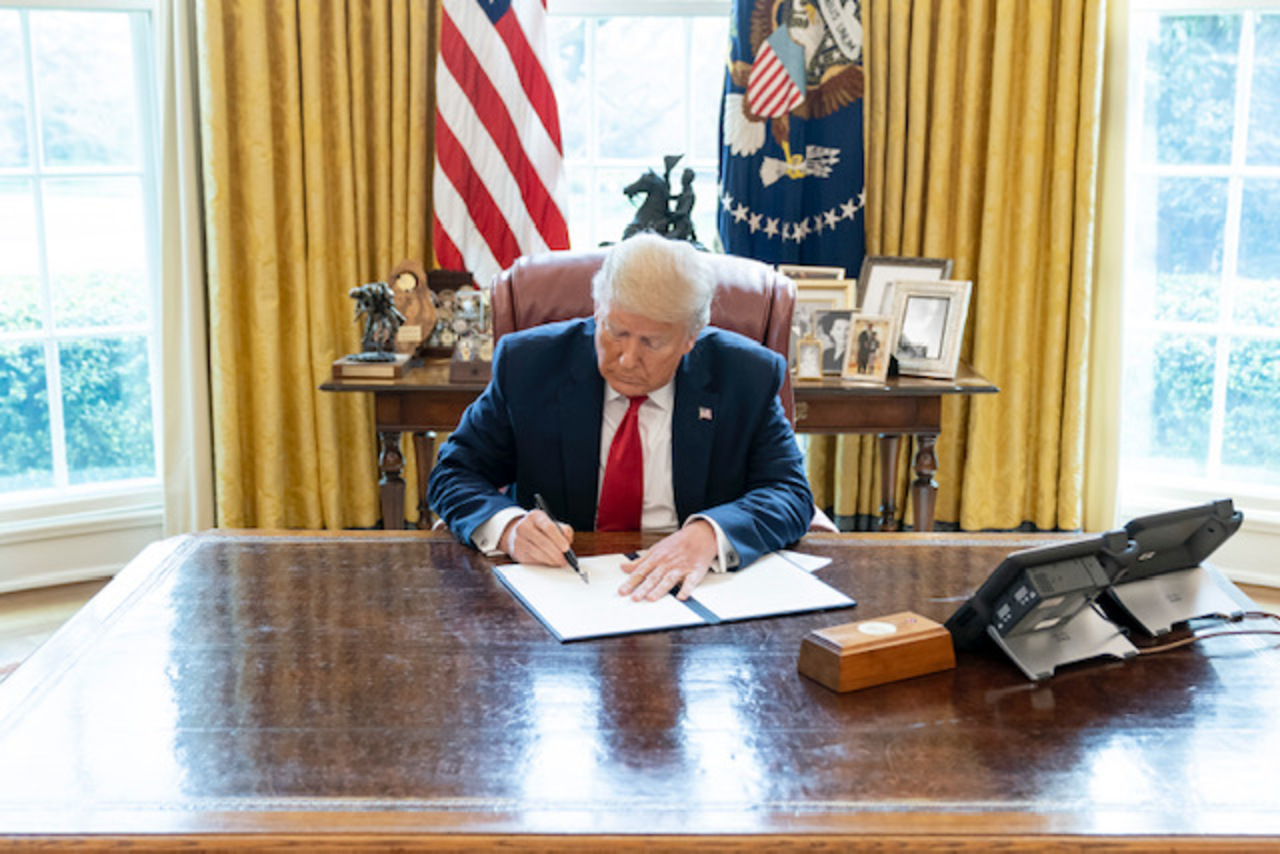
President Donald Trump signed an executive order on July 24 directing the National Park Service to install temporary signage and possibly additional outdoor displays on federally maintained sidewalks and walkways outside the National Museum of American History, according to the White House order described by the Associated Press, CBS News and Reuters. Those signs are intended to tell visitors that some exhibits inside the museum contain what the administration calls inaccurate information and to point readers to a White House report released on July 4.
The order focuses on public space controlled by the National Park Service rather than on museum galleries themselves. Reporting by CNN, AP and Fox News said the administration chose that route because the Smithsonian is governed by its own Board of Regents and museum leadership, not by direct day-to-day presidential control over exhibit content. That distinction is central to the administration’s approach.
The White House tied the move to a 162-page Domestic Policy Council report criticizing the museum’s presentation of U.S. history. The order also says the museum has failed to properly honor the 56 signers of the Declaration of Independence during the 250th anniversary year, according to AP and other outlets that reviewed the text.
The immediate impact is local to the National Mall, where the sidewalks around several Smithsonian sites are maintained by the National Park Service. CNN and NBC Washington reported that the order specifically contemplates signs or temporary exhibits on NPS-managed land used by the public, meaning visitors in Washington could see administration-approved messaging before they enter the museum.
What is confirmed is the directive itself and the federal agencies named to carry it out. What is not yet known is when the signs will appear, how many will be installed, what final wording they will use, or whether the plan will extend beyond the American history museum to other Smithsonian properties on the Mall. The Smithsonian told CBS News it had no comment at the time of publication.
Museum leadership has publicly pushed back on the White House critique. AP reported that Anthea M. Hartig, director of the National Museum of American History, defended the institution’s approach during congressional hearings this week, saying the museum’s work adds evidence, voices and objects that earlier tellings left out. That means Washington visitors may soon encounter a visible dispute between museum curators and the administration at the building’s entrance, even if the exhibits inside remain unchanged.
The broader context is Trump’s long-running push to reshape federal cultural and historical messaging. AP and NBC reported that this latest order builds on a March 2025 directive aimed at Smithsonian funding for programs the administration said promoted divisive narratives or improper ideology. The July 24 action goes further in public presentation, but still stops short of a direct exhibit rewrite ordered by the president.
That limit reflects the Smithsonian’s governance structure. The institution operates as a trust instrumentality with its own regents and secretary, and coverage by The Atlantic, AP and Reuters indicates that structure prevents the White House from simply editing displays at will. The administration instead turned to land under Interior Department and National Park Service jurisdiction, where it has clearer authority over signs and temporary installations.
For residents and visitors in Washington, the practical takeaway is straightforward: the museum remains open, and the order concerns exterior federal space rather than a confirmed immediate overhaul of indoor exhibits. Further changes inside the Smithsonian would likely require action by museum leadership or its governing structure, while the sidewalk signs can move forward through executive branch agencies if the order is carried out as written.