

Rising fuel prices are doing more than making trips to the gas station painful. They are reshaping how Americans shop, what they skip, and how far each paycheck can stretch.
Why Walmart’s warning matters so much

When Walmart talks about consumer stress, the broader market pays attention. That is because the company serves a vast cross-section of U.S. households, with especially deep reach among budget-conscious shoppers buying groceries, cleaning supplies, pharmacy items, and other necessities. Its scale gives executives a close-up view of behavior changes that often show up in earnings calls before they become obvious in government data or economic headlines.
Doug McMillon has made versions of this point before during inflationary periods, and the underlying message is consistent: lower-income shoppers feel fuel inflation first and most intensely. In 2022, Reuters reported that Walmart cut its profit outlook after higher fuel and labor costs hit margins, while McMillon said food and fuel inflation created more pressure than the company expected. Around that same period, company executives described customers shifting more of their spending toward essentials and away from general merchandise such as apparel and home goods.
That pattern remains highly relevant because fuel is not just another household expense. For many families, gasoline is a near-fixed cost tied to commuting, school drop-offs, medical visits, and basic errands. When gas rises sharply, there is no easy substitute in much of suburban and rural America. The result is a squeeze that leaves less room for everything else in the budget, from snacks and school clothes to small household upgrades.
Walmart’s own recent results reinforce why its commentary matters. In its May 21, 2026 first-quarter earnings release, the retailer said U.S. comparable sales growth, excluding fuel, was supported by grocery and general merchandise gains, with market share gains led by upper-income households. That detail is telling. Walmart is still attracting wealthier shoppers looking for value, but the company’s read on lower-income pressure suggests the customer base is not moving in sync. Some households are trading down by choice, while others are doing it out of necessity.
How fuel costs ripple through a household budget
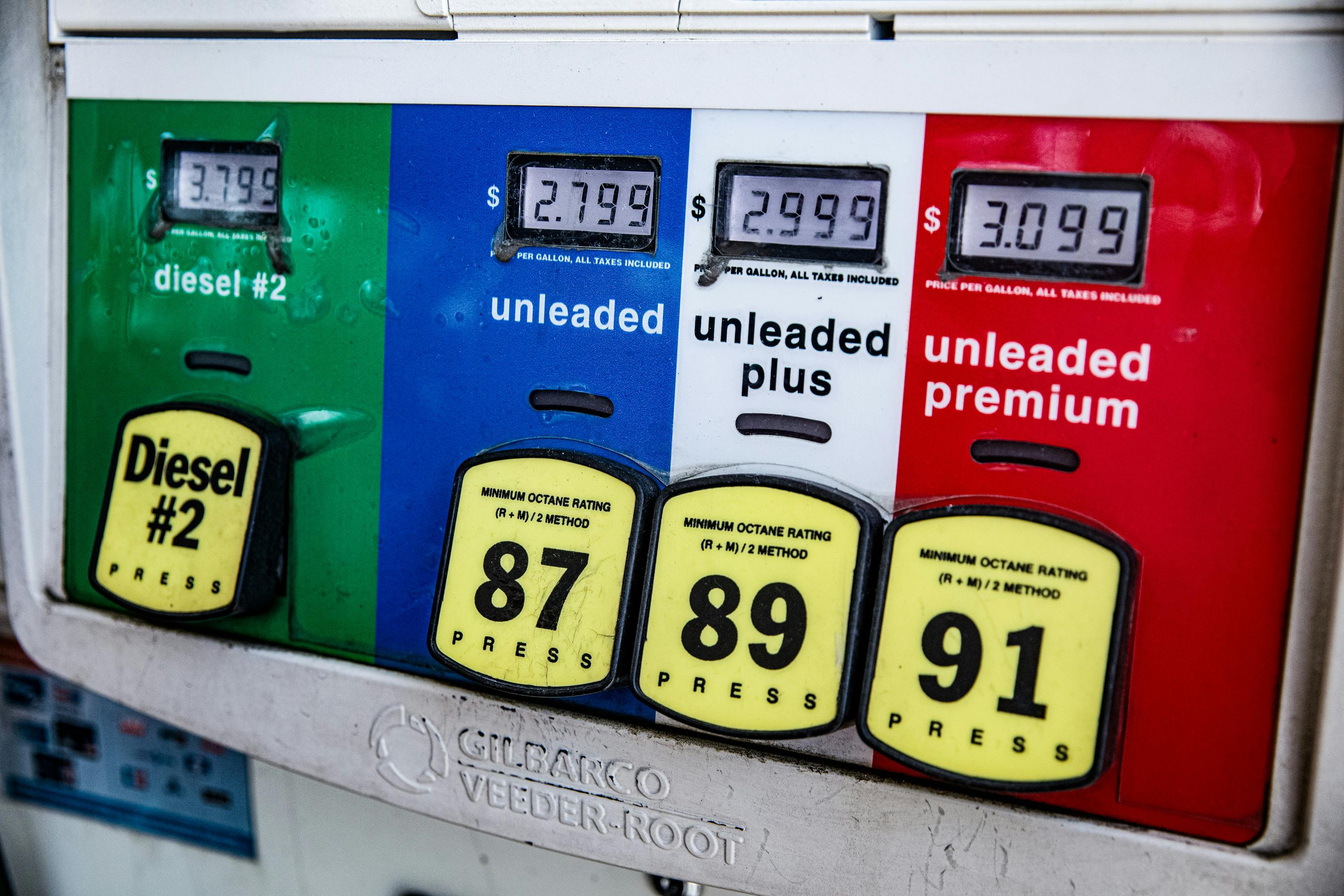
Fuel costs affect household finances in two ways at once. The first is obvious: families spend more directly at the pump. The second is more subtle but equally important: transportation costs move through the supply chain, influencing the prices of food, consumer goods, and deliveries. That means even shoppers who drive less still feel the impact when retailers and suppliers absorb or pass along higher shipping and logistics expenses.
Walmart has spoken openly about this dynamic in the past. During its 2022 earnings period, executives said fuel costs alone came in far above expectations, with Reuters and trade publications highlighting a $160 million fuel overrun in the quarter. That was not just a corporate accounting problem. It was a sign that higher energy prices were affecting both the retailer’s cost structure and the customer’s wallet at the same time, narrowing the margin for error on both sides of the checkout lane.
For lower-income families, this kind of double hit is especially damaging because a larger share of their income already goes to essentials. Gasoline, rent, food, utilities, and insurance are not flexible in the same way entertainment or travel spending might be. If one category jumps suddenly, the adjustment tends to come from the remaining sliver of discretionary money. That is why retailers often see trading down first in brand choice, then in pack size, and finally in total items purchased.
Recent fuel data show why the issue has returned to the foreground. AAA said in spring 2026 that the national average for regular gasoline climbed above $4 a gallon for the first time in four years, and later updates pushed the figure well above $4.50 at points in May. Those levels remain below the June 2022 record, when AAA’s national average topped $5, but they are still high enough to alter shopping behavior, especially for households living paycheck to paycheck.
What Walmart is seeing inside its stores

The most important part of Walmart’s message is not simply that inflation exists. It is how inflation changes behavior inside the store. When lower-income customers come under pressure, they tend to prioritize food and consumables first, then delay purchases in higher-margin discretionary categories. That is exactly the kind of mix shift that can support sales while weakening profitability, because groceries bring people in but generally carry thinner margins than apparel, home décor, or electronics.
This dynamic showed up clearly during earlier inflation spikes. Reuters and other coverage of Walmart’s 2022 results noted that customers were buying more lower-margin basics while pulling back on categories such as clothing and sporting goods. Retail analysts also pointed to shoppers switching from national brands to private-label alternatives in deli meats, dairy, and other staple areas. These are not cosmetic changes. They are classic indicators of financial strain among households trying to preserve routine purchases while cutting cost per item.
More recent Walmart reporting suggests the company is still navigating a bifurcated customer environment. In the first quarter of fiscal 2027, Walmart said market share gains were led by upper-income households, underscoring that value-seeking behavior now reaches far beyond its traditional core customer. That helps the retailer’s top line, but it also complicates the picture. A store can be winning with affluent bargain hunters even as long-standing lower-income shoppers are buying fewer extras and becoming more selective at checkout.
For investors and economists, this is why Walmart’s commentary carries such weight. It captures not just aggregate spending, but the composition of spending. A headline showing resilient retail sales can hide meaningful weakness underneath if consumers are merely reallocating dollars toward groceries, gas, and medicine. Walmart’s scale gives it unusual visibility into those shifts, particularly in communities where inflation is not an abstract macroeconomic story but a weekly budgeting exercise.
There is another reason Walmart’s view matters: the company often responds quickly with tactical pricing, promotions, and inventory changes. In prior periods, executives said they worked with suppliers on pack sizes, order timing, and cost controls to keep prices competitive. That kind of hands-on adjustment suggests the company sees pressure not as a temporary talking point, but as a real constraint on what millions of customers can afford.
Why lower-income Americans feel the pain first

The phrase “lower-income consumers are struggling” can sound broad, but in practice it describes a very specific math problem. Households with less financial cushion have fewer ways to absorb a jump in recurring costs. They are less likely to have large savings balances, more likely to carry higher borrowing costs, and more exposed to every increase in fuel, food, rent, and utilities. When those categories rise together, the stress compounds quickly.
Research and official survey data support that idea. The Federal Reserve Bank of New York reported in early 2025 that expected price increases for gas, food, medical care, education, and rent all moved higher, with the rise in household spending expectations driven by households earning below $100,000. The Cleveland Fed later found that lower-income households were hit hardest by post-pandemic inflation, even if wage gains eventually offset some of the damage by the end of 2024. The key point is that the burden landed unevenly from the start.
Transportation data tell a similar story. The Bureau of Transportation Statistics has noted that lower-income households are more likely to change behavior when gasoline prices rise, whether by skipping trips, combining errands, or turning to alternative transportation when available. That sounds manageable on paper, but in many communities it translates into real sacrifices: fewer family visits, postponed appointments, reduced job-search flexibility, and more careful route planning just to avoid burning another gallon.
Retail executives across sectors are seeing the same pressures emerge again. Recent reporting from the Associated Press said major consumer companies, including Walmart, McDonald’s, and Dollar General, have pointed to visible cutbacks by lower-income customers as fuel and other household costs climb. In other words, Walmart is not an outlier sounding an isolated alarm. It is part of a broader chorus from businesses that interact with cost-sensitive consumers every day.
That is what makes the warning significant. It is not just about whether shoppers are still spending. It is about the quality of that spending, the trade-offs behind it, and how long households can keep absorbing higher everyday costs before broader economic weakness begins to show through.
What this means for the economy and for shoppers next

Walmart’s message lands at an important moment for the U.S. economy. Consumer spending has remained more resilient than many forecasters expected, but resilience does not mean comfort. Households can keep spending while becoming more financially fragile, relying on tax refunds, timing purchases carefully, or cutting nonessential items to preserve the basics. That is often how strain first appears: not in a dramatic collapse, but in quieter shifts in behavior.
For the economy, that matters because lower-income households tend to spend a larger share of every dollar they earn. When they retrench, the effects ripple outward to restaurants, apparel chains, convenience stores, travel businesses, and local service providers. Discretionary categories usually feel the pressure first. If fuel stays elevated long enough, the drag can spread well beyond retailers that sell groceries and household necessities.
For Walmart itself, the outlook is mixed rather than uniformly negative. High fuel and food inflation can strengthen its value proposition and pull in higher-income shoppers searching for lower prices. The company’s recent earnings releases show that this is already happening. But that advantage coexists with a more sobering reality: the customers who depend on Walmart most are often the ones with the least room to absorb another spike in everyday costs.
For shoppers, the practical takeaway is straightforward. Rising fuel prices do not stay confined to the gas station. They shape weekly grocery lists, brand choices, trip frequency, and the willingness to buy anything beyond the essentials. That is why Walmart’s warning resonates. It reflects the lived reality of households that are not necessarily falling behind all at once, but are being forced into narrower and narrower choices.
If fuel prices ease, some of that pressure could fade quickly. If they remain elevated, Walmart and other large retailers will keep serving as early indicators of stress in the consumer economy. And when a company with Walmart’s breadth says lower-income Americans are struggling, it is usually worth treating that as more than earnings-call color. It is a signal that the squeeze on the American household budget is real, visible, and still unfolding.