

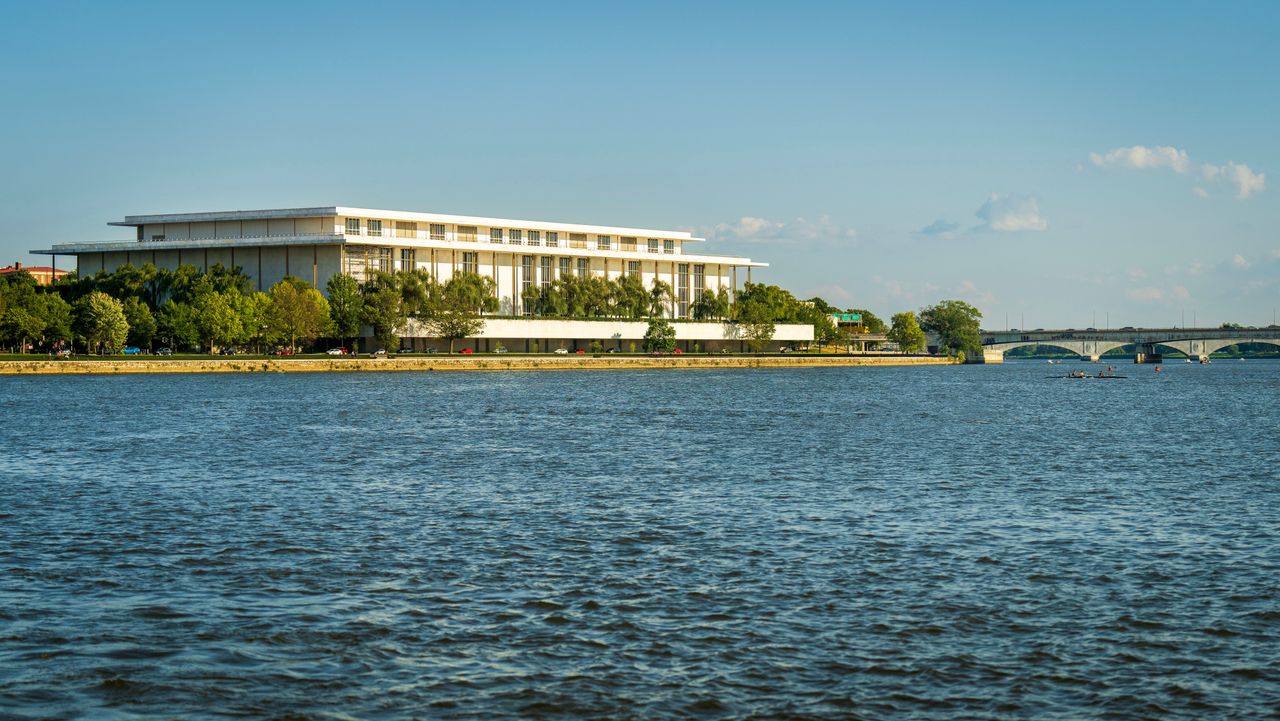
The letters were still visible for part of the night, but the outcome was no longer in doubt. By today, officials said, President Donald Trump’s name would be gone from the Kennedy Center.
A deadline arrived after the courts closed the door
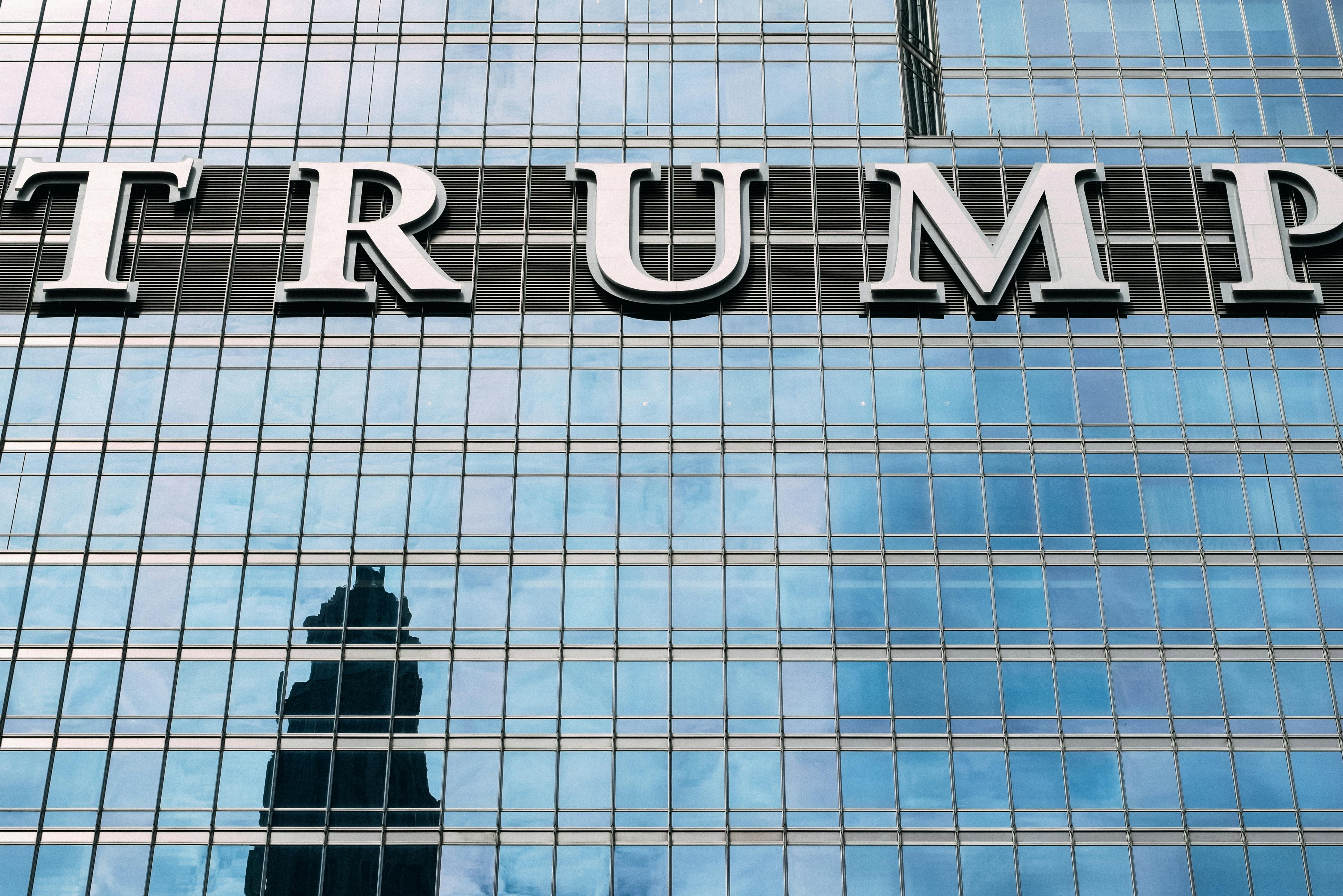
The immediate trigger was a federal court order requiring the Kennedy Center to remove Trump’s name from the building and from official materials. According to Reuters, U.S. District Judge Christopher Cooper previously ruled that the center could not be formally renamed without an act of Congress, because the institution is established in federal law as a memorial to President John F. Kennedy.
That ruling set a firm deadline of Friday, June 12, 2026, for the name to come down. In the final hours, Trump and Kennedy Center leadership sought to pause the order, arguing that the courts were intruding on management decisions and a broader renovation plan. Reuters reported that a judge declined to temporarily halt the ruling, leaving the deadline intact.
An appeals court also refused an emergency request to keep Trump’s name on the facade. CBS News and AP both reported that, with no legal relief granted, the center was left to carry out the removal despite running slightly past the court’s timetable.
By early Saturday, June 13, workers had already arrived at the site. AP reported that crews began removing the signage overnight, underscoring how quickly a symbolic political fight had become a visible physical change on one of Washington’s most recognizable cultural buildings.
Why the name change became a legal flashpoint
At the heart of the dispute is a basic but powerful question: who gets to name a national memorial created by Congress. The Kennedy Center is not just another performance venue. It is the nation’s official performing arts center and a federally chartered memorial to Kennedy, which gave opponents of the Trump rebranding a strong statutory argument.
Reuters reported that the court found the center’s board could not unilaterally recast the institution as the “Trump Kennedy Center” or otherwise attach Trump’s name to the public memorial without congressional approval. That made the issue less about taste or politics alone and more about the legal limits of board authority.
The battle intensified because the name had not only appeared in branding and communications, but had also been added physically to the facade. The Washington Post and AP reported that the court order extended beyond signage on the building to the website, promotional materials, contracts, and other official references.
That broad scope mattered. It meant the ruling was designed to reverse the entire rebranding effort, not simply remove a few letters from the front of the building. In practical terms, the order treated the public-facing identity of the Kennedy Center as part of the legal violation.
What workers were doing overnight
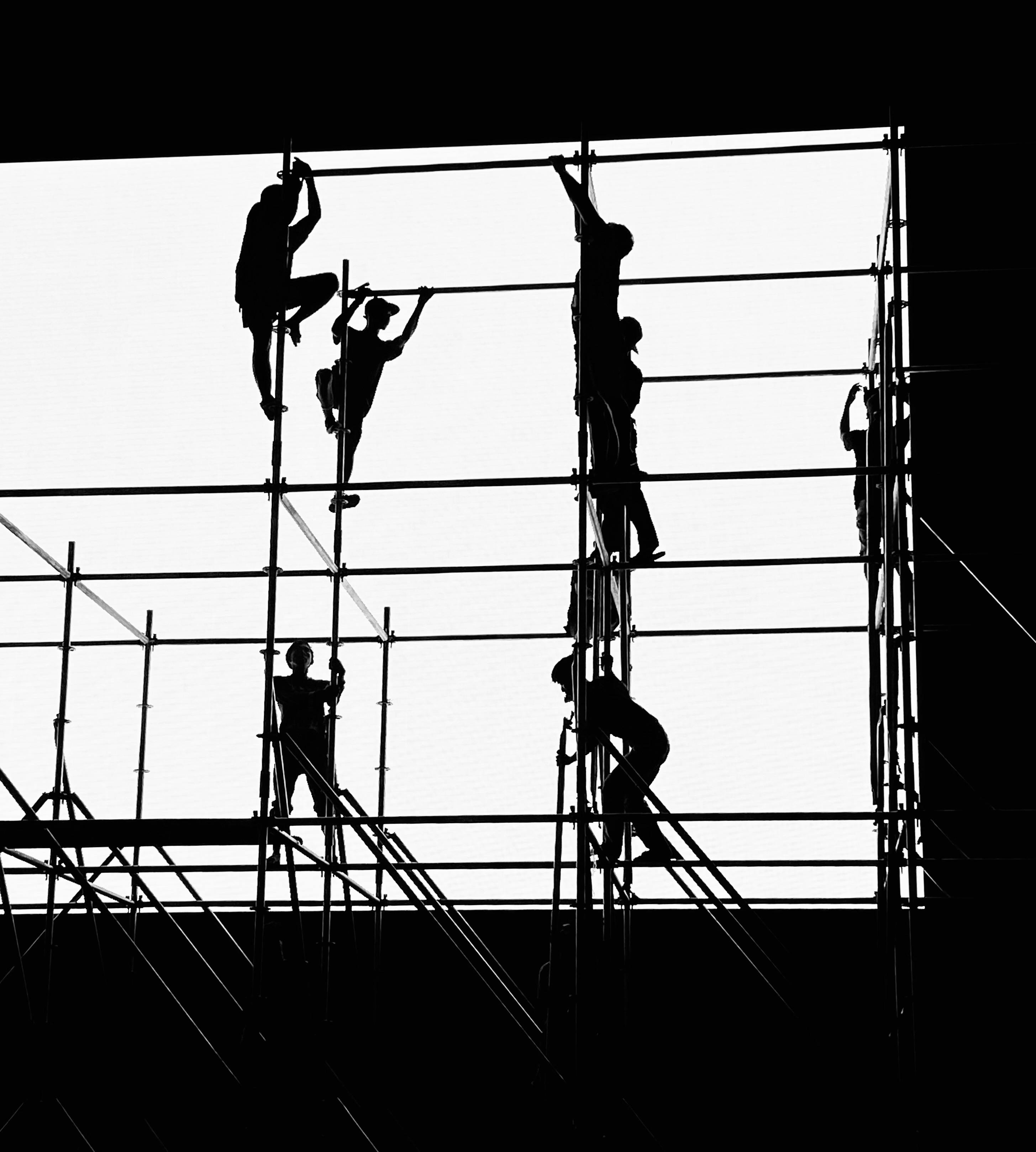
The removal itself became a public spectacle. AP reported that workers were seen on scaffolding outside the Kennedy Center overnight into Saturday, with tarps covering the area where Trump’s name had been displayed. Crews reportedly packed up around 3:30 a.m., though the tarps initially made it difficult to confirm from a distance whether every letter had already been taken down.
Officials indicated the work would be finished by today, and earlier court filings had suggested the physical removal would conclude in the early morning hours. One complication cited by the administration was the weather. Reporting carried by Reuters and other outlets said thunderstorms contributed to the delay beyond the Friday deadline.
Even so, the broader rollback had already begun before the facade work was completed. The Washington Post reported earlier in the week that Trump’s name had been removed from the Kennedy Center website, and AP noted that an email promoting ticket packages for the June 28 Mark Twain Prize event was sent without Trump’s name in the institution’s branding.
That combination of digital scrubbing and overnight construction gave the episode an unusual rhythm. The legal decision landed in court, the branding shifted online, and then the most visible symbol of the dispute played out in the dark, under scaffolding, in front of cameras and onlookers.
The larger struggle over the Kennedy Center’s identity

This fight is about more than a sign. It reflects a deeper clash over what the Kennedy Center represents and who has the power to reshape it. Since Trump’s allies took control of the center’s leadership and board, the institution has faced repeated controversy over programming, governance, and its public mission, according to AP, Axios, and other reports.
The attempt to attach Trump’s name to the center became the clearest symbol of that campaign. Supporters framed it as a legitimate exercise of authority by a board aligned with the president. Critics argued that it politicized a national cultural institution and collided with the legal status of a memorial dedicated to another president entirely.
The courts did not resolve every broader issue surrounding the center, but they did draw a line on the naming question. Axios reported that the judge emphasized the ruling was not an attempt to dictate every aspect of how the center should operate, but rather to enforce the legal constraints tied to the institution’s name and public identity.
That distinction is likely to matter in whatever comes next. The immediate conflict over the facade may end today, but the underlying battle over the Kennedy Center’s direction, leadership, and symbolic role in American public life is clearly not over.
Why this story resonated far beyond Washington

The Kennedy Center name dispute drew national attention because it blended culture, law, presidential power, and political symbolism in one highly visible place. A building associated with national prestige and artistic legacy suddenly became the site of a sharp fight over branding, authority, and historical memory.
It also landed at a time when many public institutions are under pressure to signal political identity more aggressively. In that sense, the Kennedy Center became a test case. If a congressionally named memorial can be rebranded by board action alone, critics argued, then the guardrails around civic institutions may be weaker than they appear.
Media coverage amplified the symbolism. AP described crowds and observers following the removal in real time, while other outlets highlighted the image of workers on scaffolding erasing a presidential name from a national landmark just months after it had been elevated there.
That visual mattered because it condensed a complex legal argument into a simple public moment: letters going up, then letters coming down. For many Americans, the significance of the case was not only who won in court, but what the reversal said about the limits of personal political imprinting on shared national spaces.
What happens after the name is gone

Once the last visible lettering is removed, the legal obligation appears largely satisfied, but the political repercussions will continue. The court order reached beyond the facade, requiring the elimination of Trump branding from official materials as well. That means the cleanup is administrative as much as architectural.
There may still be follow-up disputes over compliance, timing, or future governance decisions at the center. AP and Reuters both indicated that Kennedy Center leadership had resisted the ruling to the end, suggesting the broader confrontation between the institution’s current power structure and its critics is far from settled.
The practical next step is a return, at least formally, to the Kennedy Center’s congressionally established identity. That restores the legal status quo, but not necessarily institutional calm. Questions about programming, donor relations, leadership choices, and public trust are still likely to hover over the center in the weeks ahead.
For now, though, the day’s central fact is straightforward. After an unsuccessful last-minute legal fight, President Trump’s name is being removed from the Kennedy Center, and officials say the process will be complete by today.