

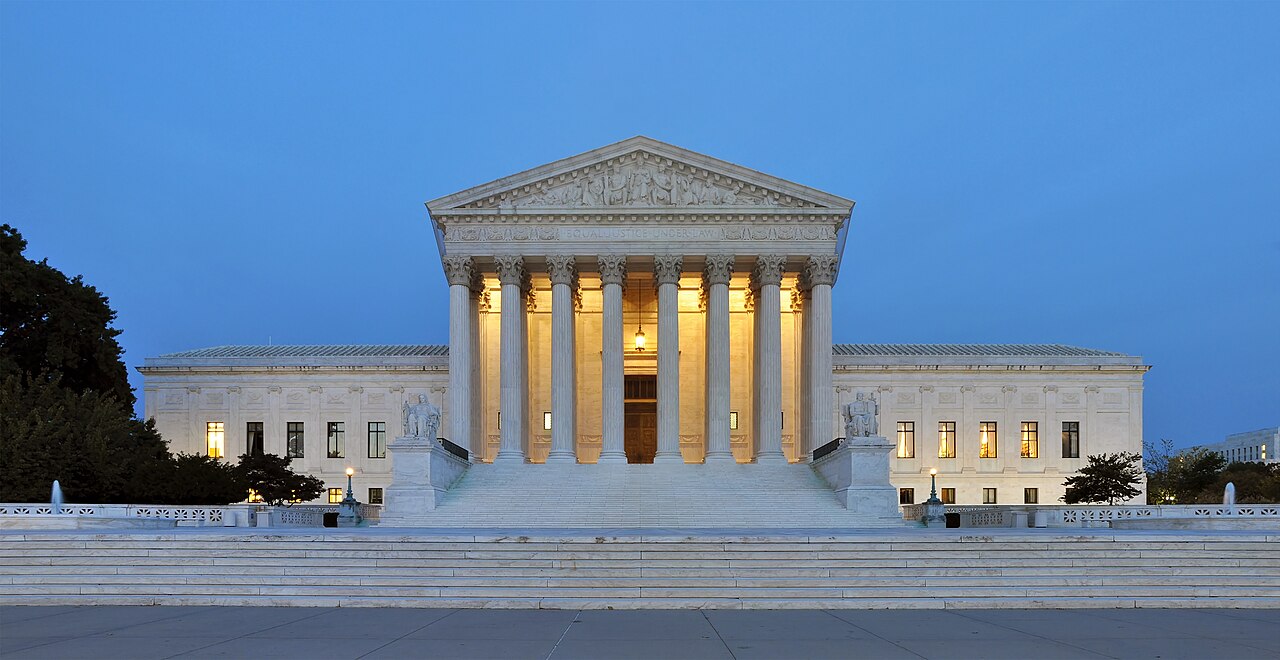
A major Supreme Court decision in 2022 expanded Second Amendment protections beyond the home and changed how states can regulate carrying handguns in public. The ruling centered on New York, where officials had required many applicants to show a special need before receiving an unrestricted concealed-carry license.
Supreme Court struck down New York’s “proper cause” standard in a 6-3 ruling
The U.S. Supreme Court ruled 6-3 on June 23, 2022, in New York State Rifle & Pistol Association v. Bruen, holding that New York’s “proper cause” requirement for a public carry license violated the Second and Fourteenth Amendments, according to the court’s opinion. Justice Clarence Thomas wrote for the majority that law-abiding citizens with ordinary self-defense needs could not be denied the ability to carry a handgun in public simply because they could not show a special, heightened need.
The case arose from challenges to New York’s century-old licensing system, which required applicants seeking to carry a concealed handgun outside the home for self-defense to convince local licensing officials that they faced unusual danger. The court said that structure gave licensing authorities too much discretion when evaluating who could carry.
The decision did not eliminate all firearm licensing nationwide. The majority specifically distinguished New York’s discretionary standard from “shall-issue” systems used in many other states, where applicants who meet objective conditions such as background checks or training requirements can obtain permits. Legal summaries from Cornell Law School and the New York attorney general’s office said the ruling removed a key barrier in New York but did not invalidate every permit regime.
The clearest immediate impact fell on New York because the challenged law was a New York statute and the plaintiffs were New York residents. State guidance issued after the decision said the court struck down the portion of the law requiring applicants to show “proper cause,” making it easier for eligible residents to seek a carry license in public spaces.
At the time of the ruling, the Supreme Court noted that only six states, including New York, used systems that required an applicant to demonstrate an additional special need beyond ordinary self-defense. That meant the practical effects were likely to be largest in that small group of states rather than in the majority of states already using objective permitting rules or permitless carry laws.
What was not resolved on June 23, 2022, was the full set of replacement rules New York and other affected states would adopt. The ruling did not create a nationwide permitless carry system, and it did not say Americans could carry firearms anywhere without restriction. The court also indicated that bans in certain “sensitive places” remained constitutionally permissible, leaving room for continued litigation over exactly where firearms could be barred.
The broader importance of Bruen was not limited to New York’s permit process. The decision changed the legal framework courts must use when reviewing gun regulations, directing judges to evaluate modern firearm laws against the nation’s historical tradition of firearm regulation rather than using the balancing tests that many lower courts had applied before.
That shift has had continuing effects in later gun cases. News coverage and legal analysis after the ruling described Bruen as a major expansion of gun rights because it recognized a constitutional right to carry a handgun in public for self-defense and supplied a new test for future challenges. In practice, that meant more state and federal firearm restrictions faced renewed scrutiny in court.
For residents, the practical takeaway was narrower than some headlines suggested. The Supreme Court did not say no permit is ever required in advance to carry a firearm, and it did not erase every state licensing rule. What it did say was that states such as New York could not condition public carry on proving an extraordinary reason beyond ordinary self-defense, a distinction that continues to shape gun policy and litigation nationwide.