

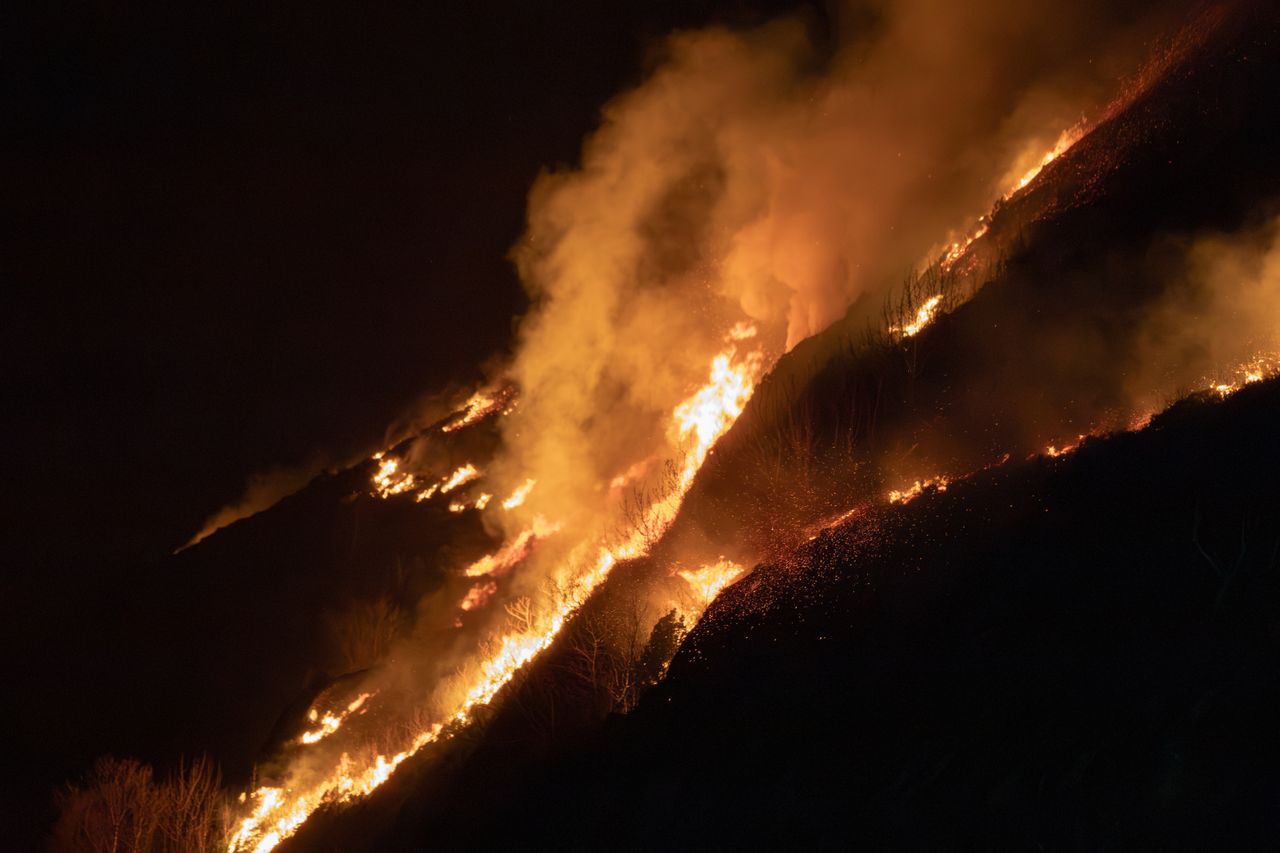
Wildfire danger is escalating across the interior West as heat, wind and exceptionally dry conditions drive fast-moving fires and strain response crews. Along the Colorado-Utah border, that danger turned deadly on June 27, when three federal firefighters were killed battling a rapidly growing fire complex in Mesa County.
Three firefighters were killed in a June 27 burnover on the Snyder Fire
The U.S. Department of the Interior confirmed on June 28 that five federal firefighters were caught in a burnover while working a wildfire in western Colorado on Saturday, June 27. Three firefighters died and two others were hospitalized with burn injuries after deploying emergency fire shelters, according to the department and later reporting from the Associated Press.
The firefighters were assigned to the interagency response on fires that officials identified as the Knowles and Gore fires in Mesa County near the Utah line. AP reported that those fires merged with other nearby fires to form the Snyder Fire, while Colorado Public Radio reported the broader incident has also been referred to as the Snyder-Mesa Fire as multiple starts combined along the border.
Officials have not yet publicly released the names of the three firefighters. The Interior Department said the identities were being withheld pending notification of family members, and it has not provided a detailed public account of the sequence of events that led to the burnover.
The immediate impact has stretched across western Colorado and into eastern Utah, where smoke, road concerns and emergency orders are affecting residents ahead of the Independence Day holiday. AP reported the Mesa County Sheriff’s Office asked people to evacuate the fire’s potential path, while Colorado Public Radio reported significant smoke impacts visible from Fruita and other Western Slope communities.
What remains unconfirmed is the full extent of structural damage along the border corridor. Authorities have not released a comprehensive count of homes, outbuildings or other property losses tied to the Snyder-area fires, and acreage figures have varied as separate fires merged and mapping changed.
On the Utah side, state officials moved quickly to limit additional ignition risks. Gov. Spencer Cox announced temporary statewide fireworks restrictions on June 25, saying Utah was facing extraordinary wildfire conditions, and the Utah State Fire Marshal’s office said those restrictions remain in effect through July 5 while local maps identify where personal fireworks are prohibited.
Officials have tied the worsening fire picture to a combination of heat, low humidity, wind and a very dry season. The National Weather Service warned over the weekend that fire conditions remained critical across the Southwest, with AP reporting that forecasters expected extreme fire behavior and rapid growth potential along the Utah-Colorado border.
Utah officials have also linked the risk to longer-term dryness. Gov. Cox said the state had already seen hundreds of fires and exhausted firefighting resources, while AP reported Utah entered the season with record-low snowpack and its warmest winter on record, conditions that leave grasses, brush and timber more likely to ignite and spread fire quickly.
For residents, the practical effect is straightforward: fire restrictions and safety rules are tightening as July 4 approaches. Utah’s fire marshal says legal discharge windows for fireworks still exist in some areas, but state and local restrictions now limit where fireworks can be used, while federal and state forest lands remain off-limits as crews continue responding to major fires across the region.