

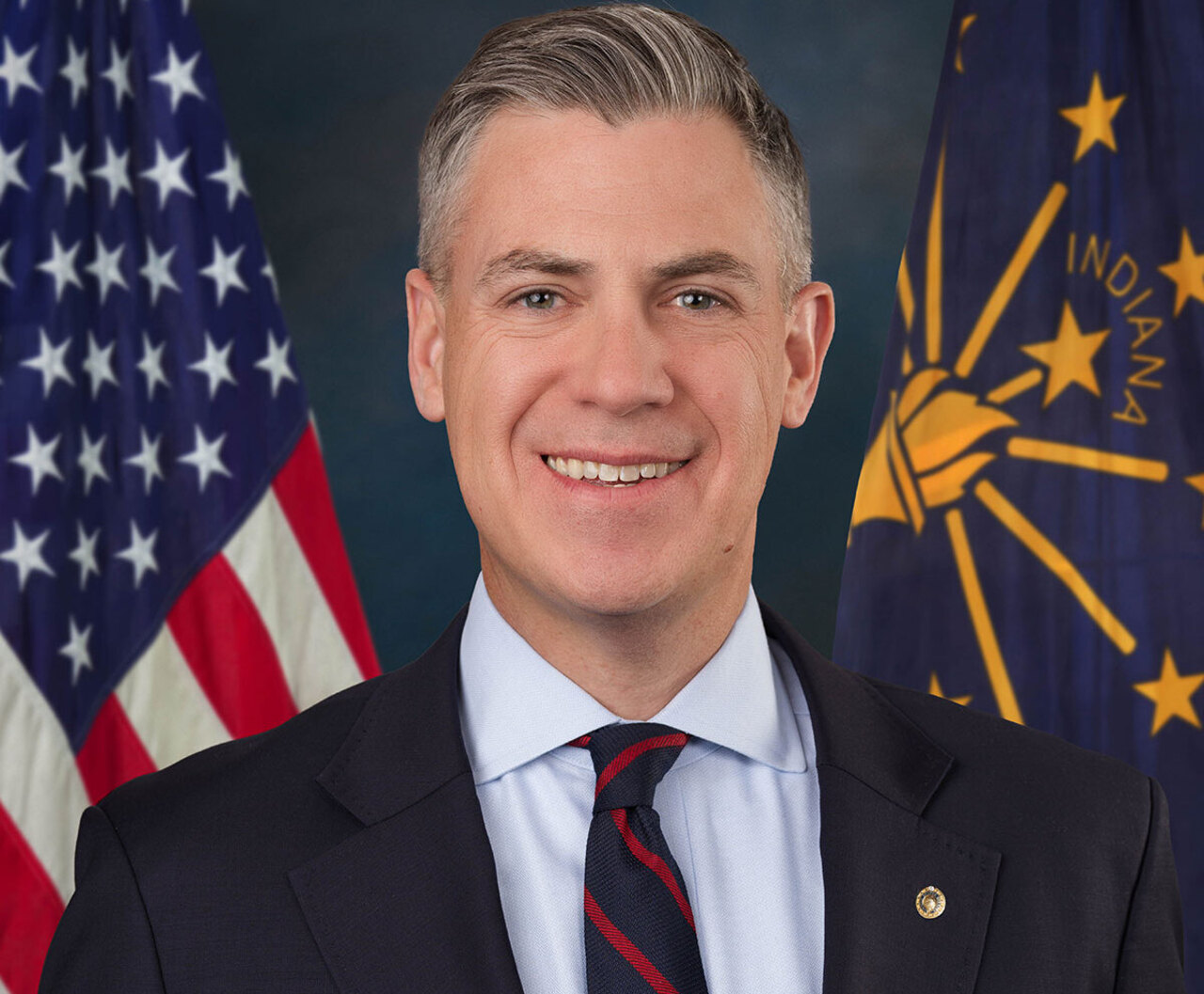
Birthright citizenship is back at the center of the national immigration debate after the Supreme Court’s June 2026 ruling left Congress, not the White House alone, as a possible path for changing federal law. That debate sharpened on July 13, when Sen. Jim Banks of Indiana said he would introduce a new bill that would define certain U.S.-born children as children of “invaders” under federal law, according to Fox News.
Sen. Jim Banks says new bill would change how federal law defines some U.S.-born children
Banks, an Indiana Republican, told Fox News Digital that he planned to introduce the Citizenship Act when the Senate returned on Monday, July 13, 2026. According to that report, the bill would seek to end automatic birthright citizenship for children born in the United States to undocumented immigrants and to some people who travel to the country for birth tourism. The proposal would do that by writing the term “invaders” into federal statute as part of a change to the Immigration and Nationality Act.
Fox News reported that Banks framed the measure around a concurring opinion from Justice Brett Kavanaugh in the Supreme Court’s June 2026 birthright citizenship decision. In that opinion, Kavanaugh said the president’s order conflicted with existing federal law, but that Congress could amend the statute. Just the News separately reported on July 13 that Banks’ legislation would codify President Donald Trump’s 2025 executive order describing illegal migration across the southern border as an “invasion” and would exclude the children of such “invaders” from citizenship under the law.
This is not the first time congressional Republicans have pursued that argument. Congress.gov records show an earlier bill, the Constitutional Citizenship Clarification Act of 2025, also sought to codify what it described as an exception for “ambassadors and invaders” in birthright citizenship law. That bill was introduced on July 15, 2025, and remained at the introduced stage in the 119th Congress, according to the congressional record summary available through Congress.gov.
Because Banks represents Indiana, the state is now directly tied to the latest Senate effort to rewrite a long-settled area of citizenship law. What is confirmed so far is limited to Banks’ public description of the measure and the reporting that he intended to file it in the Senate on July 13. A full bill text was not publicly available in the source material reviewed here, and no Senate vote schedule or committee hearing date had been confirmed in those materials.
That leaves several key questions unresolved for Indiana residents and for families who could be affected if the proposal moved forward. The available reporting does not specify how the bill would define proof of unlawful presence at the time of birth, what documentation hospitals or state agencies might be expected to use, or whether the measure would apply prospectively only. The reporting also does not identify how many Indiana births could be affected under the bill’s language.
Indiana’s relevance is therefore political as much as administrative at this stage. Banks is one of several Republicans who have recently introduced or backed legislation targeting birthright citizenship after the Supreme Court ruling. Fox News reported last week that other Republican lawmakers were also advancing related proposals, including separate legislation aimed at birth tourism, showing that Congress is becoming the main arena for this fight rather than the executive branch alone.
The immediate cause of the new bill is the Supreme Court’s June 2026 birthright citizenship ruling, which Republicans read as shutting down one route while leaving another open. Fox News reported that Kavanaugh’s concurrence provided what Banks and other GOP lawmakers see as a roadmap: if a presidential order cannot override existing statute, Congress could try to rewrite that statute. Reuters also reported in late June that legal analysts viewed existing federal statutes as directly supporting birthright citizenship, underscoring why lawmakers would need Congress, not only the White House, to change the rule.
The broader context is the Trump administration’s renewed push to restrict birthright citizenship as part of a wider immigration agenda. Reuters reported on July 8 that Trump said he would ask the Supreme Court to rehear the birthright citizenship case after the earlier setback to his executive order. At the same time, Fox News and other outlets have reported a wave of GOP proposals focused on undocumented immigration, birth tourism and citizenship policy.
For residents, the practical takeaway is that no change in citizenship status has taken effect from Banks’ proposal alone. The bill would need to be formally introduced, advance through Congress and likely face immediate court challenges if enacted. As of July 14, 2026, the confirmed development is that an Indiana senator has launched a new legislative bid to test whether Congress can narrow birthright citizenship using the “invaders” theory that Republicans say the Supreme Court left open.