

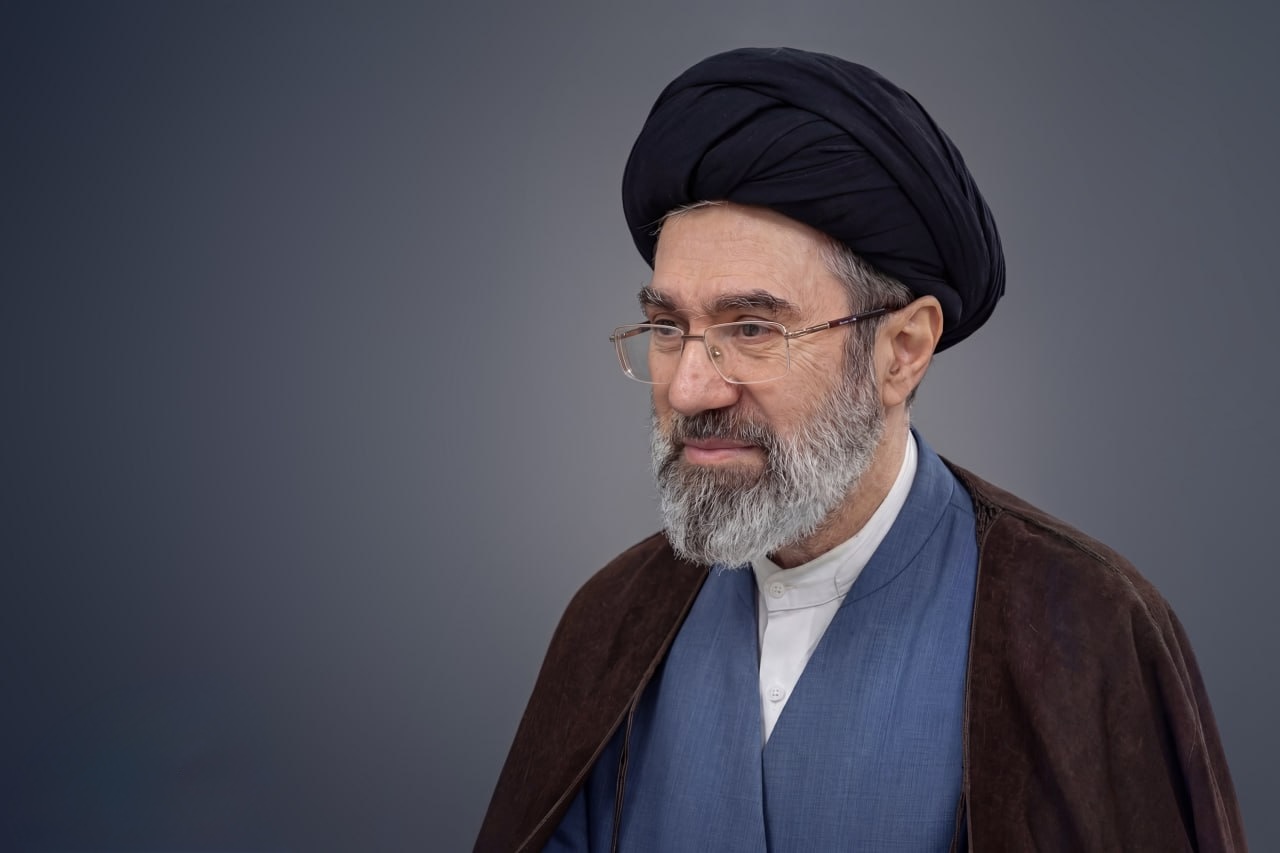
Iran’s leadership transition has unfolded under extraordinary pressure after the killing of longtime Supreme Leader Ayatollah Ali Khamenei during the war that began on February 28. Now the focus has shifted to his successor, Ayatollah Mojtaba Khamenei, who has vowed revenge but has not been publicly seen or heard from since taking office.
Iran’s new leader issued a written threat but stayed out of public view
Iran’s new supreme leader, Ayatollah Mojtaba Khamenei, issued a written statement on July 11 promising vengeance for the killing of his father and predecessor, according to Reuters and other outlets that reported on the text carried by Iranian channels. The statement threatened retaliation against those responsible for deaths in the war, but it was not accompanied by any photo, video or audio recording of Mojtaba Khamenei himself. That absence has become one of the defining facts of his early tenure.
Reuters reported that Mojtaba Khamenei was appointed supreme leader on March 8, one week after the February 28 strike that killed Ali Khamenei. Since then, senior Iranian sources cited by Reuters have attributed the lack of any new image or voice recording to security and health concerns. People close to his inner circle told Reuters earlier this month that he suffered facial injuries and significant damage to one or both legs in the same attack.
His absence remained conspicuous during the multiday funeral ceremonies for Ali Khamenei. Reuters reported on July 5 that three of the slain leader’s sons appeared beside the coffin, but Mojtaba did not. AP also noted that Iran’s new supreme leader did not appear during the main funeral events, deepening speculation about his condition and the state’s ability to present a visible new leader at a moment of national transition.
The immediate effect is being felt inside Iran, where the supreme leader’s role is both political and symbolic. Reuters reported that more than 20 Iranians it contacted in recent weeks said Mojtaba Khamenei’s absence was troubling, particularly because the country is managing a wartime succession, funeral rites for a ruler who held power for decades, and open calls for retaliation against the United States and Israel. In that context, not seeing the new leader has become part of the story.
What is confirmed is narrow but significant. Mojtaba Khamenei has issued written statements, including his latest revenge message, and Iranian state channels have circulated older images of him. What is not confirmed publicly is his exact location, the full extent of his injuries, or when he might next appear in person. Iranian authorities have not released a new video, live image, or audio recording that independently establishes his current condition.
That gap matters because Iran’s supreme leader traditionally embodies continuity during crises. AP reported that the funeral for Ali Khamenei drew crowds and senior officials, including President Masoud Pezeshkian and Foreign Minister Abbas Araghchi, but the new leader’s absence stood out even amid the scale of those ceremonies. For ordinary Iranians and foreign governments alike, the lack of a visible leader has added another layer of uncertainty to an already volatile transition.
The main explanations offered so far are security and health. Reuters reported that senior sources in Iran linked Mojtaba Khamenei’s disappearance from public view to both concerns, while earlier Reuters reporting cited people close to his circle saying he was badly wounded in the strike that killed his father. U.S. officials, including Defense Secretary Pete Hegseth in March remarks reported by Reuters, also said the new leader had been injured, though those comments did not resolve the questions surrounding his condition.
There is also a broader legitimacy issue. Ali Khamenei ruled for more than three decades, and his authority was built over years in public office and state institutions. Reuters noted that Mojtaba Khamenei took power at a moment when the Islamic Revolutionary Guard Corps is widely viewed as a dominant force in Iranian political thinking, and his appointment came under wartime conditions rather than through a normal public-facing transition.
For residents and observers, the practical meaning is straightforward: Iran has a new supreme leader on paper and in official statements, but not yet in any independently verifiable public appearance since March 8. Until that changes, each written message is likely to be examined not only for what it says about retaliation and state policy, but also for what it does not answer about who is leading Iran in public view.