

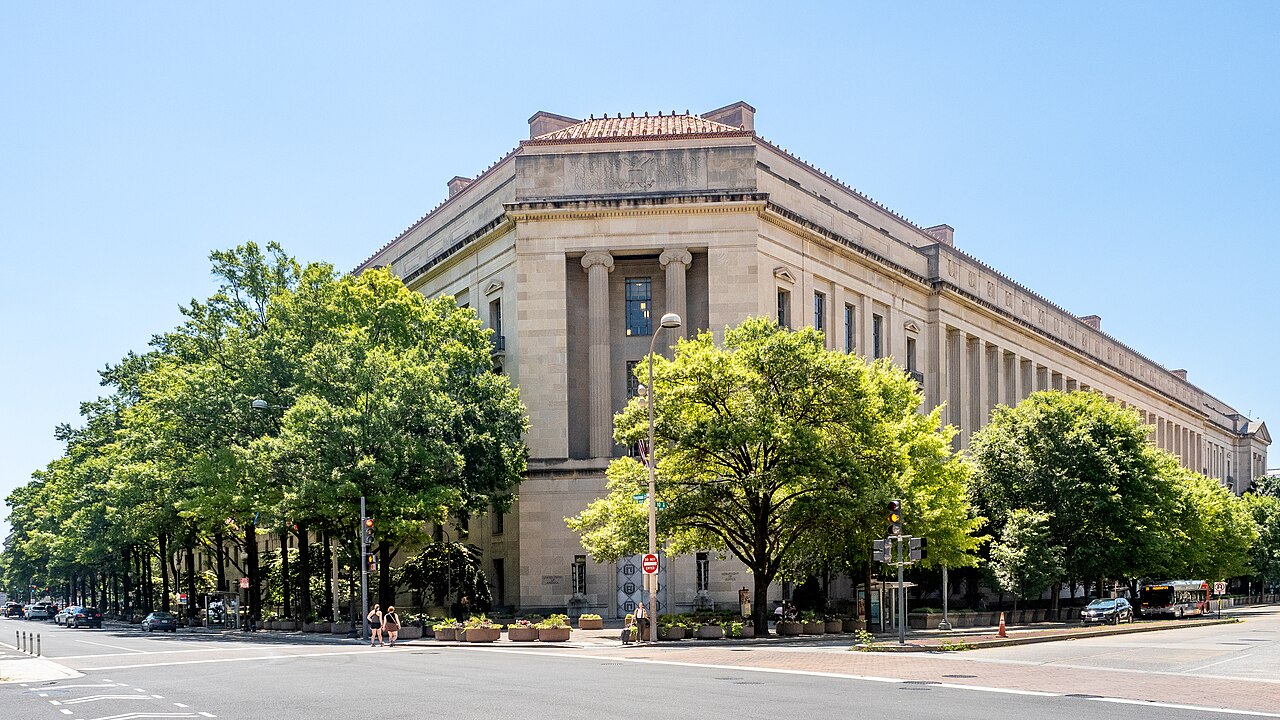
The federal government has opened a new chapter in its immigration enforcement strategy by using a little-known national security court that Congress created three decades ago. That shift came into focus on July 30, when the Alien Terrorist Removal Court held its first public hearing in Washington over the proposed deportation of Nazira Haji Zada of Fort Worth, Texas. Zada has not been charged with a crime, but the Justice Department said in court filings that she qualifies for removal under a 1996 law designed for suspected noncitizen terrorists.
First public hearing held in a court that had never heard a case
The Alien Terrorist Removal Court was established by Congress in 1996 and, according to the court’s public docket and reporting by The Associated Press, had never received a petition until the Justice Department filed one on July 15, 2026. The filing seeks the removal of Nazira Haji Zada, an Afghan woman living in Fort Worth, and the court convened its first public hearing on July 30 in Washington. AP reported that Chief Judge Joan Ericksen denied a defense request to dismiss the case at that initial hearing.
Court records cited by AP identify Zada as the first person ever brought before the tribunal. The Justice Department said the court exists to handle deportation proceedings involving people it classifies as “alien terrorists,” a term defined by federal statute. Acting Attorney General Todd Blanche said the case involves allegations that Zada supported an Islamic State-linked family plot aimed at American voters during the 2024 election cycle.
Zada’s lawyer, assistant federal public defender Matthew Farley, argued in court that the process violates due process protections because the government is relying in part on classified information. AP reported that Farley described the proceeding as a way of avoiding a criminal case, while the judge said federal courts routinely manage classified material. The government has not charged Zada criminally, and that remains a central fact in the case.
What is confirmed for Texas readers is limited but significant. AP reported that FBI agents arrested Zada at her Fort Worth home earlier in the week before the July 30 hearing, placing North Texas at the center of the first case ever heard in this court. Public reporting also identifies her as the mother and mother-in-law of two Afghan men convicted in Oklahoma in connection with an Islamic State-inspired Election Day 2024 plot.
According to AP, Zada’s son Abdullah Haji Zada was sentenced in November 2025 to 15 years in prison, and court records show he agreed to be removed from the United States after serving that sentence. Her son-in-law, Nasir Ahmad Tawhedi, pleaded guilty in the Oklahoma case after prosecutors said he took steps including obtaining rifles and arranging one-way travel for family members. Those convictions are part of the factual backdrop the government is using to explain why it filed in the special court.
What is not yet publicly known is also extensive. The government has not released a full public evidentiary record, and some of its assertions rely on classified material that Zada’s defense cannot fully review in open court. Officials also have not publicly outlined whether additional Texas-based enforcement actions are connected to this matter.
The larger context comes from the 1996 Antiterrorism and Effective Death Penalty Act and later amendments, which created the Alien Terrorist Removal Court to hear removal cases involving sensitive national security information. The court’s own website says Congress authorized five federal judges, designated by the chief justice, to review such applications. Legal analysis published by Just Security notes that the statute was designed as a specialized forum for deportation cases where ordinary proceedings might risk disclosure of classified evidence.
That same analysis explains why the court’s activation is drawing scrutiny now. Just Security reported that the government must show both that the person fits the statutory definition and that removal through other available legal means would pose a national security risk. The article also noted that constitutional concerns, especially over secrecy and access to evidence, are widely seen as one reason the process went unused for about 30 years.
For residents, the immediate practical meaning is narrow but important. This case does not create a broad public program on its own, but it does show the federal government is now willing to use a tribunal that had remained dormant since 1996. As of the first hearing on July 30, the case was still pending, and the court had not yet ruled on whether Zada will be removed from the United States.