

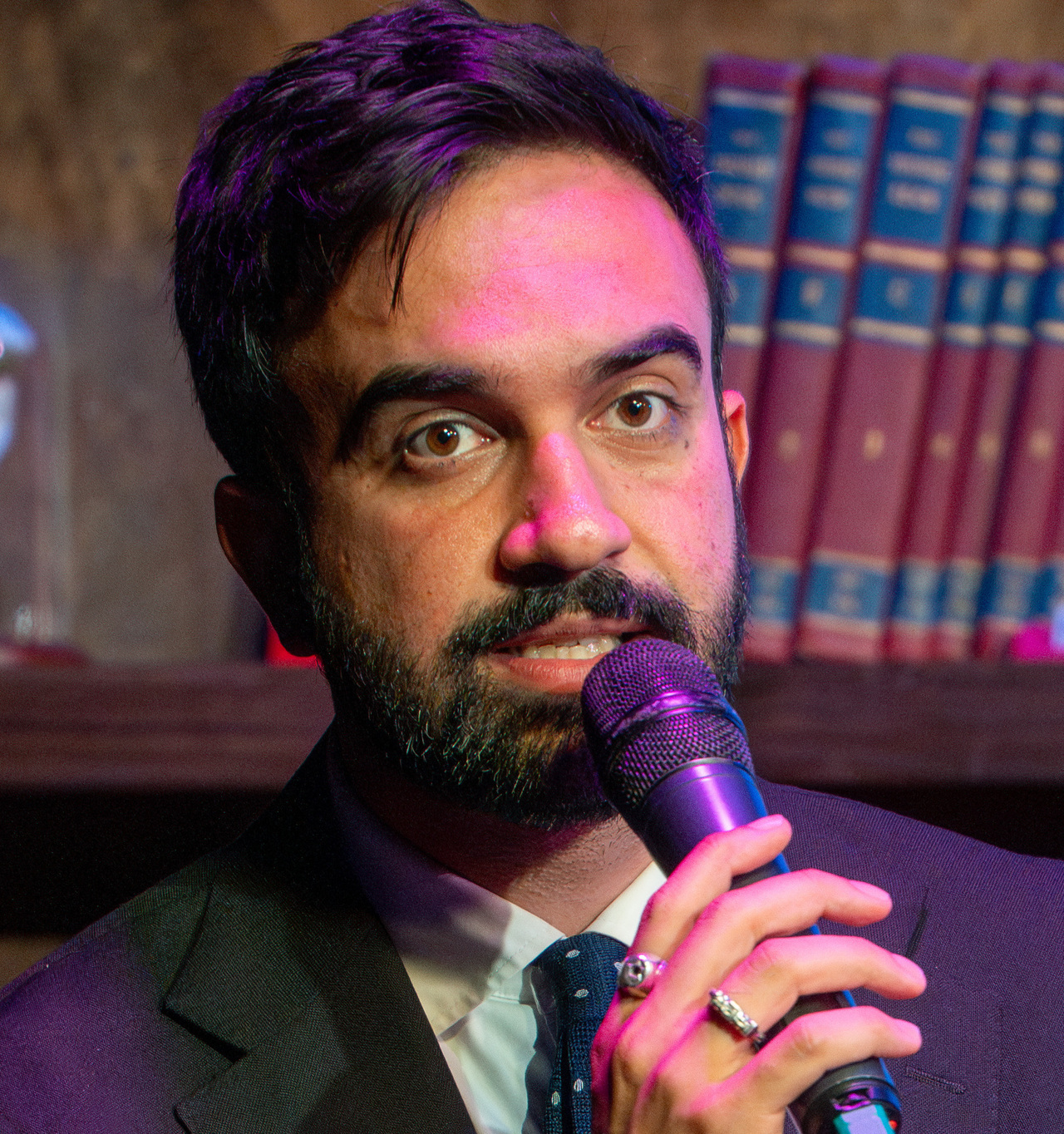
As debates over reparations continue to surface in statehouses and city governments across the country, New York has become one of the places where the issue is being formally studied. In New York City, that discussion sharpened this week after coverage of Mayor Zohran Mamdani’s comments in an interview about whether he would support cash reparations for Black New Yorkers. The available public record does not show Mamdani saying that white New Yorkers must directly pay cash reparations to descendants of enslaved people.
What Mamdani said in the interview
The current controversy centers on an interview conducted by Charles M. Blow for The Root, which Blow said on social media had been recorded at City Hall and would be released the following week. According to contemporaneous summaries circulating Friday, July 31, Mamdani was asked whether he would support cash reparations if an official racial equity or reparations body recommended them. The characterization that he “left the door open” to such payments appears in coverage and public discussion, but that is not the same as a documented statement that white New Yorkers must pay.
Reuters separately reported on July 30, 2025, that Mamdani had addressed earlier comments from 2020 by saying they were made in frustration after the murder of George Floyd. That Reuters material does not show him announcing a policy that would require white New Yorkers to make direct individual payments. More recent public remarks from City Hall in 2026 have focused on racial equity, affordability, and the loss of more than 200,000 Black New Yorkers from the city over recent decades, according to mayoral transcripts and the city’s racial equity materials.
No official City Hall release reviewed for this article announced a municipal reparations payment program, a race-specific tax on white residents, or a directive requiring white New Yorkers to pay descendants of enslaved people. That distinction is central to understanding the difference between a debated interview answer and an enacted city policy.
What is confirmed is that New York state has an active Community Commission on Reparations Remedies. The commission was created after legislation signed in December 2023, and advocacy groups including the NYCLU and Legal Defense Fund said in July 2026 that the body is examining the legacy of slavery and discrimination in New York and possible forms of redress. Reporting by New York Amsterdam News said the commission is scheduled to issue a final report on July 1, 2027.
What is not confirmed is any city order, state order, or budget action requiring white New Yorkers to make cash payments. There is also no publicly released final recommendation from the state commission directing New York City to adopt individual cash reparations. The city has not released a plan identifying eligible recipients, payment amounts, funding mechanisms, or any enforcement structure tied to race.
At the local level, Mamdani’s administration has publicly emphasized racial equity metrics rather than reparations payments. In April 2026, City Hall said Black New Yorkers were more likely than white New Yorkers to fall below the city’s “true cost of living” measure, with Black New Yorkers at 65.6% compared with 43.7% for white New Yorkers. Those findings provide context for the administration’s equity agenda, but they are not a reparations policy.
The issue is drawing attention now because reparations has moved from a general political talking point to an active subject of formal review in New York. State materials and civil-rights groups have framed the process around New York’s role in slavery and the persistence of racial disparities in wealth, housing, and opportunity. That broader debate has created a setting in which any comment from the mayor of New York City can quickly be interpreted as a policy signal.
Mamdani has also repeatedly linked present-day inequality to the departure of Black New Yorkers from the city. In April and again in July, mayoral remarks cited more than 200,000 Black New Yorkers leaving over the last few decades, tying that trend to affordability pressures. Those statements help explain why reparations questions are being directed at City Hall even though the active commission is a state body, not a city one.
For New York residents, the practical reality is that no new payment requirement has been announced. The verified record supports a narrower conclusion: Mamdani has not publicly said that white New Yorkers must pay cash reparations, but he appears unwilling to rule out supporting reparations proposals if an official commission ultimately recommends them.