

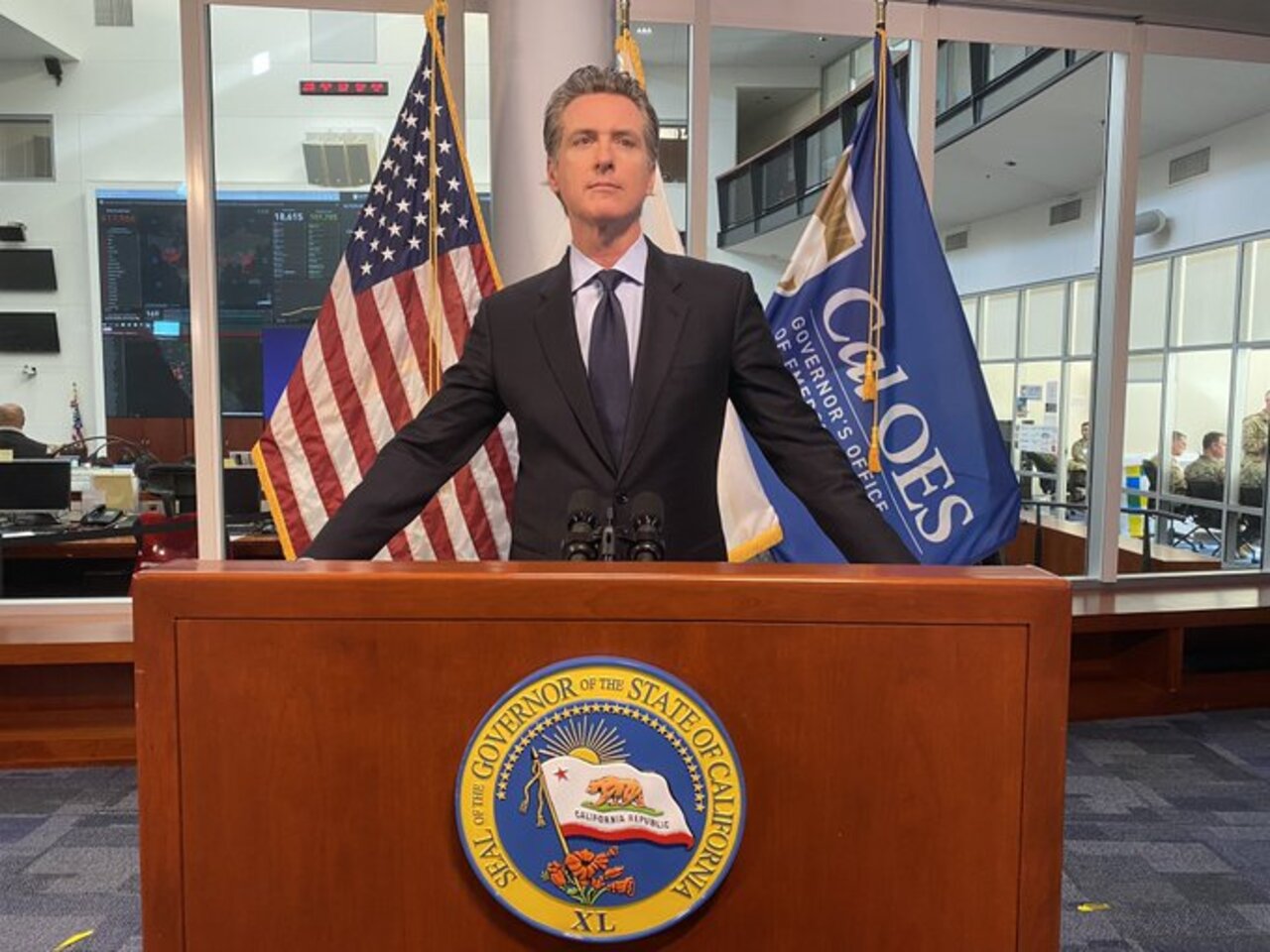
California and other states have increasingly expanded privacy laws for workers who face threats tied to politically charged public-facing jobs. In California, that debate sharpened on August 22, 2026, when Gov. Gavin Newsom signed Assembly Bill 2624, a measure critics have nicknamed the “Stop Nick Shirley Act.” The new law applies statewide and raises immediate questions about how California will balance protections against doxxing with First Amendment concerns around investigative reporting.
Newsom signs AB 2624, and the penalties are written into state law
Gov. Gavin Newsom signed AB 2624 on August 22, 2026, according to the governor’s official bill-signing release, which lists the measure by its formal title, “Privacy for immigration support services providers.” The bill was introduced by Assemblymember Mia Bonta and expands California’s Safe at Home address-confidentiality program to certain immigration support services providers, employees, and volunteers who fear for their safety because of that work. The Senate Judiciary Committee analysis said the measure would extend an existing confidentiality structure already used for other protected groups.
The same committee analysis states that eligible participants may use substitute address protections through the Secretary of State’s Safe at Home program rather than exposing home addresses in public records. The analysis also says the bill builds on laws that already restrict some online publication of personal information or images when done to incite violence or create credible threats. That matters because the nickname attached to the bill has circulated more broadly than the formal bill title.
The criminal exposure drawing the most attention comes from the existing penalty framework the bill extends to this new category of protected workers. California legislative text for related Government Code provisions states that a person may face a fine of up to $10,000 per violation, imprisonment of up to one year in county jail or under felony sentencing rules, or both, for posting protected information with intent that another person imminently use it to commit a violent crime or threat of violence. If a violation leads to bodily injury, the statute allows a fine of up to $50,000 and imprisonment under California law.
Because AB 2624 is a California law, its impact will be statewide, covering organizations and workers in cities and counties where immigration legal aid, advocacy, and related support services operate. The Senate Judiciary Committee analysis says the bill covers designated immigration support services providers, employees, or volunteers who are fearful for their safety or the safety of their family because of their affiliation with a designated facility. That means the law is not limited to one metro area or one employer.
What is confirmed is that the law expands eligibility for the Safe at Home program and extends related privacy protections to this class of workers. What is not yet known is how many California workers will ultimately enroll, how many organizations will help employees seek certification, or how often prosecutors might test the criminal provisions once the law is in effect. The state has not released a projected statewide participant count in the materials reviewed.
The effective timeline is also important for residents and organizations tracking compliance. The source material provided by the user reports that the law takes effect on October 1, 2027, and the committee analysis makes clear the bill is structured as an expansion of an existing state confidentiality framework rather than a standalone criminal code rewrite. As of now, California has not released a public list of which specific nonprofits, clinics, or service groups are expected to seek participation first.
The stated rationale for AB 2624 centers on safety. In the Senate Judiciary Committee analysis, the bill’s author said immigrant service workers can face doxxing, harassment, and threats because of the nature of their work, and that extending Safe at Home protections would help keep personal information confidential in public records. The analysis also names the Coalition for Humane Immigrant Rights of Los Angeles, Women’s Foundation California, and Solis Policy Institute as sponsors.
That same analysis says supporters argued the law would help staff and volunteers continue providing legal, social, and humanitarian services without fear for their safety. It also cites a broader “anti-immigrant political climate” as part of the context offered for the bill and notes prior expansions of Safe at Home protections to other groups facing targeted harassment. In other words, lawmakers presented AB 2624 as an extension of an existing model, not a wholly new type of privacy program.
For California residents, the practical takeaway is narrower than the bill’s nickname suggests. The available legislative materials indicate the criminal provision hinges on intent tied to imminent violence or threats of violence, not on ordinary reporting by itself. What happens next will likely depend on implementation by state agencies, enrollment by eligible workers, and whether future court challenges test where privacy protection ends and protected journalism begins.