

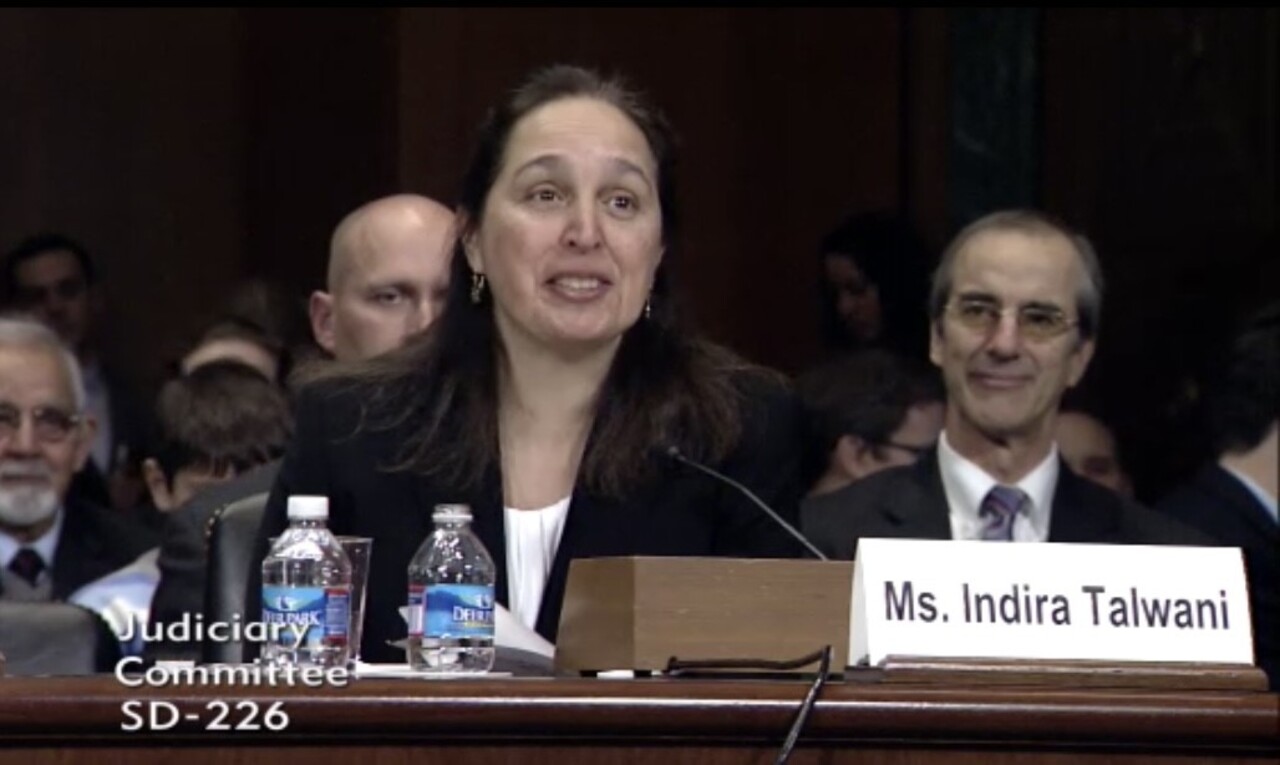
As legal fights over voting rules intensify ahead of the November 3, 2026 midterm elections, federal courts are again weighing how far the White House can go in changing election procedures. In Boston, U.S. District Judge Indira Talwani on August 27 temporarily blocked core parts of a U.S. Postal Service rule tied to President Donald Trump’s mail-voting directive, reversing course just one day after a previous injunction had been lifted. The dispute centers on how ballots are handled nationwide and whether federal agencies can impose new requirements on states so close to an election.
Judge Talwani Halts USPS Rule Again
Judge Indira Talwani’s new order stopped the U.S. Postal Service from enforcing the central parts of a recently finalized mail-voting rule, according to Reuters and court proceedings reported Thursday. The temporary restraining order came after Democratic-led states and voting-rights groups filed renewed lawsuits once the Postal Service formally adopted the rule. Talwani said the pause will stay in effect while she considers whether a longer preliminary injunction should be issued at a September 3 hearing.
The rule would require states to provide the Postal Service with lists of mail-ballot recipients and would require outbound and return ballot envelopes to carry unique barcodes, according to Reuters. Under the same rule, USPS could refuse to deliver ballots that do not meet those standards or that are linked to voters not appearing on state-provided lists. Reuters reported that all 50 states allow some form of mail voting, 29 states allow no-excuse mail voting, and eight states conduct elections entirely by mail.
The timing is central to the dispute. Reuters reported that USPS processed nearly 100 million ballots in the 2024 election cycle, while the plaintiff states said about 30% of voters nationwide cast ballots by mail. Talwani wrote, according to the Associated Press, that states did not have the time or money to redesign ballots, secure approvals, update election systems, train workers, and upload voter data before the midterms.
The order applies nationwide for now, affecting states that rely heavily on mail ballots as they prepare for fall voting. The immediate effect is that election officials do not have to comply, at least for the moment, with the new federal mailing standards that plaintiffs said would force costly operational changes in the final stretch before Election Day. A fuller hearing is scheduled for September 3, and that proceeding could determine whether the pause lasts longer.
What remains unsettled is how many state election offices had already begun preparing for compliance during the one-day window after Talwani lifted the earlier injunction on August 26. Public reporting has not established a comprehensive list of states that changed procedures, ordered new materials, or began data-sharing preparations in response to the brief shift in the case. The White House did not immediately respond to requests for comment reported by AP, and Reuters said USPS declined to comment earlier in the week.
For residents, the main point is that voting by mail is not being newly restricted by this rule today. The underlying legal challenge is still active, and the court has not issued a final ruling on whether the Postal Service has authority to set these election-mail conditions. That means election rules for November remain subject to further court action, but the judge’s latest order prevents immediate enforcement while the case continues.
The latest ruling followed a U.S. Supreme Court decision on August 24 that lifted one earlier order blocking Trump’s mail-ballot restrictions, according to Reuters. The high court did not decide whether Trump’s underlying executive order was lawful; instead, it said one set of challengers had acted too early because the administration had not yet taken sufficiently concrete steps. Once USPS finalized the rule, plaintiffs returned to court arguing the dispute was no longer hypothetical.
Trump signed the executive order in March 2026, directing federal action to tighten mail-voting procedures after years of criticizing voting by mail. Reuters reported that Talwani had previously found in June that the president lacked authority to order changes in how states administer federal elections, noting that the Constitution assigns states a primary role in setting voter eligibility rules. AP reported that opponents argue the Postal Service’s role under the new rule would go beyond neutral mail delivery and intrude on election administration reserved to states and Congress.
The practical consequence is continued uncertainty heading into the midterms, not a final resolution. The judge’s order keeps the rule from taking effect while she reviews the broader request for a preliminary injunction, and the case is widely expected to move quickly through appeals. For now, the factual status is clear: the USPS rule is blocked again, and a September 3 hearing is the next major date in the case.