

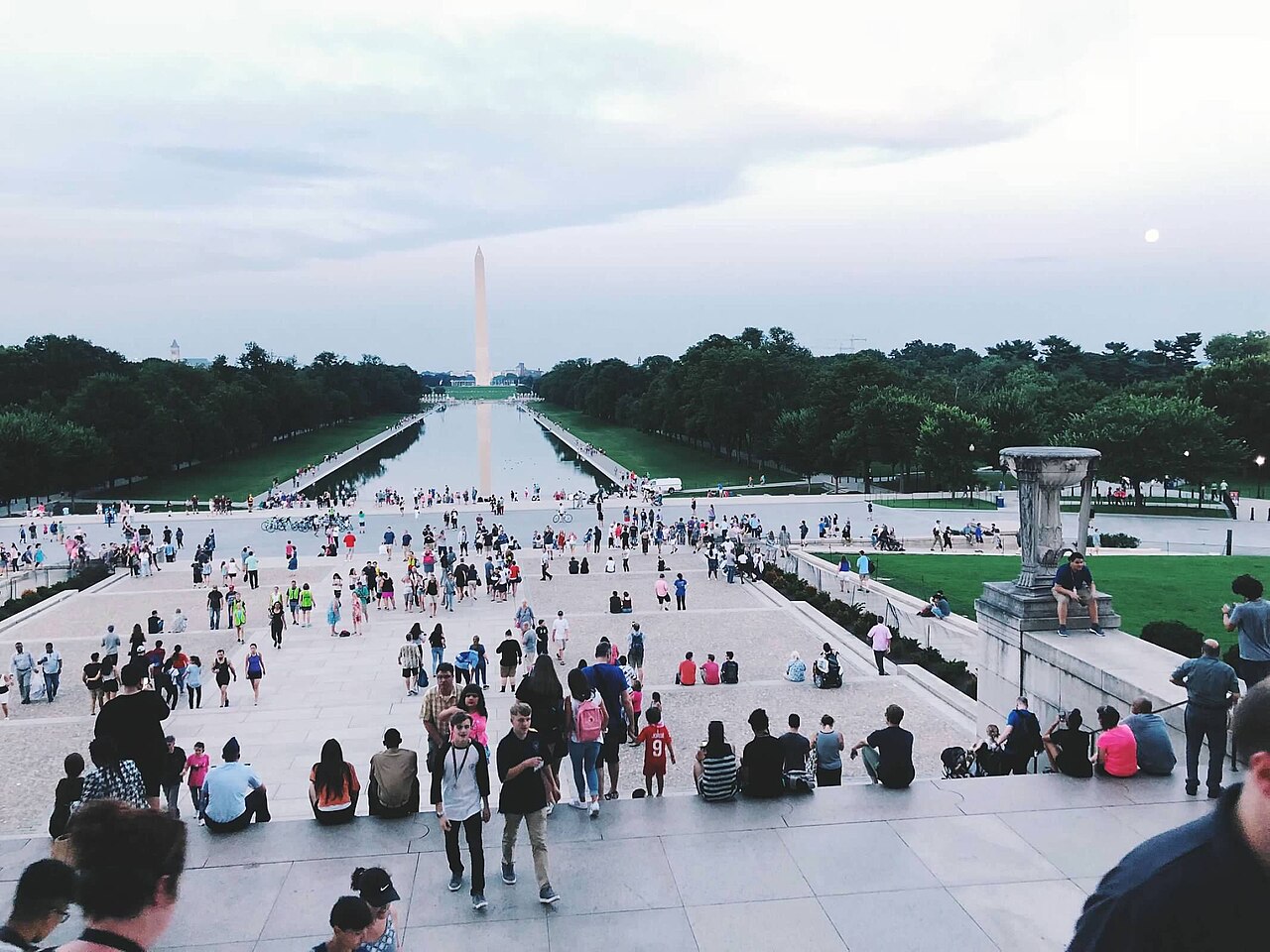
Voting rights and election access have returned to the center of national political debate ahead of the 2026 midterm elections. In Washington, D.C., thousands gathered August 28 for the “March on Washington 2026: Defend the Vote” rally at the Lincoln Memorial, where civil rights leaders said protections won during the 1960s are facing new pressure.
Thousands gathered at the Lincoln Memorial for the “Defend the Vote” march
The event was formally billed as “March on Washington 2026: Defend the Vote,” and organizers said it was held on Friday, August 28, 2026, to coincide with the 63rd anniversary of the 1963 March on Washington for Jobs and Freedom. The official event website said the program began on the National Mall with a gathering at 8 a.m. and a stage program at 9 a.m., while Reuters and the Associated Press both reported that thousands attended.
The rally was organized by the National Action Network led by the Rev. Al Sharpton and the Drum Major Institute led by Martin Luther King III and Arndrea Waters King, alongside more than 90 partner organizations, according to Reuters and event organizers. Coverage from Reuters identified groups including the NAACP and the National Urban League among those backing the march. Speakers used the Lincoln Memorial setting to connect the 2026 gathering directly to the original 1963 demonstration where Martin Luther King Jr. delivered his “I Have a Dream” speech.
The Associated Press reported that Sharpton called the 2026 event one of the most consequential of the anniversary marches because it followed a Supreme Court ruling this year affecting voting-rights protections. Reuters reported that Martin Luther King III told participants the anniversary was not only about remembrance but also about action. The scale of the turnout was described publicly as thousands, but organizers did not release a single official crowd count on the day of the event.
Although the subject of the rally was national election policy, the event’s immediate impact was centered in Washington, where the National Mall again served as the stage for a major civil rights demonstration. Marchers moved through a highly symbolic section of the capital, beginning at the Lincoln Memorial and proceeding past other national monuments, according to the Associated Press. That gave the city a visible role in a renewed public campaign around voting access.
What is confirmed is that Washington hosted the gathering and that national civil rights leaders, elected officials and advocacy groups used the city to amplify their message before the November midterms. Reuters reported that the march was timed to pressure lawmakers and rally public opposition to what organizers described as an erosion of voting protections. The event also drew national media attention because of its direct historical link to the 1963 march held in the same place.
What remains unclear is the full breakdown of attendance by state, any official estimate from federal or city agencies, and whether the demonstration will translate into specific legislative movement in Congress. Organizers publicly framed the event as a mobilization effort, but they did not release a comprehensive participant tally or a detailed post-event agenda on the day of the march. For Washington residents, the clearest immediate effect was the city’s role as the backdrop for a national debate playing out in real time.
Speakers and organizers said the cause of the rally was a combination of recent legal and political developments affecting how Americans vote and how districts are drawn. Reuters reported that the march came after a Supreme Court decision earlier in 2026 weakened a key provision of the Voting Rights Act, a ruling that was followed by redistricting disputes in several Southern states. The Associated Press separately reported that civil rights leaders linked the rally to a broader wave of changes in voting laws and district maps.
That context is especially significant because the 2026 midterm elections are close, and election administration has become a central flashpoint. Recent Associated Press reporting has also documented litigation over federal actions affecting mail voting and ongoing political fights over election procedures. Organizers argued those developments have created uncertainty around access to the ballot and revived concerns long associated with the civil rights movement.
For residents and voters, the practical takeaway is narrower than the rhetoric from the stage: no immediate voting rule changed because of the rally itself. What the event did do was place public attention on the rules, court cases and legislative battles that will shape how people cast ballots this fall. As of the weekend after the march, the demonstration stood as a large, symbolic show of support for voting-rights protections, with the policy fight continuing in courts, Congress and statehouses.