

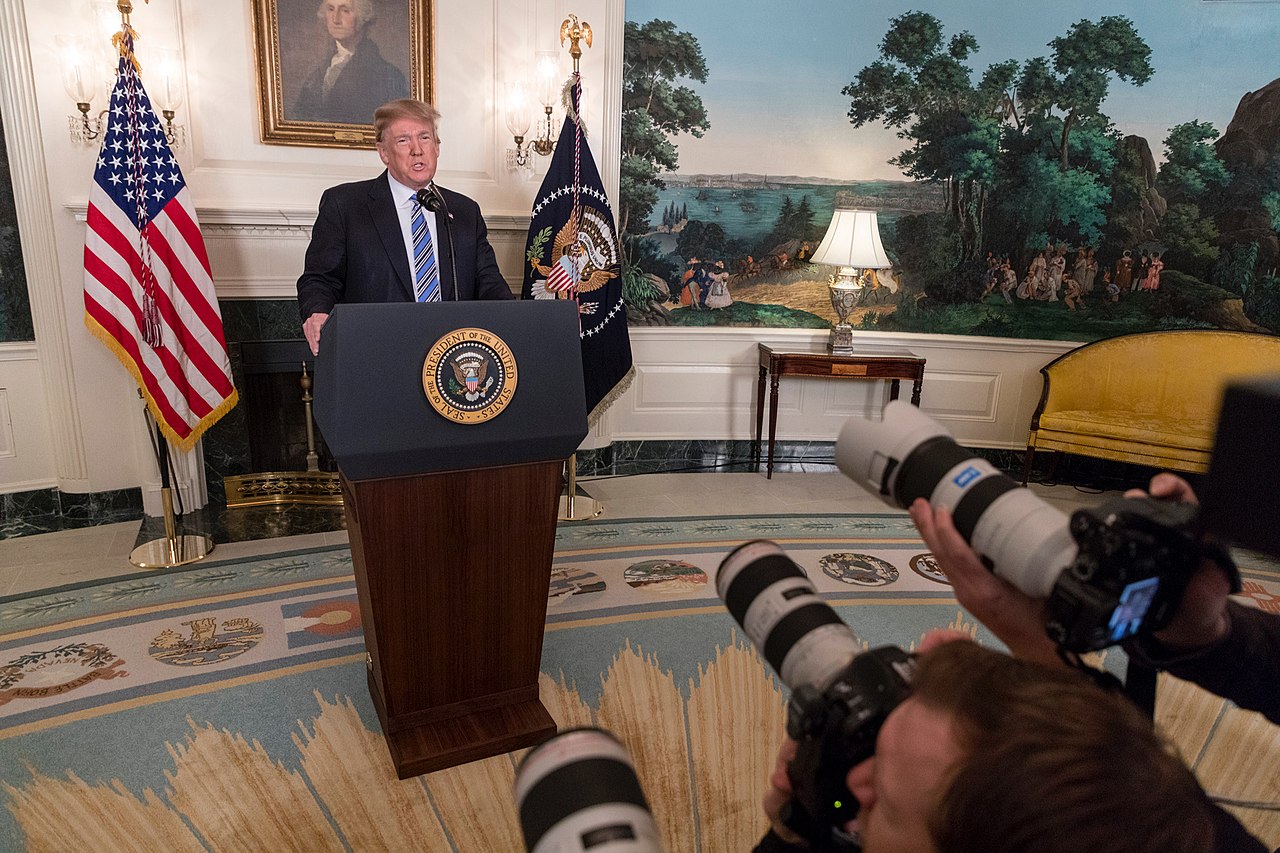
National tensions between the White House and major news organizations escalated again Friday as President Donald Trump broadened his attacks on outlets he says produce unfair coverage. The latest confrontation centered on Trump’s declaration that CNN, Politico and MS NOW are barred from the White House, with the president also indicating more media organizations could face similar treatment. In Washington, the announcement added fresh uncertainty about how access to presidential spaces will be controlled and challenged.
Trump announces new White House media ban and hints at more
President Donald Trump said Friday, September 18, that CNN, Politico and MS NOW were being banned from the White House, according to CBS News, the Associated Press and Reuters, after posting the announcement on Truth Social. Trump wrote that the move was “effective immediately” and said the outlets had engaged in what he described as false reporting. During an Oval Office event later Friday, he was asked to explain the action and said he was acting because the outlets were “fake news,” according to CBS News.
The scale of the action, as publicly described, involves three named news organizations with the possibility of additional outlets being added. Reuters reported that Trump said he could announce more names after first identifying CNN, Politico and MS NOW. The Associated Press similarly reported that the president threatened further bans, making this more than a dispute involving a single network or reporter.
What remains unclear is how the White House intends to enforce the directive. CBS News reported that Trump said he did not want those outlets in his office, meaning the Oval Office, but as of late Friday afternoon journalists from the named organizations were still on White House grounds. That gap between the declaration and its immediate effect has become a central question in assessing the practical reach of the order.
The confirmed impact so far is concentrated in Washington and specifically around White House access, not a nationwide restriction on broadcasting or publishing. Reports from CBS News, Reuters and the Associated Press describe the move as a White House access ban tied to presidential spaces and coverage logistics. None of the reporting indicates that the administration announced a broader federal prohibition on the outlets’ operations outside the White House complex.
Even within Washington, major details remain unsettled. The White House has not publicly released a written enforcement policy, a full description of which spaces are covered, or a procedural explanation for how the restriction would apply to daily press operations. That means it is not yet known whether the ban would affect the full White House campus, smaller pooled events, credentialing, or only certain restricted rooms such as the Oval Office.
The three targeted organizations quickly signaled resistance. CNN said it stands behind its White House reporting and stated that any follow-through on the threatened ban would violate constitutional protections, according to CBS News. Other outlets not named in Friday’s announcement are watching closely because Trump explicitly said more media organizations could follow.
The dispute comes with clear legal context from earlier White House press-access battles. CBS News reported that the administration previously moved against the Associated Press after the outlet refused to adopt Trump’s preferred “Gulf of America” terminology, and a federal judge in April 2025 ruled that the White House had to restore the AP’s access to presidential spaces. That case is still continuing through the courts, with an appeals court allowing a temporary restriction on some smaller spaces, according to CBS News.
First Amendment advocates said Friday’s move could face the same kind of challenge. Jameel Jaffer, executive director of the Knight First Amendment Institute at Columbia University, said the ban is unconstitutional and said exclusion from the White House press pool based on viewpoint would violate First Amendment protections, according to CBS News. Reuters also reported that the move is likely to be challenged on constitutional grounds.
For residents and readers, the immediate effect is that White House coverage rules may continue changing even as legal fights determine what can actually stand. There is no confirmed full list of additional outlets that could be targeted, and there is no public timetable for any expanded action. What is confirmed is that the administration has opened a new fight over press access in Washington, and the next steps are likely to unfold through both White House enforcement decisions and court review.