

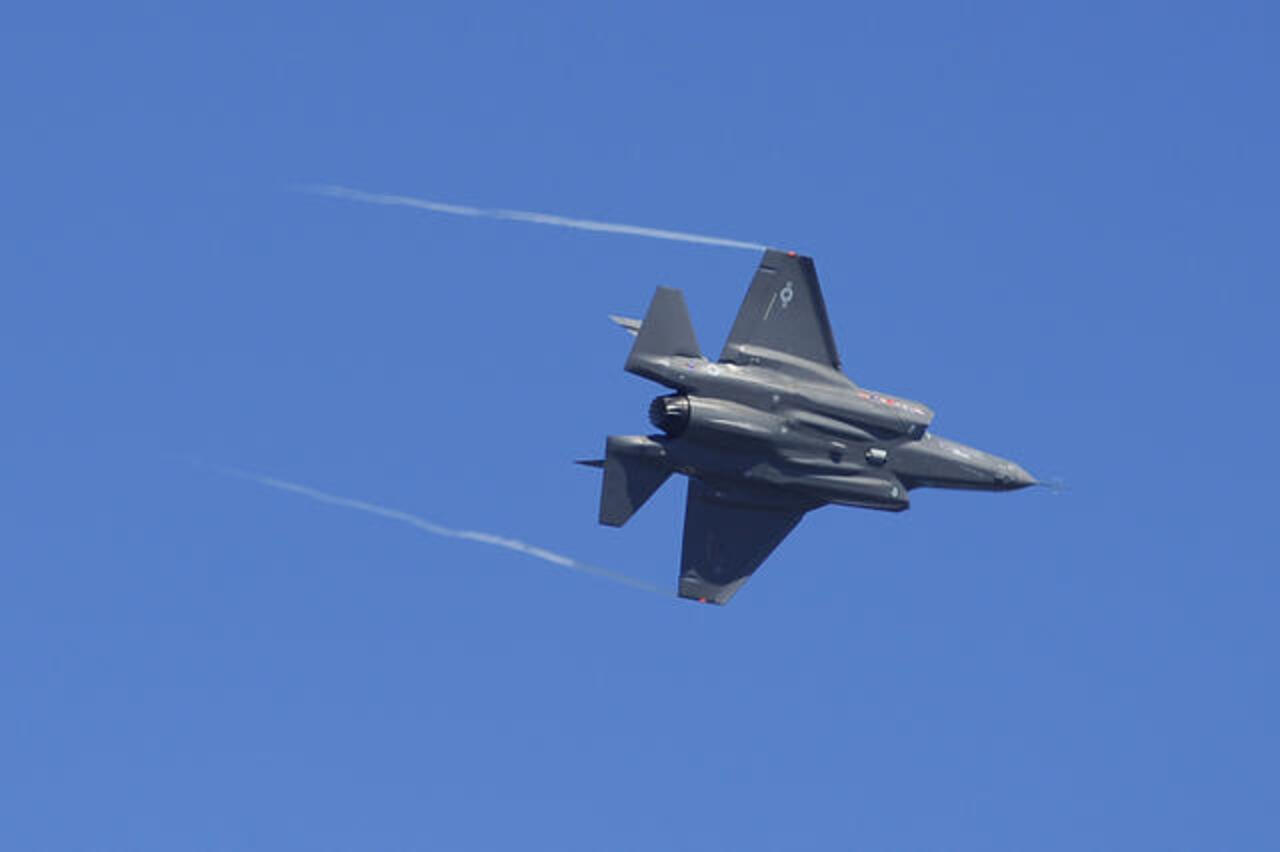
The United States has continued expanding military cooperation with key Middle East partners as regional tensions remain high and competition with China shapes national security decisions. That broader strategy now centers on Saudi Arabia, where the State Department on Sept. 17 approved a possible sale of advanced F-35 fighter jets despite documented concerns about the kingdom’s ties with Beijing. The proposed transfer would mark a major shift in U.S. policy toward Riyadh and one of the most sensitive arms decisions now before Congress.
The proposed sale and what was approved
The State Department approved a possible foreign military sale to Saudi Arabia for up to 48 Lockheed Martin F-35 Lightning II aircraft, 49 Pratt & Whitney engines, communications systems, spare parts, training and support, according to Reuters and other reports that cited the department’s congressional notification issued Sept. 17. The estimated value is $24.3 billion. The proposal still faces congressional review and is not a final signed contract.
Reuters reported that the package would amount to roughly two squadrons of aircraft, making it one of the most significant U.S. arms proposals for Saudi Arabia in years. The same report said Saudi Arabia has pressed for access to the F-35 for years, while Israel has remained the only Middle Eastern country to operate the aircraft. That history makes the approval notable beyond the dollar figure alone.
The Saudi Embassy in Washington welcomed the move, describing it as another step in defense cooperation between the two countries, according to Reuters. The administration has framed the sale as part of a broader effort to deepen security ties with Riyadh as the kingdom confronts regional threats, particularly from Iran. The State Department’s action does not complete the sale, but it formally moves the process into Congress.
The immediate impact is centered in Washington, where lawmakers now have the opportunity to review the proposed sale and decide whether to challenge it. Congress has previously scrutinized arms transfers to Saudi Arabia, especially after the 2018 killing of journalist Jamal Khashoggi, and Reuters noted that some members remain wary of expanding military cooperation. No final delivery schedule has been publicly released.
What is confirmed is the scale of the request and the administration’s decision to advance it despite security objections. What is not yet known is whether Congress will seek conditions, demand additional safeguards, or move to block the transfer altogether. The administration also has not publicly detailed the full technology-protection measures that would be attached to any eventual sale.
The decision also carries implications for U.S. defense policy in the Middle East. Reuters said Washington traditionally weighs arms sales through the lens of preserving Israel’s “qualitative military edge,” a long-standing U.S. standard meant to ensure Israel has more advanced capabilities than neighboring states. Approving F-35s for Saudi Arabia tests how that standard is interpreted at a time of shifting regional alliances and active conflict.
The sharpest objections have focused on Saudi Arabia’s relationship with China and the risk that sensitive F-35 technology could be exposed. A November 2025 letter from Reps. Raja Krishnamoorthi, Joe Courtney and Donald Norcross warned that Saudi Arabia’s deepening military and digital ties with the People’s Republic of China could jeopardize U.S. national security if operational know-how or technology were shared with Beijing. The lawmakers cited reported Pentagon intelligence concerns, Huawei’s cloud facility in Riyadh and China Telecom’s government-related work in the kingdom.
Reuters also reported that Saudi Arabia’s push for the aircraft comes amid broader modernization plans under Crown Prince Mohammed bin Salman’s Vision 2030 agenda. Saudi Arabia has sought to diversify defense relationships while maintaining its long security partnership with Washington. That balancing act is central to the debate now unfolding in Congress and across the national security establishment.
For U.S. residents following the issue, the practical next step is congressional review rather than immediate aircraft delivery. The sale has been approved in principle by the State Department, but major questions remain about oversight, security conditions and whether lawmakers will insist on added protections before the process moves forward. For now, the official record shows a proposed $24.3 billion transfer that has advanced, but not been finalized.