

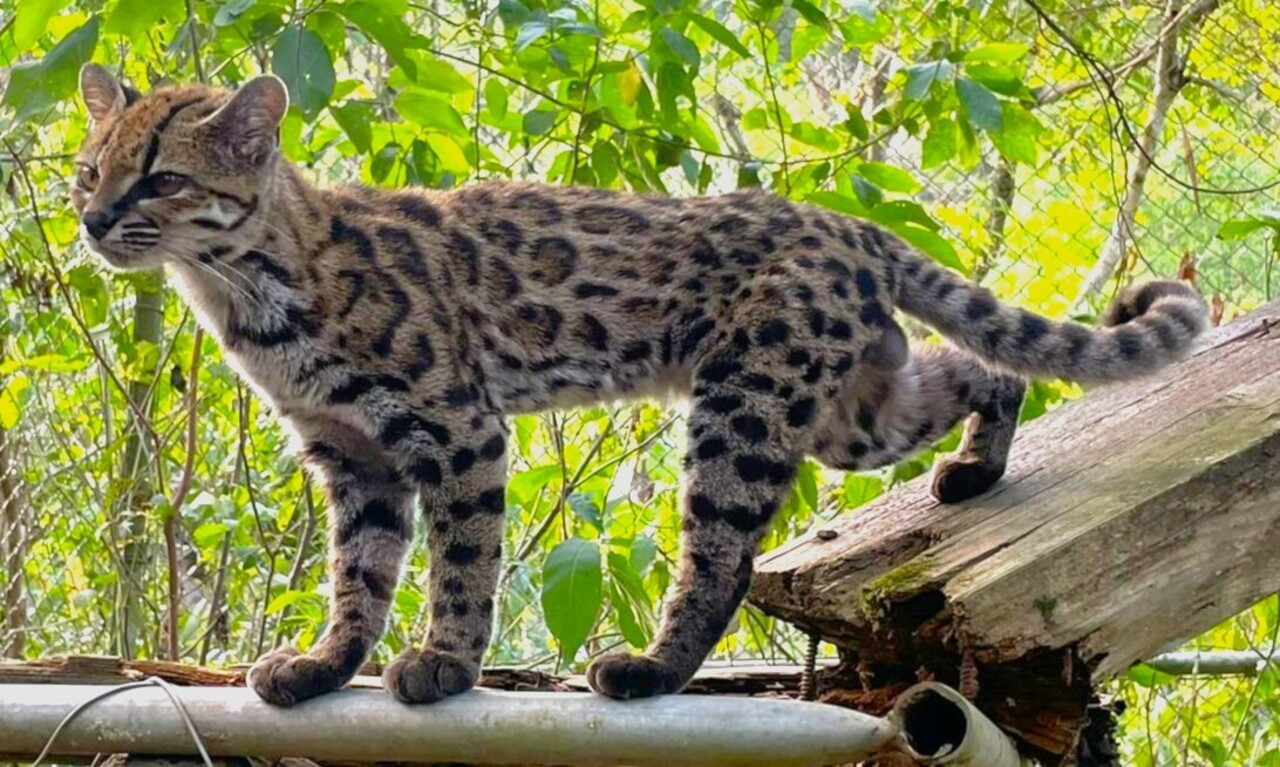
A newly described wildcat species is drawing global attention because discoveries in the cat family are rare and can alter conservation planning across continents. That development now centers on Bolivia, where scientists said a small spotted feline long known locally as the tilcayo has been formally identified as a separate species. The finding was published Sept. 17 in the journal Current Biology and marks the first newly named living wildcat species in more than 100 years.
Scientists formally name Leopardus tilcayo after genomic analysis
The newly identified species is Leopardus tilcayo, a small wildcat from Bolivia’s Yungas cloud forests that researchers formally described in a Sept. 17 study in Current Biology. According to reporting from the Associated Press and National Geographic, the study analyzed genomes from more than 30 cats, including a broad sample of Leopardus species, and found that the tilcayo lineage split from related tiger cats about 1.4 million years ago. The researchers said that evolutionary separation was large enough to support naming a distinct living species.
The animal that helped anchor the discovery had been living for years at the Senda Verde wildlife sanctuary in Bolivia after a local family found it in the forest and briefly tried to keep it as a pet, according to the Associated Press. Researchers said the male cat is notably small, measuring about 18 inches from head to the base of the tail and weighing roughly 3 pounds. Its coat is light brown with irregular dark rosettes, details that helped distinguish it from other tiger cats alongside the genetic evidence.
Scientists also said the broader paper revises tiger cat classification across South America. National Geographic reported that the study recognizes five distinct tiger cat species, rather than the simpler classification used for many years. That means the discovery is not only the naming of one new wildcat, but also part of a larger restructuring of the Leopardus family tree based on modern genomic work.
The confirmed geographic center of the discovery is Bolivia’s Yungas region, a subtropical cloud forest area on the eastern slopes of the Andes near La Paz. According to the Associated Press, local communities had long known the animal by the name “tilcayo,” and the scientists retained that local name in the formal scientific designation. Researchers said the species lives in Bolivia’s tropical Andean cloud forests, giving the finding an unusually specific local conservation focus.
What is confirmed is that the identified animal and the strongest current evidence come from Bolivia. What is not yet known is the full population size, the exact distribution of the species across the country, or whether meaningful populations extend beyond the areas already sampled. Scientific American reported that researchers have said it remains unclear how many tilcayos exist in the wild.
That uncertainty matters because species recognition can immediately narrow what scientists consider a species’ true range. National Geographic reported that splitting one broadly defined tiger cat grouping into several species means each species may occupy a smaller area than previously assumed. In practical terms, that can change how conservation agencies, sanctuaries and researchers assess risk in Bolivia and across neighboring parts of South America.
Researchers attributed the delayed identification to both science and circumstance. National Geographic reported that the cat first drew serious attention after biologist Paola Nogales-Ascarrunz examined it at Senda Verde in 2017 and later noticed that its markings did not match guidebook images of similar tiger cats from Brazil. The species was then confirmed only after advances in genomic analysis allowed scientists to compare complete genomes across museum specimens and modern samples.
The broader context is that small wildcats are less studied than larger cats and are often difficult to distinguish by appearance alone. According to National Geographic, even museum specimens have previously been misidentified, and remote camera images do not always provide enough detail to separate one small cat species from another. Study co-author Jonas Lescroart said the results show hidden diversity still exists even in a well-studied animal family, while outside experts told the Associated Press that the case shows local knowledge can precede formal scientific recognition.
For residents, researchers and wildlife officials in Bolivia, the practical implication is that a locally known animal now has formal scientific standing, which can influence future field surveys and conservation priorities. Scientific American reported that the authors said the finding should strengthen protection efforts for Yungas forests and related tiger cat habitats. For now, the next phase is not another naming decision but basic fieldwork: scientists still need better data on the tilcayo’s numbers, range and behavior in the wild.