

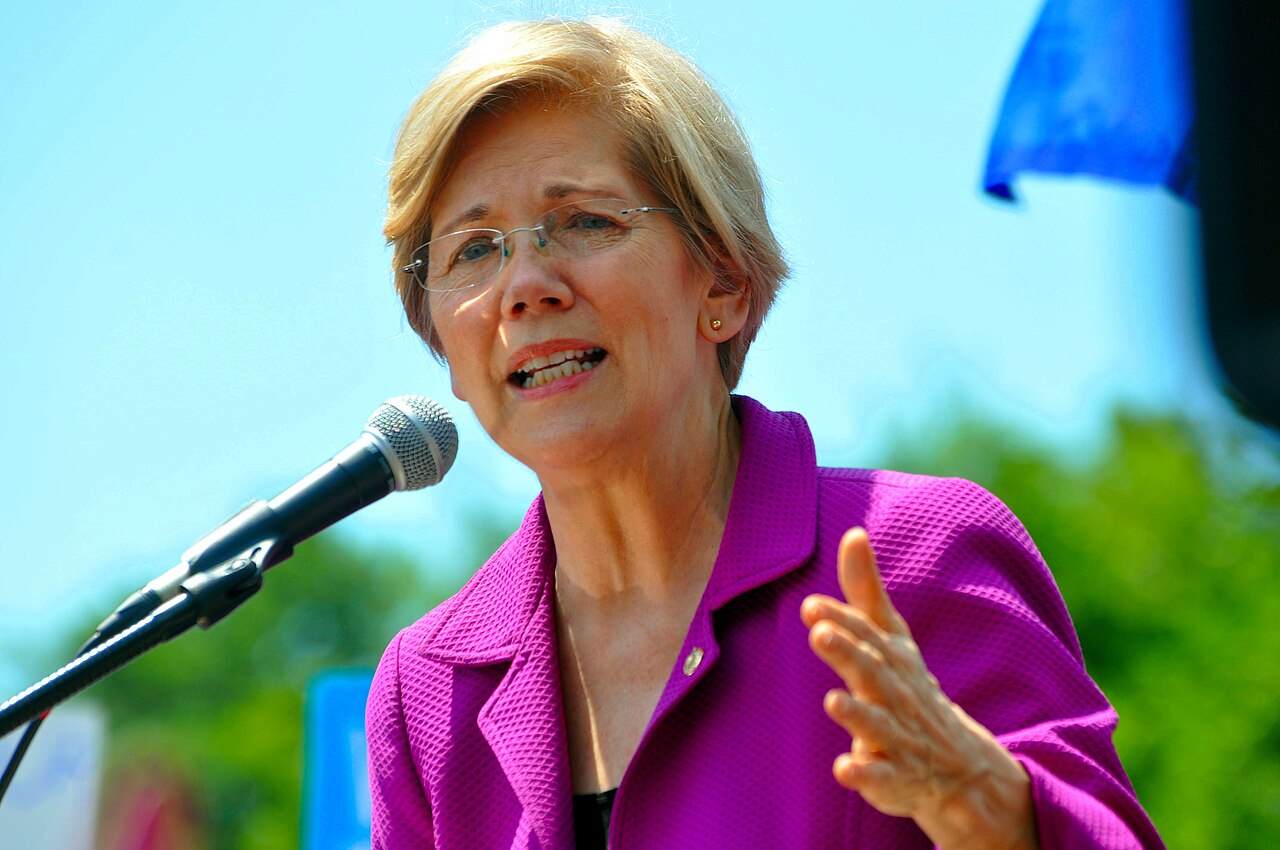
Federal ethics disclosures have increasingly drawn scrutiny as elected officials continue to buy and sell securities while shaping policy that can move markets. That debate sharpened again on September 22, when a newly released filing showed President Donald Trump’s accounts logged 1,156 securities transactions in July. Sen. Elizabeth Warren, a Massachusetts Democrat, said the scale of that activity is exactly why presidents should not be allowed to trade individual stocks.
July filing put the scale of Trump’s trading in plain view
The July disclosure, released publicly by the U.S. Office of Government Ethics on September 22, showed 1,156 purchases and sales made on Trump’s behalf during the month, with CNBC calculating the total value at roughly $79 million to $270 million. The filing also showed sales of Microsoft and Amazon shares that reached as much as $25 million each, according to CNBC’s review of the report. Reuters separately reported that Trump bought between $15,001 and $50,000 of SpaceX shares on July 10 and later sold as much as $15,000 worth on July 17.
Because federal disclosure forms use value ranges rather than exact figures, the precise size of each holding and trade is not publicly known. Reuters reported that limitation made it difficult to determine the exact amount of Trump’s investment in SpaceX and other positions. The filing nonetheless added another month of unusually heavy activity to a portfolio that has already drawn sustained attention in Washington.
Warren has made that volume central to her criticism. In an August statement issued with Rep. Robert Garcia, Warren said Trump’s disclosures showed 3,555 individual stock trades worth up to half a billion dollars in the first three months of 2026 and more than 14,000 stock trades worth up to $1.06 billion during his first year in office. She said the pattern raised questions about whether a president can trade extensively while also making decisions that affect the same markets.
Warren’s argument after the new July filing was consistent with her broader push for tighter ethics rules. Her office has said the concern is not only the dollar value of the trades, but also the possibility that presidential power, market-moving statements and inside knowledge of government actions can overlap with personal investing. In a Senate hearing earlier this year, Warren pointed to Trump’s signed disclosure and said the trades occurred while he was making decisions affecting those companies and sectors.
What is confirmed by the public filing is the number of July transactions and the broad categories of assets involved, including stocks, funds and bonds. What is not yet known from the disclosure is who specifically directed each trade at each moment, because the forms do not provide that level of detail. One transaction highlighted in coverage involved Northrop Grumman on the same day Trump signed an executive order affecting defense supply-chain requirements, but published reports said the filing does not show the precise execution time.
The White House has defended the arrangement. Reuters reported that spokesman Davis Ingle said third-party financial institutions independently manage the president’s portfolio and replicate recognized indexes. That explanation has become a central part of the administration’s response as critics continue pressing for more detailed answers about oversight and decision-making.
The latest disclosure lands in the middle of a longer-running debate over the STOCK Act and whether current rules are strong enough for presidents and other senior officials. Current law generally allows presidents, vice presidents and members of Congress to own and trade stocks, so long as they disclose transactions. Critics, including Warren, have argued that disclosure alone does not solve the conflict posed when a sitting president can influence industries, contractors and financial markets.
That debate has widened because Trump’s July filing did not stand alone. Public reporting on earlier disclosures showed similarly brisk trading in prior months, reinforcing the impression that the July activity was part of an ongoing pattern rather than an isolated burst. Warren and Garcia have asked Trump to identify the money managers behind the accounts and explain transactions they said deserved closer scrutiny.
For the public, the immediate takeaway is practical rather than procedural: the disclosures offer a partial but official window into how actively the president’s accounts are trading, even if they do not reveal exact dollar amounts or timing for every move. The filing released September 22 is likely to keep attention on whether existing disclosure rules are enough, while the White House continues to state that outside managers, not Trump personally, execute the portfolio’s trades.