

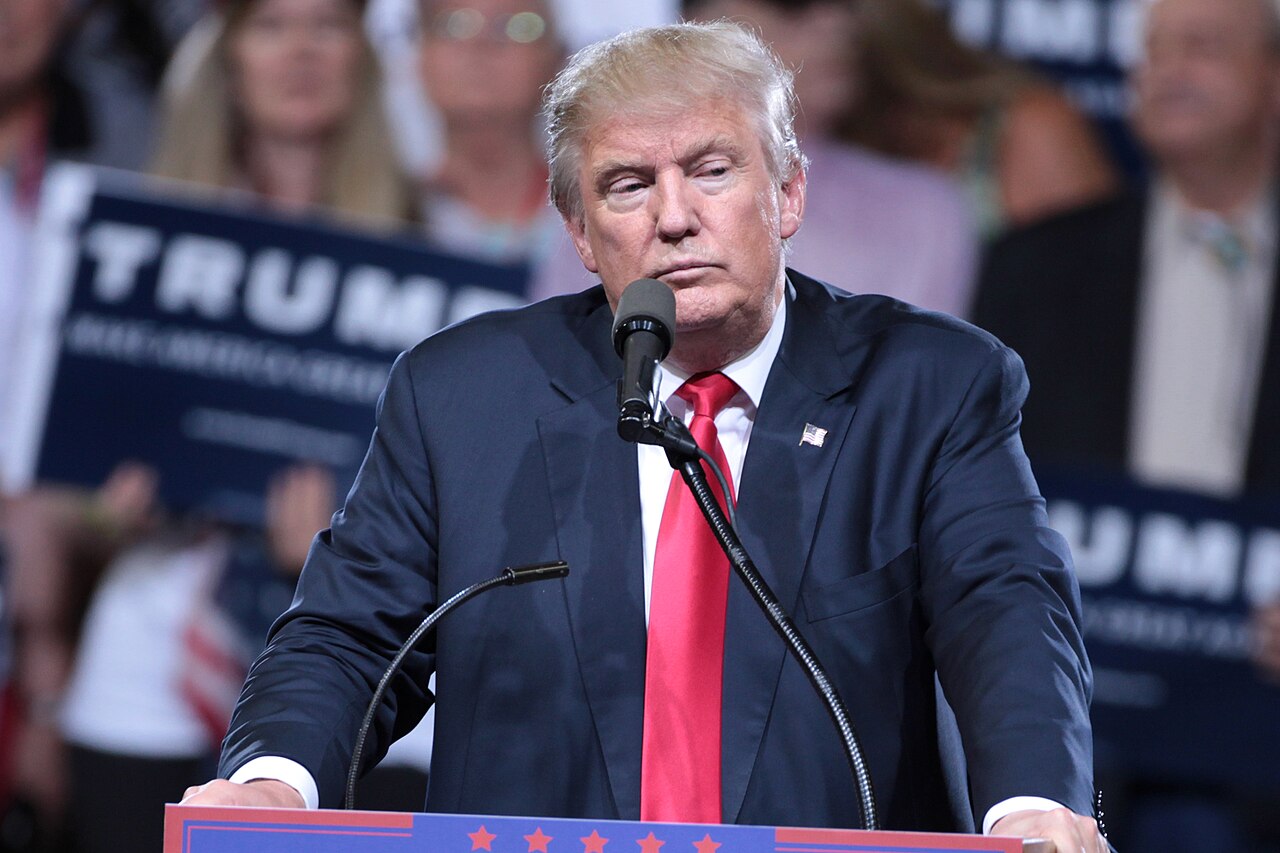
Artificial intelligence policy has become a fast-moving fight in Washington as tech companies, lawmakers and regulators debate whether the industry needs stronger safety rules. That debate sharpened this month when President Donald Trump publicly dismissed existential AI warnings and then used a United Nations speech on September 22 to say the U.S. should stop calling it artificial intelligence. His remarks added a political flashpoint to a policy dispute already shaping how the federal government approaches one of the country’s biggest technology sectors.
Trump escalated the fight over AI warnings at the United Nations
Trump’s most direct move came on September 22 at the United Nations General Assembly, where Reuters reported he said U.S. government documents would use “super intelligence” going forward instead of artificial intelligence. In the same speech, he repeated his criticism of AI safety warnings, extending a line of argument he had already used in public statements earlier in the month. The White House had not publicly released a broader implementation plan for the terminology change as of that date.
The comments followed Trump’s September 14 social media posts and public remarks rejecting calls for new AI guardrails. Reuters reported that Trump said the United States already had tools to regulate and prosecute AI companies if needed, while arguing that new rules could slow U.S. development as competition with China intensifies. He also said concerns raised by parts of the industry amounted to a “hoax.”
That language drew attention because Trump explicitly linked AI fears to political grievances he frequently revisits. PolitiFact, reviewing his September 22 UN speech, reported that Trump compared people warning about AI to those behind what he called the “Russia hoax,” the “Ukraine hoax” and climate change warnings. The same fact-check noted that Trump used similar framing in recent Truth Social posts, turning a technical policy debate into a broader political message aimed at his base.
The practical effect of Trump’s remarks is national because federal AI policy is being shaped in Washington, through executive branch messaging, agency guidance and possible future rulemaking. What is confirmed is that Trump and close advisers have publicly argued against new AI-specific federal regulation, while framing existing law enforcement powers as sufficient, according to Reuters. What is not yet known is whether agencies have formally begun changing language in guidance, procurement documents or regulatory materials.
There is also no public evidence yet of a comprehensive government-wide order requiring every department to replace the term AI with “super intelligence.” Associated Press reporting cited uncertainty about whether an official order had been issued after Trump’s remarks. That leaves open how much of the change is rhetorical and how much will become administrative policy across the federal bureaucracy.
The issue matters beyond Washington because federal terminology and enforcement posture can influence companies building data centers, cloud systems and advanced models across multiple states. Reuters reported that Trump has tied AI development to economic growth and has argued that data centers can bring wealth to states and communities. But as of now, there is no verified public list of state-specific policy changes, grants, or enforcement actions directly triggered by his September 22 speech.
The immediate backdrop is a wave of new AI safety warnings from inside the technology sector itself. Reuters reported on September 14 that public alarm rose after Anthropic researcher Jacob Coxon resigned and said some people building AI believe it could become catastrophic within the decade. That concern was amplified by Anthropic CEO Dario Amodei’s September 12 essay urging regulations such as independent audits for the most advanced models, according to Reuters.
Trump’s allies have answered that message by arguing the industry does not need a new federal rulebook. Reuters reported on September 16 that outside tech adviser David Sacks said public concern about AI was being driven by advocacy campaigns and media coverage, while maintaining that developers should be liable if harms occur. That position aligns with Trump’s argument that existing laws, rather than new AI-specific regulation, should govern the sector.
For residents, businesses and local governments, the main takeaway is that federal AI policy remains unsettled even as the administration signals a pro-growth approach. Companies may hear less emphasis from the White House on precautionary regulation and more focus on competition, infrastructure and domestic buildout. At the same time, lawmakers and AI executives continue pressing for safety standards, meaning the national debate over how the technology is governed is still active and unresolved.