

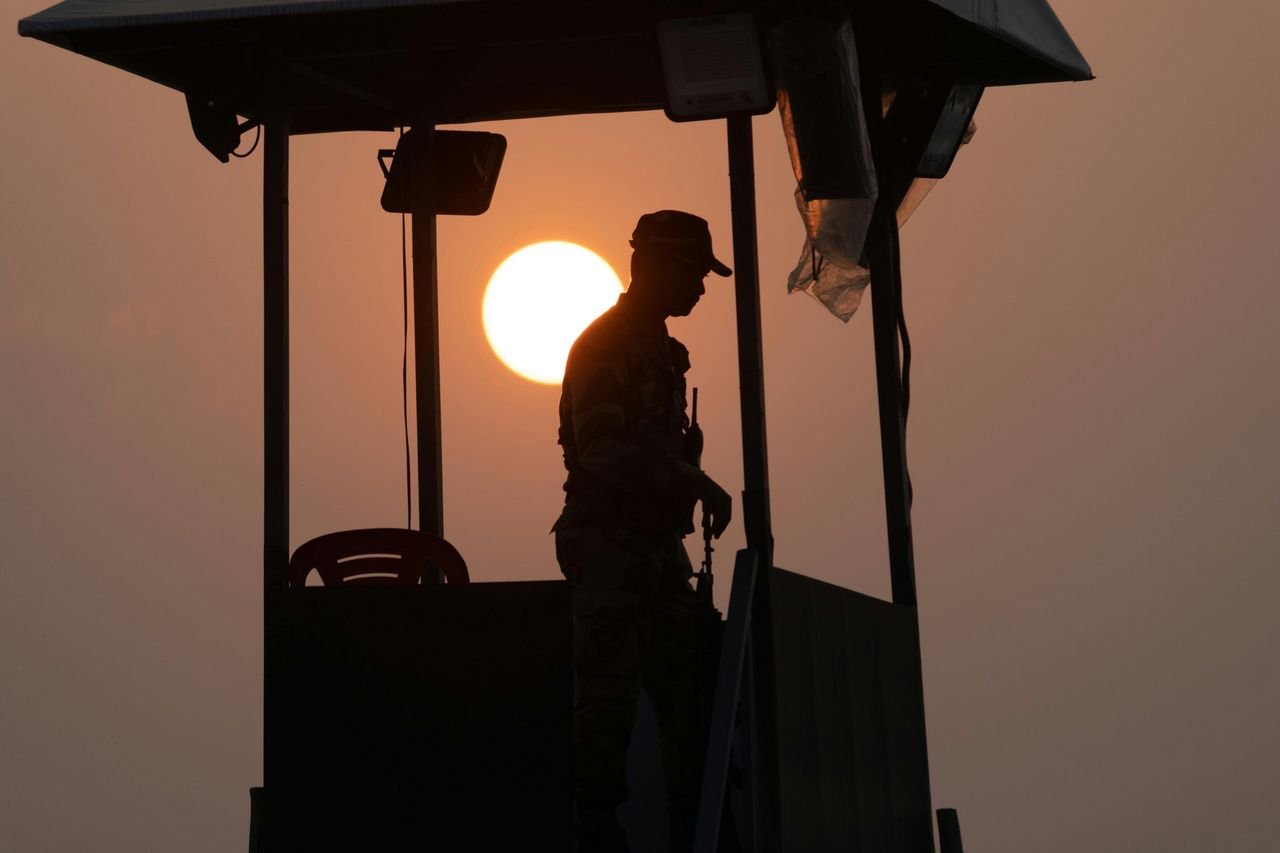
The latest India-Pakistan crisis did not remain a regional matter for long. Once military strikes, retaliatory threats, and nuclear overtones entered the picture in May 2025, world capitals began reading every signal from New Delhi and Islamabad as a measure of whether South Asia was moving toward containment or catastrophe.
Why the crisis commands global attention

The immediate trigger for the 2025 crisis was the April 22, 2025 attack in Pahalgam in Indian-administered Jammu and Kashmir, where 26 civilians were killed. The massacre shattered a fragile sense that tourism-heavy areas might remain partly insulated from militant violence, and it produced a rapid political response in India centered on punishment, deterrence, and diplomatic pressure. According to reporting carried by Reuters and other major outlets, India soon downgraded ties with Pakistan and suspended its participation in the Indus Waters Treaty, one of the most durable agreements ever sustained between the two rivals.
That sequence instantly transformed the crisis from a security emergency into a wider strategic confrontation. A terror attack was no longer being treated as an isolated outrage; it had become the basis for a broader restructuring of bilateral relations. Water, trade, airspace, diplomacy, and military signaling were all drawn into the dispute. When one of the few surviving institutional guardrails between India and Pakistan comes under strain, outside powers take notice because it suggests that escalation is no longer confined to the Line of Control.
The international anxiety is not merely about another border clash. India and Pakistan are both nuclear-armed states with a long history of wars, limited wars, proxy violence, and recurring crises over Kashmir. The United Nations warned in early May 2025 that “the world cannot afford a military confrontation between India and Pakistan,” a phrase that captured the mood far beyond South Asia. The concern was not rhetorical inflation. It reflected the fact that even a conflict initially framed as calibrated retaliation can become difficult to control once both sides feel compelled to preserve credibility.
This is why leaders in Washington, Beijing, Moscow, Paris, Tokyo, and Gulf capitals watch the crisis so closely. They are not only responding to immediate violence. They are trying to interpret intent: whether strikes are symbolic or expansive, whether military messaging is meant for domestic audiences or actual coercion, and whether back-channel communication remains functional. In nuclearized rivalries, ambiguity itself becomes a strategic danger.
How global powers are reading the signals
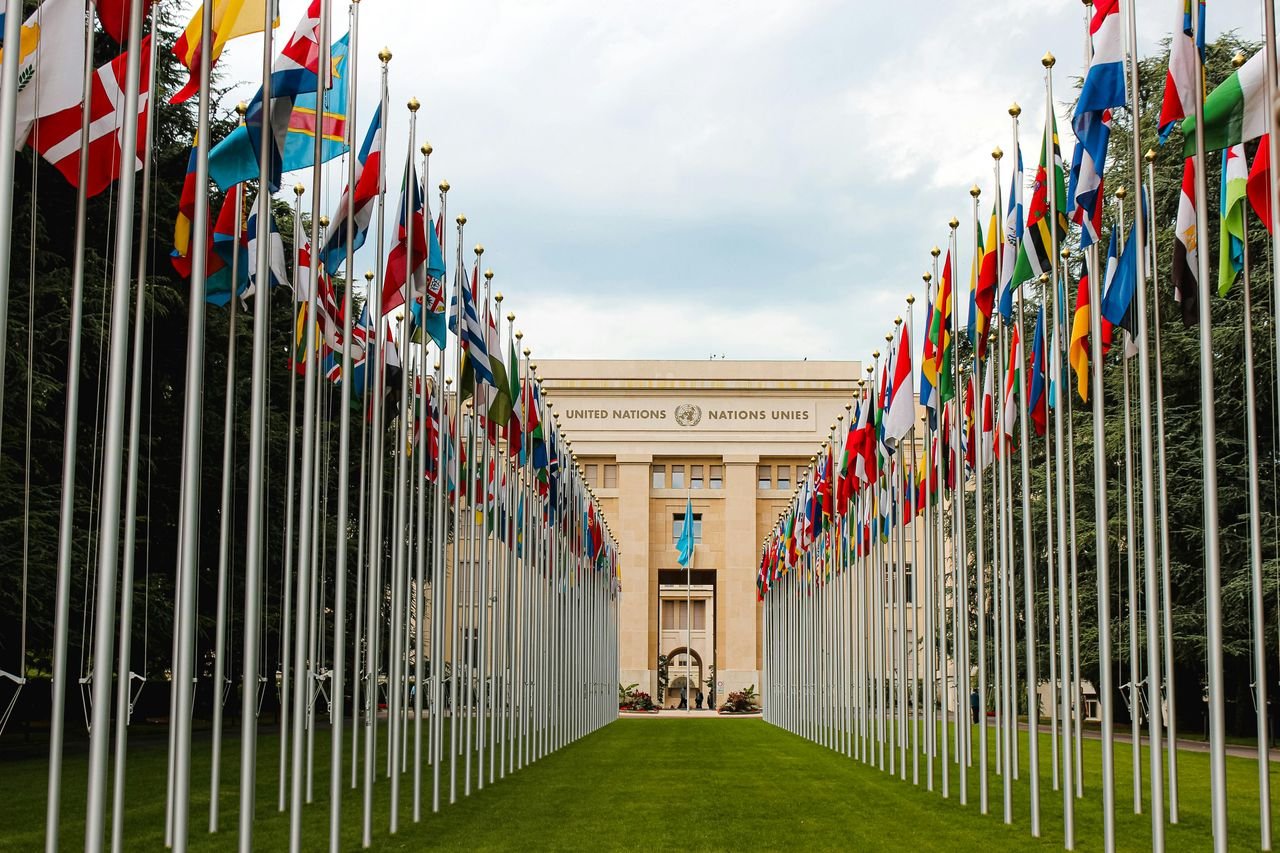
International reactions in May 2025 were notable for both their speed and their caution. The United States said it was closely monitoring the situation, while President Donald Trump publicly expressed hope that the fighting would end quickly. Secretary of State Marco Rubio also said Washington would remain engaged with Indian and Pakistani leadership in pursuit of a peaceful resolution. Yet the tone of the American response suggested a careful balancing act: recognizing India’s counterterrorism concerns while also trying to prevent retaliatory action from broadening into sustained interstate conflict.
China’s reaction was equally revealing. Beijing described India’s military operation as regrettable and urged both sides to remain calm and exercise restraint, according to statements widely cited by Reuters. That language matters because China is not a neutral observer in South Asia. It has deep strategic ties with Pakistan, a contested border and unresolved rivalry with India, and a significant stake in regional stability through trade corridors and wider Asian security calculations. Chinese caution therefore reflected both principle and self-interest.
Other governments also moved quickly to stake out positions that condemned terrorism but prioritized de-escalation. Japan warned that the situation could spiral into full-scale military conflict and urged restraint through dialogue. France called on both countries to avoid escalation. Russia expressed deep concern over the growing military confrontation. The United Arab Emirates appealed for de-escalation in the interest of regional and international peace. These statements shared a common structure: no major power wanted to appear indifferent to the Pahalgam attack, but none wanted to endorse an open-ended cycle of retaliation either.
Such responses reveal how foreign capitals now read India-Pakistan crises less as isolated bilateral events and more as systemic stress tests. A military exchange in South Asia affects energy markets, airline routes, investor confidence, defense postures, and diplomatic bandwidth across multiple regions. In 2025, financial markets in both countries showed signs of stress during the confrontation, underscoring how even brief escalations can produce wider economic shocks.
The result is a form of intense international scrutiny that is both public and private. Publicly, leaders call for restraint. Privately, diplomats and security officials try to identify red lines, clarify intentions, and reinforce the channels that still function between the two militaries. In this sense, world leaders are not simply watching events unfold. They are trying to influence the tempo of the crisis before the logic of retaliation outruns diplomacy.
The nuclear shadow behind every diplomatic message
The extraordinary sensitivity surrounding the crisis cannot be understood without the nuclear dimension. The fear is not necessarily that either side is eager to cross the nuclear threshold. Rather, the concern is that conventional operations, if misread or expanded, could create pressure, panic, or confusion that changes the strategic environment faster than decision-makers can manage it. That is why outside governments react so strongly even to limited strikes.
A 2026 analysis by the British American Security Information Council argued that the May 2025 crisis should be understood as a nuclear crisis even though nuclear weapons were not used, because their presence shaped incentives, perceptions, and escalation risks throughout. The report also stressed that India-Pakistan competition reflects the stability-instability paradox: nuclear deterrence may reduce the likelihood of all-out war while making lower-level military confrontation more thinkable. In practical terms, that means each side may believe it can act forcefully below the nuclear threshold, even as every move heightens the possibility of miscalculation.
This is precisely the dilemma world leaders are watching. A strike intended as limited punishment may be seen by the other side as the opening phase of a larger campaign. An attack on an airbase or military node may be interpreted not only in conventional terms but also in relation to nuclear infrastructure, command systems, or strategic signaling. The BASIC report warned that conventional-nuclear entanglement was a serious issue in the May 2025 crisis, especially where conventional attacks occurred near assets associated with nuclear-capable systems.
For outside powers, therefore, diplomatic language serves several purposes at once. Calls for restraint are meant to slow operational momentum. Condemnations of terrorism are designed to acknowledge the original provocation. Offers of mediation or “good offices” are intended to preserve face for both sides while creating off-ramps. Even carefully chosen adjectives such as “regrettable,” “deeply concerned,” or “maximum restraint” are part of a broader attempt to stabilize expectations.
The nuclear shadow also explains why crisis communications become internationally significant. When information is partial, nationalist rhetoric is rising, and military forces are on alert, the possibility of accidental or inadvertent escalation becomes harder to dismiss. In such moments, the world’s leading governments watch not only what India and Pakistan do, but how clearly they communicate what they are doing. In a nuclearized rivalry, uncertainty can be more dangerous than aggression itself.
Crisis management depends on communication, not just deterrence
One of the most important lessons of the 2025 crisis is that deterrence alone does not guarantee control. Both India and Pakistan may believe that nuclear weapons cap escalation, yet crises still accelerate because domestic political incentives, military signaling, and distrust push leaders toward visible action. The crucial question then becomes whether there are reliable mechanisms to halt the climb.
Here, communication channels matter enormously. The BASIC study found that the DGMO hotline between the two militaries played an effective role in facilitating the May 10, 2025 ceasefire. Direct military-to-military communication helped coordinate the suspension of hostilities and formalize the ceasefire at the operational level. That finding is significant because India-Pakistan crises are often discussed in terms of force posture and doctrine, when in practice the existence of credible communication can be just as important in preventing disaster.
The United States and other outside actors appear to have recognized this in real time. Reports following the ceasefire indicated that Washington had been in touch with both sides, while other countries including Gulf states and regional partners also pressed for de-escalation. Yet even here, diplomacy was politically contested. Trump later described the United States as having helped substantially in securing the truce, while India pushed back against broader claims that trade incentives or external mediation had determined the ceasefire. That divergence itself illustrates how sensitive questions of sovereignty, prestige, and narrative remain in South Asian crises.
Communication, moreover, is not simply about making contact. It is about whether messages are trusted, accurately interpreted, and linked to genuine political willingness to step back. The BASIC report notes that hotlines can lose effectiveness when each side fears deception. Deep mistrust narrows the value of even established channels. This means that crisis management depends not only on institutional mechanisms but on the quality of strategic judgment at the top.
For world leaders watching from afar, this is the most sobering reality. There is no automatic stabilizer in India-Pakistan relations. Nuclear deterrence may discourage total war, but it does not eliminate the danger of limited war, signaling contests, or unintended escalation. The margin between calibrated force and uncontrolled confrontation remains thinner than many public statements imply.
What the world should understand about the next phase
The central international challenge is not simply ending one round of violence. It is addressing the pattern that keeps returning South Asia to the brink. The 2025 crisis showed how quickly a militant attack, domestic political pressure, and retaliatory doctrine can interact with water disputes, diplomatic rupture, and military operations. Unless those layers are addressed together, each ceasefire risks becoming an interval rather than a settlement.
That is why global attention will remain intense long after the immediate exchanges fade. The future of the Indus Waters Treaty, the credibility of bilateral communication channels, the management of militant violence, and the military doctrines of both states will all shape whether the next crisis begins from an even more dangerous baseline. World leaders understand that the issue is no longer whether India and Pakistan will experience tension again. It is whether the guardrails available next time will be weaker than they were in May 2025.
There is also a broader geopolitical reason for sustained scrutiny. India is central to multiple international strategies involving trade, technology, maritime security, and balancing China. Pakistan remains important in regional security, ties with China, Gulf diplomacy, and the politics of the Muslim world. Neither state can be treated as peripheral. A crisis between them immediately intersects with the priorities of major powers that may disagree on almost everything else.
For the general public, the most important point is this: when world leaders watch every move in an India-Pakistan crisis, they are not indulging in diplomatic theater. They are responding to a confrontation in which local violence can have global strategic implications. The language of restraint, concern, and urgent diplomacy may sound repetitive, but it reflects a hard truth. In South Asia, small signals can carry enormous weight.
The lesson of 2025 is therefore not merely that the world fears war between India and Pakistan. It is that the world understands how modern crises unfold: through layered retaliation, contested narratives, and the constant risk that one side’s limited message becomes the other side’s intolerable threat. That is why every move is watched. And that is why, when the next crisis comes, the international response will begin long before the firing stops.