

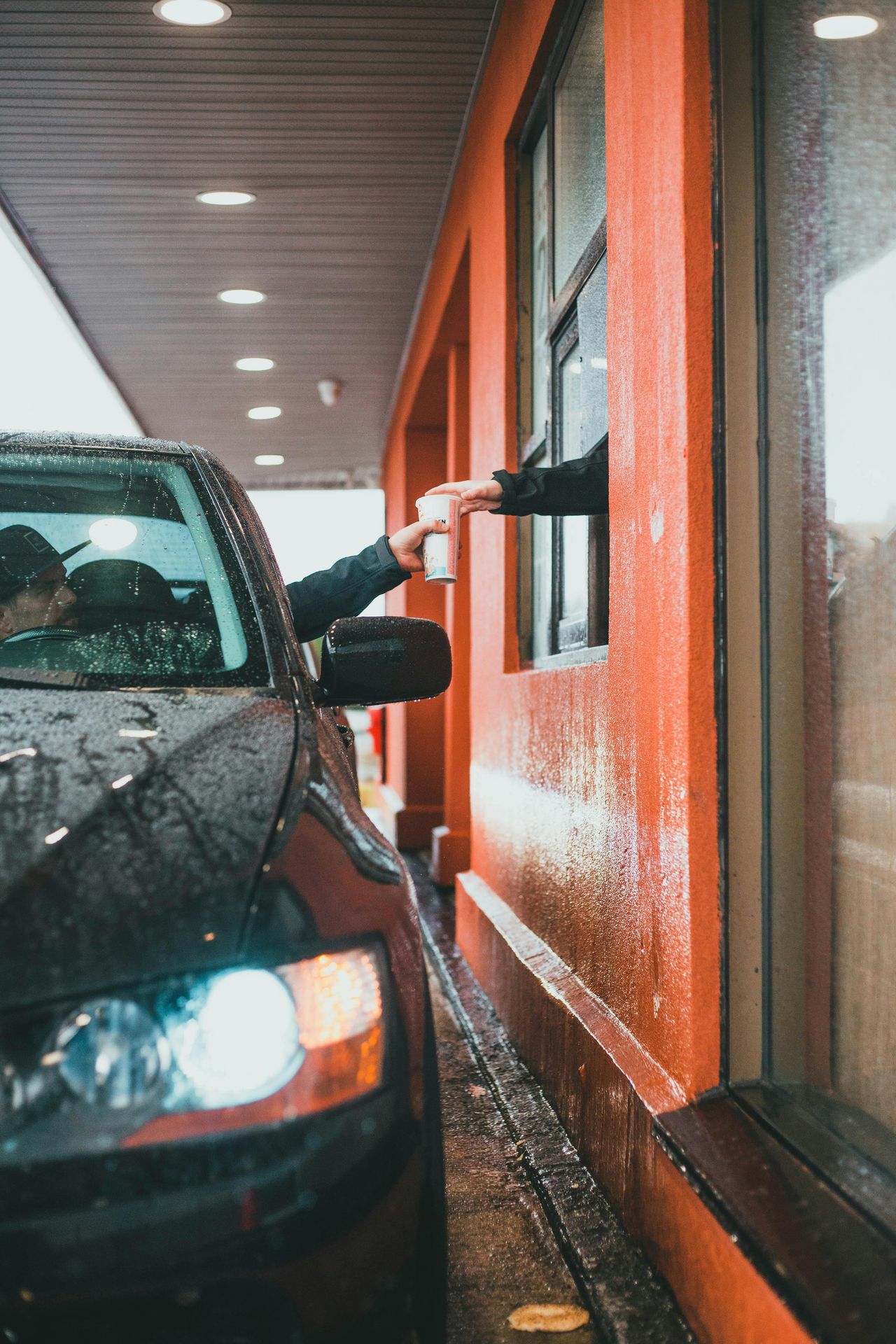
The slowdown is subtle until you stand at the window. Then it becomes impossible to miss.
For many fast-food workers, the change in American spending habits is not showing up first in earnings calls or market reports. It is showing up in the pauses between cars, in smaller tickets, in customers asking what still costs less than $5, and in a lane that no longer feels as relentlessly packed as it did during the pandemic boom.
The drive-thru is no longer the automatic bargain it once was

For years, the drive-thru represented the perfect modern convenience: fast, familiar, and usually cheap enough to feel like an easy decision. During the pandemic, it became even more central to American eating habits as dining rooms closed and off-premise ordering surged. But that era also trained consumers to accept repeated menu price increases, and now the limits of that tolerance are becoming clear. The quick-service industry is discovering that convenience alone does not always overcome sticker shock.
Recent data points tell the story. The American Customer Satisfaction Index reported that U.S. chain restaurant sales grew just 3.1% in 2024, below the 4.1% menu-price inflation rate, meaning consumers effectively spent less after adjusting for inflation. The same study said frustrated customers shifted from large fast-food brands toward smaller competitors, convenience stores, or simply eating at home more often. In other words, even when nominal sales held up, real demand was weakening under the surface.
Major restaurant companies have acknowledged the squeeze. In May 2025, McDonald’s said its U.S. same-store sales fell 3.6% in the first quarter, its steepest domestic decline since 2020. According to the company’s leadership, lower-income consumers earning $45,000 or less had reduced industrywide traffic by double-digit percentages, while middle-income customers were also pulling back sharply. That matters because fast food has long depended on repeat visits from budget-conscious households who once saw it as the most efficient way to buy a quick meal.
The drive-thru has felt that pressure especially hard because it sits at the intersection of speed and price expectations. If customers believe they are paying more than they should for a rushed meal, the lane loses its emotional advantage. The old logic was simple: drive-thru food was not the best meal, but it was the easiest good-enough option. As prices climbed, many Americans started asking a more uncomfortable question: if a combo meal costs this much, why not trade up, cook at home, or skip it entirely?
Workers notice the pullback long before quarterly reports do

When customer behavior shifts, frontline employees usually spot it before executives or analysts do. They see the order screens fill more slowly. They hear more requests to remove extras, substitute cheaper items, or split one meal between two people. They also absorb the frustration when customers feel surprised by totals that no longer match their mental picture of fast food as low-cost food.
That worker perspective matters because drive-thru jobs are built around rhythm. A strong lane has a cadence: car after car, steady order flow, predictable rushes, and average ticket patterns that managers can almost anticipate by instinct. When Americans spend less, that rhythm breaks. Workers start to notice longer dead spots between bursts, more customers pulling away after looking at the menu board, and an increase in cautious, price-led ordering rather than impulse additions like desserts, upgraded drinks, or extra sandwiches.
Industry research supports those observations. The 2025 QSR Drive-Thru Report described a market where traffic is down and diners are “guarding spend” as higher costs pressure household budgets. Intouch Insight’s 2025 drive-thru study found the average number of cars in line had fallen to 1.20, down from more than two cars per lane during the 2020 pandemic peak and slightly below the prior year. Even when that sounds like a modest change on paper, it feels significant to workers whose shifts are shaped by queue length, pace, and throughput.
The change is not just about fewer cars. It is also about what those cars represent. Workers report that guests are more deliberate, less forgiving, and more focused on getting exact value for money. That can create a paradox on the job: slower traffic does not necessarily make work easier. In many stores, lower volume comes with tighter labor scheduling, fewer staffed positions, and greater pressure to maintain service times with leaner crews. A lane with fewer customers can still feel tense if every transaction carries a sharper emotional edge.
For workers, the drive-thru slowdown is not an abstract economic trend. It is a lived pattern of changed behavior: more coupon questions, more app troubleshooting, more requests for separate checks, and more hesitation before a customer says yes to the total. The national conversation may focus on inflation and consumer sentiment, but in the headset, it sounds like one repeated phrase: “What’s the cheapest thing you have?”
The lane is under pressure from more than just inflation

Rising prices are the clearest reason Americans are spending less at drive-thrus, but they are not the only one. The drive-thru’s dominance was partly a product of circumstance. During the height of the pandemic, it absorbed extraordinary demand because other options were limited or uncomfortable. As normal routines returned, some of that business naturally redistributed to dine-in, pickup, and digital ordering. What looked like permanent channel growth turned out to be, at least in part, a temporary spike.
That rebalancing is now showing up across the industry. Intouch Insight reported that takeout traffic rose 15.5% year over year in 2025, delivery grew 13.5%, and dine-in visits rose 1.2% after a larger rebound in 2024. Mobile ordering has also changed the competitive landscape, with 57% of adults using it, including 74% of millennials and 65% of Gen Z. For major chains such as McDonald’s, digital channels account for up to 40% of total sales, giving customers more ways to bypass the traditional speaker-and-window experience altogether.
That matters because the drive-thru no longer owns convenience the way it once did. Curbside pickup, app-based ordering, and dedicated pickup shelves have reduced the lane’s monopoly on speed. If a customer can order ahead, skip the line, and avoid a garbled speaker exchange, the drive-thru loses one of its most powerful selling points. The more these alternatives improve, the more the lane must compete on both value and execution.
There is also a perception problem. As prices at many quick-service chains have risen, some consumers increasingly compare fast food not only with other fast food, but with fast-casual restaurants and even casual dining promotions. Placer.ai noted in May 2026 that fast-casual traffic rose 1.9% year over year in April while quick-service visits declined for a second straight month. That suggests some customers are re-evaluating whether traditional drive-thru chains still offer the best trade-off between quality, portion size, price, and convenience.
Workers see the consequences of that comparison every day. Customers arrive more skeptical, more app-dependent, and more selective. The lane still matters enormously, but it is no longer the only practical answer to “What should we get tonight?” In a more crowded convenience market, the drive-thru has to earn the visit in ways it did not have to a few years ago.
Chains are fighting back with value menus, technology, and tighter operations

Restaurant companies understand the danger of losing habitual drive-thru customers, which is why much of the industry response has centered on restoring a sense of value. Limited-time bundles, low-price meal deals, app-exclusive discounts, and revived combo branding are all attempts to tell consumers that fast food can still fit a stressed household budget. The problem is that value is not just a price point. It is a feeling, and once customers start doubting it, rebuilding trust becomes difficult.
That challenge is visible across the market. McDonald’s, which faced months of criticism over pricing, leaned heavily into value offers in 2024 and 2025. Other brands have done the same, launching meal bundles and discount platforms designed to pull cautious diners back into the fold. Restaurant industry analysts have noted that the resulting “value war” reflects something deeper than ordinary competition. It is a response to a consumer base that is no longer willing to pay premium fast-food prices without questioning the tradeoff.
At the same time, chains are investing in operational upgrades meant to improve the drive-thru experience. The 2025 QSR Drive-Thru Report highlighted the intensifying focus on speed, accuracy, and friendliness as key performance measures. Intouch Insight’s study found average total service time at the drive-thru reached 4 minutes and 15 seconds in 2025, 10 seconds longer than the year before, even as lines shortened. That combination is revealing: fewer cars do not automatically translate into faster service, especially when labor pressure, digital complexity, customized orders, and technology hiccups complicate operations.
Artificial intelligence is part of the new playbook as well. Chains across North America are testing AI-powered order-taking to reduce labor strain, improve consistency, and move cars through more efficiently. But technology is not a magic fix. Workers often become the human backstop when automation mishears an order, a loyalty account fails to load, or a digital system creates confusion instead of convenience. In many stores, innovation has not eliminated pressure on staff; it has simply changed the form that pressure takes.
So the industry response is happening on two fronts at once. Chains are trying to reassert value to customers while also squeezing more efficiency from each lane. For workers, that means the drive-thru is becoming both more strategically important and more operationally demanding, even as spending softens.
What this slowdown says about the American consumer now

The decline in drive-thru spending is about more than burgers and breakfast sandwiches. It is a revealing measure of how strained the American consumer feels. Fast food has always been one of the country’s clearest barometers of disposable income because it sits in the middle of everyday decision-making: not essential like groceries, not extravagant like a fancy dinner, but frequent enough to reflect confidence or caution in real time. When people start trimming there, it signals a broader recalibration.
The pressure is not limited to the lowest earners. McDonald’s leadership said in early 2025 that not only lower-income customers but also middle-income consumers were pulling back sharply. That broadening matters because it suggests the problem is not simply isolated hardship. It points to a wider sense that household budgets are under strain and that small indulgences are being reconsidered. If even the drive-thru is starting to feel expensive, Americans are likely reassessing spending across a much wider set of categories.
There is also a psychological shift underway. For years, fast food benefited from being an almost thoughtless purchase. It was the fallback option after a long day, the solution during errands, the easy yes for families in the car. Now more of those purchases are being deliberated. Consumers are checking apps before leaving home, comparing deals across chains, or deciding that a grocery run makes more sense. That does not mean the drive-thru is disappearing. It means it is losing some of its frictionless certainty.
For workers, that shift lands with unusual clarity. They are not just serving food; they are listening to a country negotiate with itself over what convenience is worth. They hear the budget arithmetic in every downgraded meal, every extra pause at the menu board, and every customer who decides against the add-on. In that sense, drive-thru workers are among the earliest witnesses to a larger economic mood.
Americans are still using drive-thrus, and the lane remains central to quick-service restaurants. But the era of easy spending has faded. What workers are noticing is not just a slower line. It is a more cautious country, one order at a time.