

A tense industrial emergency in Southern California has turned an ordinary neighborhood into the center of a high-stakes public safety operation. What began as a chemical problem at an aerospace facility has rapidly escalated into a major evacuation, with officials warning that a damaged tank could either crack open or explode.
Why the Garden Grove tank became an immediate regional emergency

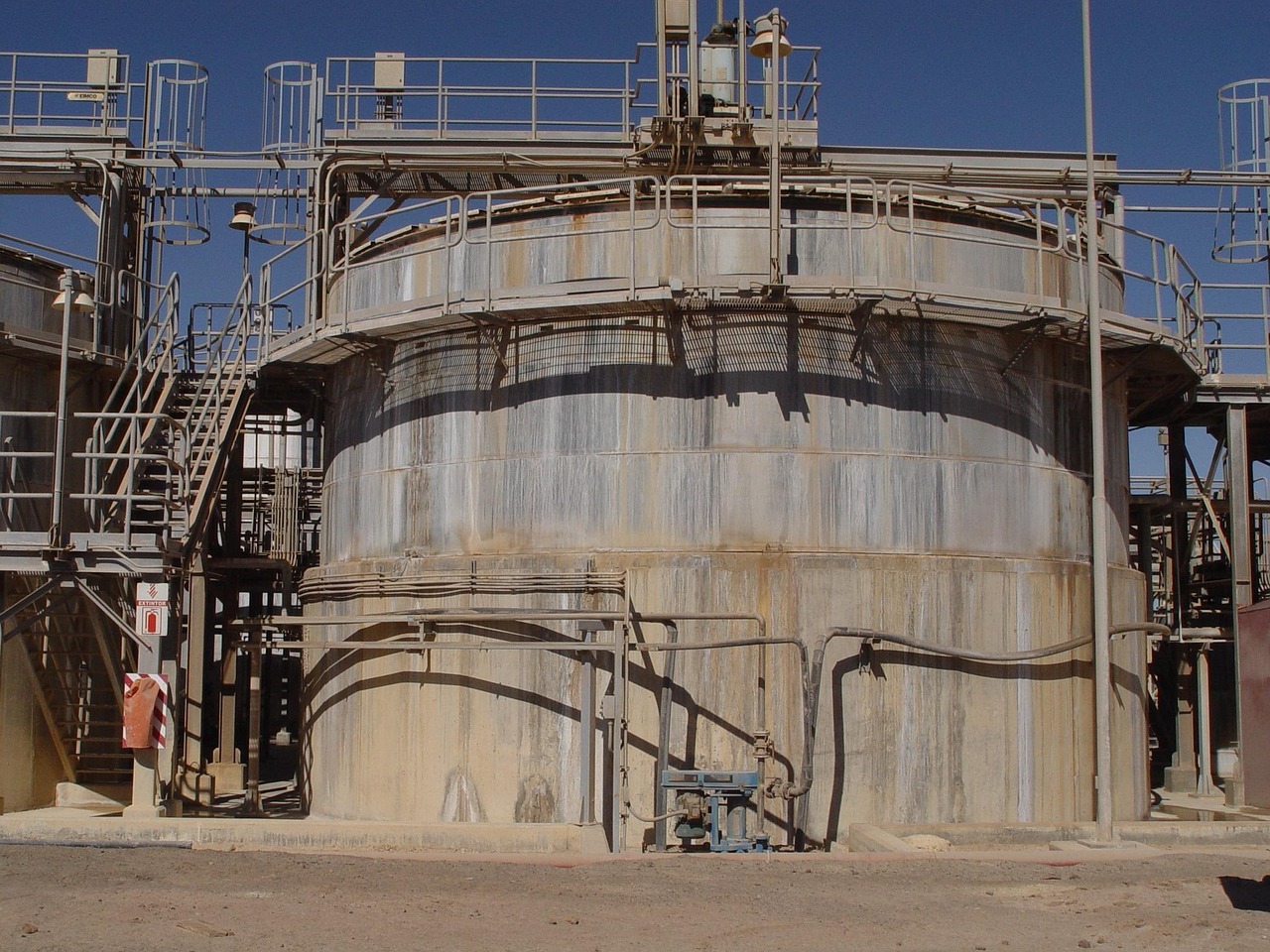
The crisis is centered in Garden Grove, an Orange County city about 40 miles south of downtown Los Angeles, where a damaged storage tank at a GKN Aerospace facility began venting hazardous vapors after overheating. According to the Associated Press and Reuters, the tank is a 34,000-gallon vessel containing methyl methacrylate, or MMA, a volatile chemical used in plastics manufacturing, including aerospace components. While the tank itself has a 34,000-gallon capacity, officials said it held roughly 6,000 to 7,000 gallons of MMA at the time the danger became acute. That distinction matters because even a partially filled vessel can create enormous pressure, flammability, and toxic exposure risks when heat and vapor buildup are involved.
Authorities have been unusually blunt about the danger. Orange County fire officials have said the tank is expected to fail in one of two ways: it could rupture and spill thousands of gallons of chemical material onto the ground, or it could ignite or explode, creating a fireball and a potentially dangerous vapor release. The Associated Press reported that the event was described by responders as highly unusual, while the Los Angeles Times characterized the emergency as severe enough to trigger fears of a massive blast in a densely populated part of Orange County. In practical terms, this is not a routine hazardous materials call but a prolonged, unstable incident with potentially catastrophic consequences.
The scale of the response reflects that reality. Evacuation orders and warnings spread across parts of Garden Grove and neighboring communities including Anaheim, Buena Park, Cypress, Stanton, Westminster, and surrounding areas, depending on operational updates from emergency managers. Reuters and the Associated Press reported that roughly 40,000 residents were initially covered by evacuation orders, while later reporting indicated that the broader affected population reached about 50,000 as officials reassessed the danger zone. That kind of population displacement is extraordinary for a single industrial tank incident and underscores how close homes, schools, roads, and businesses sit to heavy industrial operations in Southern California.
The timing also intensified the disruption. The emergency stretched into the Memorial Day weekend, turning a local industrial accident into a regional logistics challenge. Families were forced to decide whether to leave immediately, businesses lost operating time, and law enforcement had to secure evacuated neighborhoods while health officials warned of the possibility of respiratory harm if the chemical were released in significant quantities. By then, the story was no longer just about one tank. It had become a test of how fast Southern California could protect a large urban population from a fast-changing industrial threat.
What methyl methacrylate is and why officials are so concerned

Methyl methacrylate is a flammable industrial chemical used to make acrylic plastics and other manufactured components. It is widely used in industrial settings because it helps create strong, lightweight materials, which is one reason an aerospace manufacturer would have it on site. But the same chemical properties that make MMA useful in production also make it dangerous in an accident. It can produce hazardous vapors, ignite under the right conditions, and create significant health risks if people are exposed in enclosed or poorly ventilated areas.
Health officials have focused especially on inhalation risk. According to reporting from ABC News and the Associated Press, public health authorities warned that if the tank exploded or released large amounts of vapor, people in the surrounding area could face severe respiratory irritation or worse. Even without a blast, a chemical leak of this kind can create an invisible hazard zone where odor, vapor drift, and wind conditions complicate the response. That is why emergency planning around flammable chemicals often assumes that fire, toxic exposure, and evacuation logistics must all be managed at the same time rather than in sequence.
What makes this incident particularly dangerous is the combination of heat, confinement, and uncertainty. Fire crews have been trying to cool the tank, but the exact internal condition of a damaged chemical vessel can be difficult to assess in real time. If internal pressure rises too far, the structure can crack or violently fail. If a fissure develops and relieves some pressure, that may reduce explosion risk, but it can also increase the chance of a spill and vapor release. Reuters reported that officials were evaluating a possible crack that might have eased some pressure, yet authorities were still not ready to declare the site safe.
That uncertainty is why emergency language has remained cautious and urgent. Officials have not treated the discovery of a possible fissure as a resolution. Instead, they have framed it as one variable in a still-dangerous event. The tank’s contents remain flammable, the structure remains compromised, and any sudden change in pressure or ignition conditions could still produce a serious outcome. For nearby residents, that means the threat is not hypothetical. It is a live hazard shaped by chemistry, engineering limits, weather, and the narrow margins responders face when trying to stabilize industrial equipment that was never meant to fail this way.
The evacuation zone, the emergency declaration, and the strain on residents

One of the most striking features of the Garden Grove emergency is the size of the evacuation footprint. Officials established a broad zone extending roughly a mile around the facility, according to reporting from the Los Angeles Times and other outlets, and that radius swept through heavily populated residential and commercial areas. In a suburban environment where city boundaries blur together, an evacuation order does not affect one isolated block. It can disrupt school schedules, shutter businesses, displace vulnerable residents, and strain shelters and transportation systems almost immediately.
The human side of the crisis is easy to overlook when the focus is on chemical behavior and tank pressure. Tens of thousands of people were told to leave with little certainty about when they could come back. Some residents went to friends or relatives, while others relied on public shelters or temporary accommodations. Reuters reported that authorities also faced resistance from some residents who did not want to evacuate, a common challenge in fast-moving emergencies where the danger is invisible and the order feels abstract until something catastrophic happens. For emergency managers, persuading people to leave can be nearly as difficult as managing the hazard itself.
California Gov. Gavin Newsom declared a state of emergency as conditions worsened, a move reported by the Los Angeles Times and other outlets that signaled the seriousness of the threat and opened the door to broader state support. Such declarations are not symbolic gestures in incidents like this. They help mobilize agencies, resources, regulatory flexibility, and technical expertise that local responders may need when a situation extends beyond the capacity of a single city or county. In this case, the declaration reflected the reality that an unstable tank at one plant had become a multi-jurisdiction emergency with statewide implications.
The broader lesson is about urban vulnerability. Southern California’s industrial economy operates alongside neighborhoods, schools, and shopping corridors that are deeply woven into the same landscape. That arrangement supports jobs and manufacturing, but it also means industrial failures can produce immediate civilian consequences. The Garden Grove evacuation illustrates how modern metro regions are exposed not only to earthquakes, wildfires, and floods, but also to complex industrial incidents that require technical expertise, rapid communication, and public trust. When people are told to leave because a tank might explode, they are experiencing the consequences of land use, industrial regulation, and emergency planning all at once.
How firefighters and hazardous materials teams are trying to prevent disaster

Responders have approached the site with a mix of caution, technical improvisation, and defensive strategy. Fire crews have been spraying water on the tank in an effort to cool it and reduce the chance that rising temperatures will lead to a catastrophic failure. Images published by multiple outlets showed sustained water application, a standard but difficult tactic when dealing with overheated chemical storage. Cooling can buy time, but it does not necessarily solve the underlying structural problem if the vessel has already been compromised or if an internal reaction is continuing.
Officials have acknowledged that the response may require what one report described as an “out of the box” solution. That language captures the central challenge: there is no simple playbook when a large chemical tank is unstable, difficult to access safely, and located inside a populated urban area. Any intervention has to weigh two competing risks. Aggressive action could destabilize the vessel or trigger ignition, while a more passive approach might allow temperatures, pressure, or leakage to worsen. The result is a highly controlled operation where every move is tested against worst-case scenarios.
Technical teams also have to think beyond the single tank. Reuters and the Associated Press noted concern that an explosion could threaten other tanks or equipment at the site, raising the possibility of a chain reaction. That prospect dramatically changes incident planning because responders are no longer just trying to stop one release. They are trying to prevent an industrial escalation that could spread heat, debris, or chemical contamination across the facility. In hazardous materials response, secondary consequences often determine evacuation size, firefighting tactics, and public messaging far more than the first failure alone.
The possible crack identified over the weekend may have slightly changed the risk profile, but not enough to end the emergency. If the fissure is venting pressure gradually, that could make a sudden explosion less likely. Yet a slowly developing failure still presents severe spill, vapor, and ignition risks. That is why officials have resisted giving residents a quick all-clear. Stabilizing the scene means understanding whether the tank is cooling, whether pressure is dropping safely, whether vapors are dispersing, and whether the structure can hold long enough for a controlled resolution. Until those answers are clear, the response remains a race against both time and physics.
What this crisis reveals about industrial safety near major population centers

The Garden Grove emergency is not just a dramatic local story. It is a warning about how industrial risk persists in metropolitan areas where advanced manufacturing and dense residential development exist side by side. Aerospace and plastics facilities are part of Southern California’s economic backbone, but incidents like this show the public cost when hazardous materials storage goes wrong. The question is no longer whether industrial sites belong in urban counties. They already do. The real issue is whether oversight, maintenance, emergency planning, and community notification systems are robust enough for worst-case scenarios.
One key concern is transparency. Residents often know little about the chemicals stored near them until an emergency unfolds in real time. In the Garden Grove case, many people learned details about methyl methacrylate, tank capacity, and failure scenarios only after evacuation orders were issued. That pattern is common across the country. Communities may have general right-to-know frameworks, but in practice, most people do not fully understand the industrial hazards embedded in their neighborhoods. Crises like this tend to trigger public demands for clearer disclosure, more rigorous inspections, and updated local emergency plans.
Another lesson involves resilience in emergency communication. Officials had to explain a technically complex threat in plain language: leave now because the tank could fail or explode. That message is stark, but it is also effective. When public officials communicate clearly about uncertainty rather than pretending they have complete control, they are more likely to preserve trust. In this incident, the repeated warning that the tank could rupture or blow up conveyed both urgency and honesty. It also helped justify a very large evacuation footprint that might otherwise have seemed excessive to residents facing traffic, displacement, and business losses.
In the end, even if the tank never explodes, the incident will still stand as a major industrial near-disaster. A safe resolution would be a success, but not proof that the system worked perfectly. It would also be evidence of how close a densely populated region came to something much worse. The response in Garden Grove has shown the value of decisive evacuation orders, interagency coordination, and technical caution. It has also raised harder questions about chemical storage, aging infrastructure, and the risks urban communities inherit when dangerous industrial materials are kept within reach of tens of thousands of homes.