

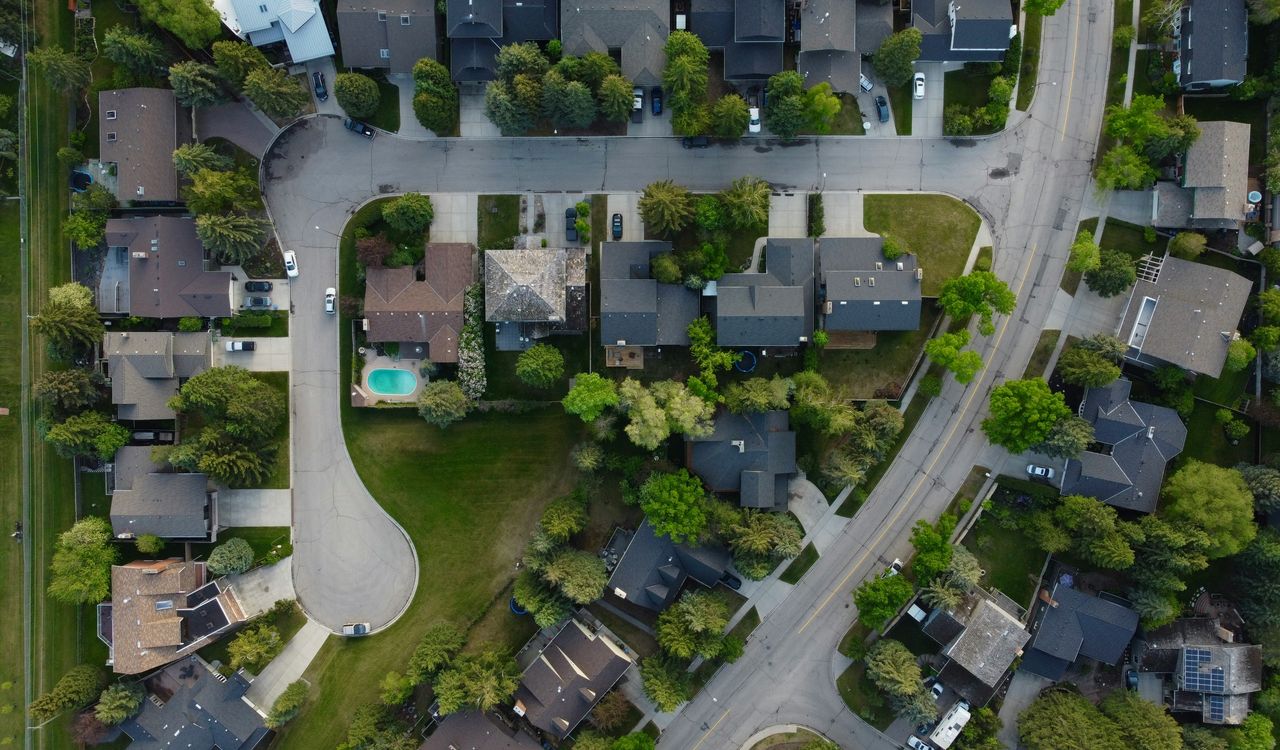
The housing market is sending two messages at once. On paper, prices remain remarkably strong, but for millions of aspiring owners, the market feels more closed than ever.
A market at a high point, but not a healthy one

The phrase “15-year high” captures the paradox of the current US housing market. Values remain elevated after years of pandemic-era appreciation, even though sales activity has been subdued and affordability has deteriorated sharply. Recent National Association of Realtors data show the median existing-home price in April 2026 at about $417,700, extending a long streak of year-over-year price gains. That tells a simple story: prices have stayed high even as the market itself has become unusually sluggish.
Normally, softer sales would cool prices more decisively. But housing has not behaved normally for several years. A major reason is supply. Even with inventory gradually improving, the market is still far from the kind of balance that would produce broad affordability. NAR reported 1.47 million existing homes on the market in April 2026, equal to a 4.4-month supply. That is better than the extreme shortage of recent years, but it still does not amount to a flood of affordable listings, especially in the entry-level segment.
Economists have repeatedly pointed to the “lock-in effect” as a central distortion. Millions of owners refinanced or bought when 30-year mortgage rates were far lower, often near 3%. As the Federal Reserve has noted, many of those homeowners are reluctant to sell and take on a new loan at a much higher rate. That has kept the resale market tight, even when demand has weakened. In effect, the market is not freezing because nobody wants to move; it is freezing because moving has become financially irrational for many households.
That is why today’s high prices should not be mistaken for market strength in the traditional sense. A truly healthy housing market would pair steady demand with sufficient supply, rising incomes, and meaningful access for new entrants. Instead, the current market is being propped up by scarcity, not broad-based confidence. Homeowners who already own property have largely retained their equity gains. Those trying to buy their first home are looking at a market where prices remain lofty, options are limited, and financing costs still feel punishing.
Why first-time buyers are taking the hardest hit

First-time buyers are always more sensitive to affordability because they do not have home equity from a previous sale to cushion the blow. In this cycle, that structural disadvantage has become severe. The National Association of Realtors found that the first-time buyer share dropped to 24%, the lowest level since it began tracking the figure in 1981. The median age of a first-time buyer also climbed to 38, another record, showing just how much longer Americans now need to save, earn, and wait before they can enter the market.
That shift is more than a statistical curiosity. It represents a fundamental reordering of who gets access to homeownership. In previous eras, first-time buyers routinely made up closer to 40% of the market. Now they are being edged out by repeat buyers with equity, all-cash purchasers, and households with family assistance. NAR’s profile found many first-time buyers still rely heavily on savings, but a meaningful share also need financial help from relatives or other outside resources. Inheritance, gifts, and family-backed loans are becoming more relevant at exactly the moment when housing is supposed to reward work and long-term planning.
Monthly costs are the biggest obstacle. Redfin reported that the median monthly housing payment for buyers reached record territory in 2025, while average mortgage rates remained near the upper-6% range for much of the period. Even when rates eased modestly, the payment relief was limited because home prices stayed high. That means many would-be buyers are not just struggling with down payments; they are failing debt-to-income tests or deciding that ownership would consume too much of their paycheck.
The result is a market that increasingly rewards people who already have wealth. Buyers at the upper end can absorb higher borrowing costs or avoid them altogether with cash. First-time buyers, meanwhile, are often competing for the smallest slice of inventory: starter homes that have appreciated dramatically over the last decade. In that environment, even a slight bidding contest or a modest rate increase can knock out a buyer who was barely qualified to begin with. The ladder into homeownership still exists, but its first rung is much higher off the ground.
The mortgage-rate trap reshaped the entire market

Mortgage rates are not the only housing problem, but they have amplified every other one. Over the past few years, rates more than doubled from pandemic-era lows, altering both demand and supply in the same direction. On the demand side, higher borrowing costs slashed affordability. On the supply side, they trapped existing owners in place. When both forces hit at once, the market stopped functioning normally.
The Federal Reserve has explicitly described this dynamic in its monetary policy reporting. Existing-home sales have remained depressed in part because current owners who locked in lower rates are unwilling to swap them for much costlier financing. That phenomenon explains why inventory has improved only gradually instead of surging. Even households that want more space, less space, or a different location often decide to stay put because the financing penalty is too steep.
This is also why builders have gained relative importance. New-home sales have at times held up better than existing-home transactions because builders can offer incentives that individual sellers cannot. Rate buydowns, closing-cost support, and design concessions have made newly built homes more competitive, even when their sticker prices are not dramatically lower. For first-time buyers, that has created an unusual split market: the resale side remains constrained, while the new-home side offers somewhat more flexibility, though often in farther-out suburbs or exurban communities.
Still, lower rates alone would not instantly solve the problem. If borrowing costs fall meaningfully, some sidelined buyers would rush back into the market, potentially reigniting competition before supply catches up. That is why even modest affordability improvement has not translated into a broad reopening of homeownership. According to Redfin, affordability stopped worsening in 2024 for the first time in several years, but costs remained near record levels and required incomes stayed far above pre-pandemic norms.
In other words, rates have created a trap with no easy escape. High rates suppress demand, but they also suppress the listings that would make the market more accessible. Lower rates would help buyers, but they could also lift prices again if supply remains constrained. First-time buyers are stuck in the middle of that tension, waiting for a market reset that has not fully arrived.
What this means for families, communities, and the economy

When first-time buyers get pushed out, the consequences travel far beyond the housing sector. Homeownership has long been one of the main ways middle-class households build wealth in the United States. Delaying entry by five or ten years means delaying equity accumulation, missing years of potential appreciation, and often spending more on rent during the interim. For younger households, that can reshape lifetime finances.
There is also a geographic dimension to the problem. Buyers who cannot afford homes near job centers often move farther away, accept longer commutes, or leave high-opportunity regions altogether. That can hollow out local labor markets, strain transportation systems, and deepen inequality between households that bought earlier and those still renting. In many metro areas, the affordability crunch is not just a housing issue; it is becoming a workforce issue.
Families are adapting in visible ways. More adult children are staying with parents longer to save for down payments. Multigenerational living arrangements are becoming more common. Household formation is being delayed, and major life choices such as marriage, childbearing, and relocation are increasingly entangled with mortgage math. The housing market is no longer simply reflecting social change; it is actively driving it.
The broader economy feels these distortions too. Existing-home transactions normally generate spending on renovations, furniture, moving services, appliances, and local professional services. When turnover stays low, that economic activity softens. At the same time, elevated prices make homeowners feel wealthier on paper, but that wealth is unevenly distributed and difficult to unlock without selling or borrowing. The result is a market that preserves asset values while limiting mobility.
For policymakers, this is a warning sign. A country cannot sustain healthy household formation if entry into ownership depends increasingly on family wealth, late-life earnings, or geographic compromise. The social contract around housing starts to fray when stable employment and disciplined saving are no longer enough to buy an ordinary starter home. What looks like resilience in national price data may, underneath, be a growing access problem with long-term economic consequences.
What would actually bring first-time buyers back

A real recovery for first-time buyers will require more than a small dip in mortgage rates. The deeper issue is the shortage of attainable homes. That means more construction at the lower end of the market, faster permitting, zoning reform in high-demand communities, and policies that make smaller-lot, lower-cost development feasible again. Industry groups including NAR have argued that supply expansion is the only durable answer to affordability pressure.
The composition of supply matters as much as the quantity. Adding luxury apartments and high-end single-family homes may improve headline inventory, but it will not solve the entry-level shortage. What first-time buyers need are modestly sized homes, townhouses, condos, and starter properties near employment centers. Yet these are often the hardest homes to build under current land-use rules, construction costs, insurance burdens, and local opposition to denser development.
Financing innovation can help at the margins. FHA, VA, and other low-down-payment options remain important, and some buyers are using builder incentives or seller concessions to reduce upfront costs. But financing tools cannot fully compensate for a market where prices have outrun incomes for years. If monthly payments remain near record highs, easier credit alone risks stretching households rather than truly helping them.
There are signs of incremental improvement. Inventory has been rising from ultra-low levels, some regions are tilting closer to balance, and affordability improved modestly year over year in parts of the country. NAR’s monthly data for 2026 have also shown first-time buyers regaining a somewhat larger share of monthly transactions than the historic low seen in the annual profile. But that is not the same as a broad comeback. The annual trend still points to a market that remains difficult to enter without above-average income or outside support.
The path forward is clear even if the fix is not quick. More homes need to be built, more owners need reasons to list, and borrowing costs need to normalize without reigniting runaway price growth. Until those pieces move together, the housing market may continue to look strong from a distance while functioning poorly for the people trying hardest to get in. For first-time buyers, the issue is no longer whether housing is desirable. It is whether the market will make room for them again.