

Americans have not stopped wanting things. They have simply become more selective about what they can still afford.
That shift helps explain why so many households are cutting back, even when unemployment has remained relatively low and headline inflation no longer looks as alarming as it did at its peak.
The pullback is real, but it is not happening for the reasons many people assume

The story of consumer caution is often told as a reaction to vague economic anxiety, but the evidence points to something more concrete. Households are trimming purchases because the math of daily life has changed. Bankrate reported in 2025 that 54% of U.S. adults expected to spend less on discretionary purchases such as travel, dining out, and entertainment than they did the year before. That is not just a mood shift. It is a budget decision shaped by what happens before anyone even thinks about booking a trip or ordering takeout.
A broader body of survey data shows the same pattern. Gallup found in April 2025 that inflation or the high cost of living remained the most important financial problem facing American families, while housing costs and lack of money followed close behind. Pew Research Center likewise found in spring 2025 that a majority of Americans rated their personal financial situation as only fair or poor, and a growing share expected their finances to worsen over the following year. When people say they are cutting back, they are usually responding to fixed bills, not making an abstract statement about the economy.
That distinction matters. Consumer spending in the United States is often discussed as if it rises or falls with confidence alone, but confidence is heavily shaped by recurring household obligations. A family may still be employed, still paying the mortgage, and still making restaurant reservations less often because grocery bills, utility costs, insurance premiums, and child care are absorbing more of the paycheck. The result is a quieter kind of financial strain: not collapse, but constant compression.
This is why the phrase “cutting back” can be misleading. For many families, it does not mean slashing luxuries after a period of excess. It means protecting the essentials by shrinking the optional. The pressure shows up in small choices repeated every week: fewer nights out, delayed home repairs, cheaper brands, postponed vacations, and more careful holiday spending. Americans are not retreating from spending because they suddenly became austere. They are reprioritizing because the cost of maintaining ordinary life has climbed faster than comfort.
Housing, utilities, and groceries are doing more damage than one inflation number can show

Headline inflation can make conditions look manageable, but households do not live inside a single percentage point. They live inside a monthly stack of bills. Bureau of Labor Statistics data showed consumer prices rising 2.7% over the 12 months ending in June 2025, with shelter up 3.8% and food at home up 2.4%. Even when overall inflation moderates, the categories families feel most often—rent, mortgage-related costs, groceries, electricity, and other home expenses—can keep biting.
Housing is the clearest example. Harvard’s Joint Center for Housing Studies reported that in 2023, a record 22.6 million renters, or 50%, were cost-burdened, meaning they spent more than 30% of income on housing and utilities. For homeowners, the burden has been rising too. Harvard found that 20.3 million homeowner households were cost-burdened in 2023, and the trend has been especially severe among lower-income owners dealing with higher insurance, property taxes, utilities, and maintenance costs. Those figures help explain why spending cuts often begin at the edges of the budget. Once housing eats too much, everything else becomes negotiable.
Utilities are another underappreciated source of stress. An Associated Press report on a 2025 analysis found that past-due utility balances jumped 9.7% year over year to $789, and nearly 6 million households had utility debt severe enough that it was nearing collections. That kind of strain rarely makes headlines in the same way as mortgage rates or stock prices, but it directly changes spending behavior. A family behind on electricity or heating bills is not merely “concerned about inflation.” It is forced to redirect cash away from almost every other category.
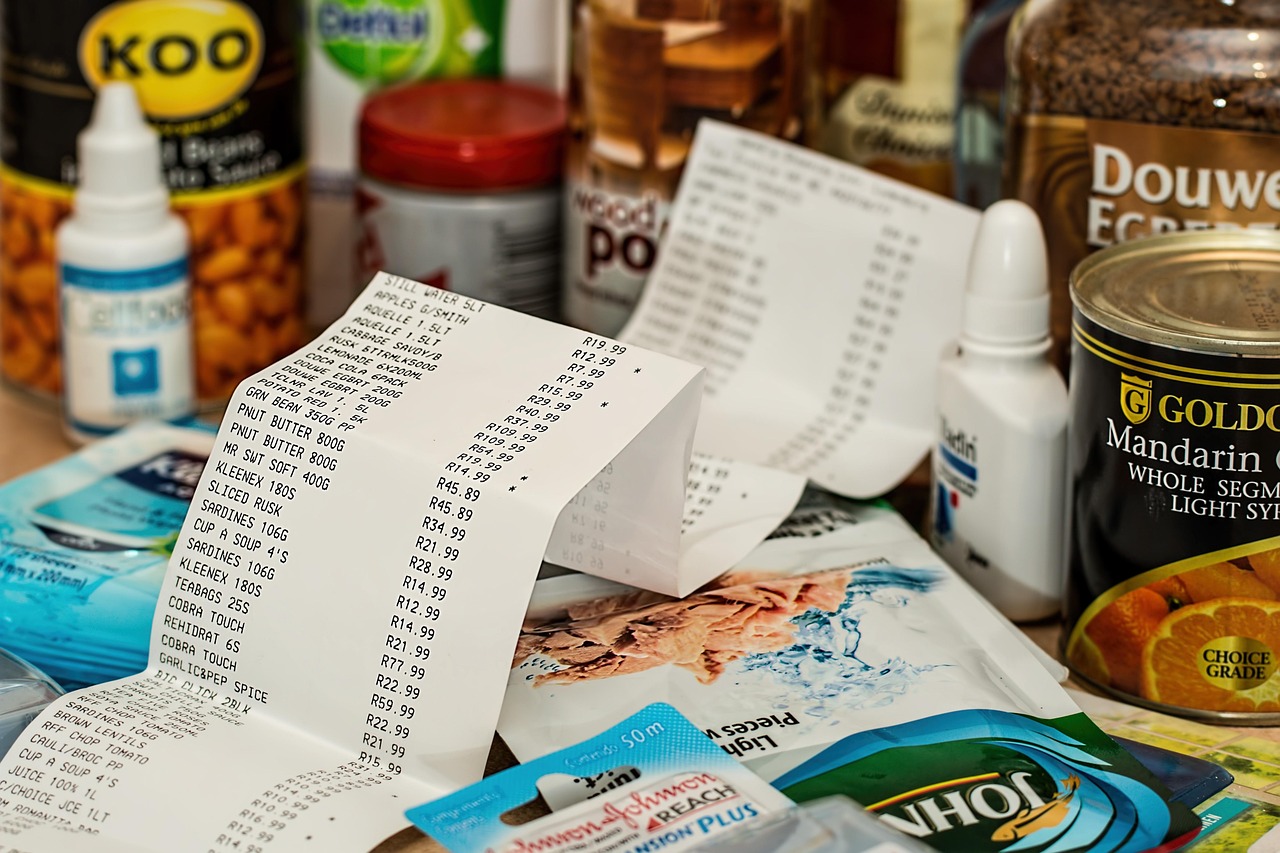
Groceries are the most visible reminder of this squeeze because they are purchased so frequently. An AP-NORC poll in 2025 found that about half of Americans described grocery costs as a major source of stress and another third called them a minor one. Pew found that 90% of Americans said healthy food had become at least a little more expensive over the past few years. That matters because grocery spending is one of the last categories people can fully control day to day, so it becomes both a stress point and a coping mechanism. Families substitute brands, buy less meat, skip impulse items, and shop multiple stores, all while feeling poorer even if their income has technically risen.
Debt, depleted savings, and child care are turning routine expenses into bigger trade-offs

The pressure at home does not end with visible bills. It deepens when families no longer have much room for error. New York Fed data showed total household debt reached $18.04 trillion at the end of 2024, while credit card balances climbed to $1.21 trillion. By the first quarter of 2026, mortgage balances had risen to $13.19 trillion and credit card balances remained elevated at $1.25 trillion, even after a seasonal decline. High debt does not automatically mean crisis, but it does reduce flexibility. Every balance carried forward narrows the choices available next month.
Savings provide less of a cushion than many households would like. According to the Bureau of Economic Analysis, the U.S. personal saving rate was 4.5% in January 2026, after sitting at 3.9% in December 2025. That is an improvement from some lower readings, but it is still not the kind of buffer that makes families feel secure when an appliance breaks, a medical bill arrives, or insurance renewals rise sharply. A low or middling saving rate can coexist with steady spending in the aggregate while masking millions of households living very close to the line.
Child care is another expense that reshapes entire household budgets, particularly for parents in their prime earning years. Census Bureau research released in 2026 found that 23.9% of households with children 13 and under paid for child care in 2024, spending an average of $10,520 annually, or 5.6% of household income. That is a meaningful share of income before groceries, housing, transportation, and health costs are fully accounted for. For many parents, cutting back on “extras” is not really optional once child care enters the picture. It becomes the price of staying employed.
The combined effect of debt, thin savings, and caregiving costs is a new kind of consumer restraint. It is less about a dramatic downturn and more about chronic triage. A household that can technically pay its bills may still feel financially pinned because too many obligations are fixed and too few can be reduced quickly. That is why spending pullbacks often look inconsistent from the outside. Families may still pay for a child’s activity or a summer trip while cutting restaurant meals, subscriptions, apparel, and home upgrades. They are not behaving irrationally. They are managing a budget under pressure.
Americans are not just spending less; they are redefining what counts as optional

One of the most important changes in the current spending environment is psychological. Items once treated as manageable conveniences are now being reconsidered as luxuries. Dining out, entertainment, streaming bundles, premium groceries, and spontaneous weekend travel are increasingly the first places households try to create breathing room. Bankrate’s 2025 discretionary spending survey captured this directly, showing that more than half of Americans expected to spend less on fun purchases than they had the year before. The message is clear: enjoyment still matters, but affordability wins.
Healthcare has also become part of this trade-off system. Gallup reported in 2025 that one-third of Americans had cut back on household spending in order to pay for healthcare, while many also reported delaying major life events because of medical costs. That kind of sacrifice reveals how distorted the category of “discretionary” has become. If households are reducing vacations, entertainment, or even clothing purchases to cover prescriptions, deductibles, or procedures, then much of what gets labeled consumer weakness is really expense substitution.
The same pattern appears in food behavior. When people feel stretched, they do not simply buy less; they buy differently. They swap national brands for store brands, reduce fresh items with short shelf lives, and look for foods that stretch across multiple meals. The burden is especially acute because grocery shopping is one of the few places where people can watch inflation in real time. A rent increase arrives annually. Food prices confront households several times a week. That repeated exposure reinforces the sense that finances are tightening, even if wages have risen somewhat over time.
This helps explain why public sentiment often feels worse than topline economic statistics suggest. Pew noted in 2026 that whether wages have “kept up” with inflation depends heavily on how inflation is measured, but many households continue to feel pinched anyway. The emotional truth of the budget is shaped less by annual wage charts than by the immediate cost of eggs, electricity, child care, insurance, and housing. When those essentials remain stubbornly high, people redefine the rest of their spending accordingly. What looks like consumer pessimism is often simple realism.
What this means for the economy and for households trying to stay ahead of the squeeze

The practical implication is that consumer resilience in aggregate should not be mistaken for household ease. Americans may continue spending enough to support overall economic growth, but the composition of that spending is changing. More money is being absorbed by nonnegotiable categories, leaving less available for the purchases that usually signal confidence and comfort. That matters for retailers, restaurants, travel companies, and local service businesses, but it also matters for policymakers who may be tempted to view slowing inflation as the end of the affordability story.
The deeper issue is that many of the forces driving cutbacks are “closer to home” precisely because they are tied to shelter, utilities, food, caregiving, and debt service. These are not fringe expenses. They are the infrastructure of everyday life. When they rise faster than households can comfortably absorb, the response is not always default or recession. More often, it is quiet retrenchment. Families keep going, but with less margin, less spontaneity, and more vigilance over each purchase.
That dynamic can persist for a long time. A household does not need to be in financial crisis to behave defensively. It only needs to believe that one more increase in rent, insurance, medical costs, or groceries could knock the budget off balance. Gallup’s 2025 affordability findings suggest that this sense of hardship remains widespread, with a majority of Americans saying recent price increases have hurt their ability to maintain their standard of living. That kind of pressure changes behavior well before it shows up in dramatic economic headlines.
So when two-thirds of Americans say they are cutting back, the most revealing explanation is also the simplest one. They are not merely reacting to the national economy in the abstract. They are responding to the cost of running a home, feeding a family, getting to work, paying for care, and staying current on bills. In that sense, the spending pullback is not mysterious at all. It begins in kitchens, utility accounts, rent statements, insurance notices, and child care invoices—exactly where financial reality is felt first, and hardest.