

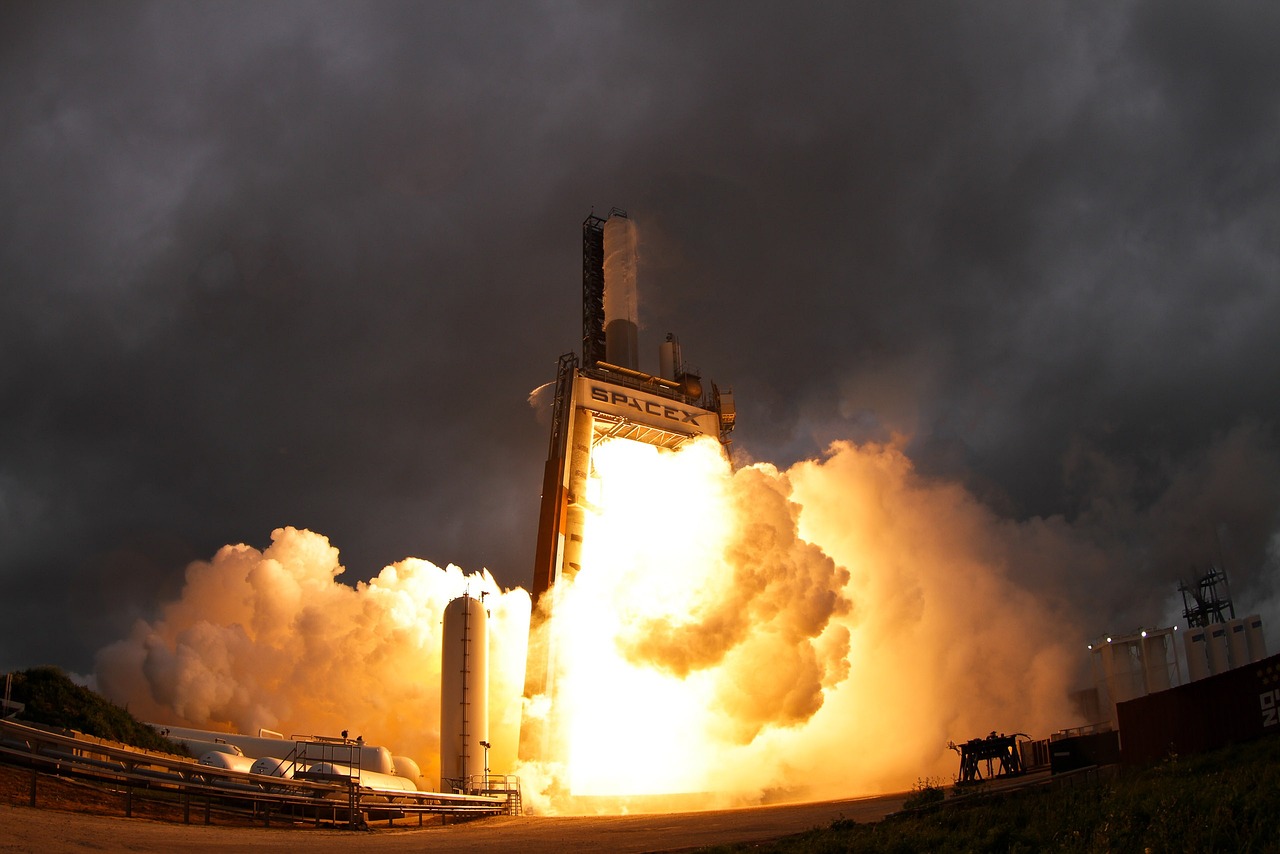
Few machines on Earth can fail this spectacularly and still be called progress. That is exactly why SpaceX’s latest Starship V3 splashdown became both an engineering event and a cultural moment.
A planned ending that still looked like catastrophe

When SpaceX launched the first test flight of its upgraded Starship V3 from Starbase, Texas, on May 22, 2026, the mission was designed to push the company’s next-generation vehicle through a demanding, end-to-end trial. According to the Associated Press, this was the biggest and most powerful Starship variant yet, and it carried 20 mock Starlink satellites as part of the test profile. The upper stage completed its trip around the world and headed for a controlled splashdown zone in the Indian Ocean, a familiar destination for Starship test flights that are not intended for recovery.
What made the finale feel so jarring was the contrast between intent and optics. The spacecraft reached the ocean as planned, but after splashdown it erupted in a towering fireball that instantly looked, to much of the world, like a disaster. Video distributed by major outlets showed a bright burst over the water, the kind of image that compresses nuance into one unforgettable visual. Euronews and other broadcasters described the mission as having completed most objectives before the explosion after splashdown, which is technically true but emotionally beside the point for casual viewers.
That tension is central to understanding Starship. SpaceX routinely treats test flights as data-gathering exercises rather than polished demonstrations, and fiery endings do not automatically mean mission failure. AP reported that the spacecraft’s mission ended as planned with a fiery splashdown in the Indian Ocean, while Space.com noted that a post-splashdown explosion was expected because the vehicle was not designed for ocean recovery on this mission. In other words, the fireball was dramatic, but not necessarily disqualifying in engineering terms.
Still, public interpretation rarely follows aerospace logic. To engineers, the mission can be parsed into propulsion, thermal protection, reentry behavior, payload deployment, and terminal operations. To everyone else, the rocket landed in the ocean and then blew up. That simple narrative is why the footage spread so quickly and why debate about the flight was never going to stay limited to launch specialists or dedicated space fans.
What Starship V3 actually achieved before the explosion

The most important fact about the mission is that the splashdown explosion came after a long list of meaningful flight achievements. Space.com reported that Starship V3 successfully launched on May 22 and that the upper stage completed payload deployment and splashed down off Western Australia after roughly an hour-long mission. AP likewise reported that the vehicle released 20 mock satellites before ending the flight in the Indian Ocean. For SpaceX, that sequence matters more than the dramatic last seconds because it reflects progress toward a spacecraft that must eventually survive orbital-class operations with repeatable precision.
This was not simply another Starship test with a new coat of paint. Space.com described V3 as a next-generation build with a major design overhaul aimed at moving the system closer to operational missions. The mission also tested hardware tied to future Starlink V3 capabilities, and Space.com reported that modified satellites were meant to gather imagery and information related to Starship’s heat shield performance. That is a telling detail because it shows SpaceX is increasingly using each flight to validate interconnected systems rather than isolated stunts.
At the same time, the test was not flawless. Reports indicated the mission included technical glitches, and the booster encountered trouble on return. AP later reported that the first-stage booster’s performance triggered regulatory scrutiny even though the spacecraft itself continued around the world and completed its planned end-of-mission sequence. That split outcome is crucial: the upper stage did many of the things SpaceX wanted, while the booster side of the architecture raised enough concern to halt subsequent launches pending review.
This is the paradox of Starship in 2026. The program can post visible gains and visible failures in the same hour. A vehicle may deploy test payloads, endure reentry, and hit its ocean target, yet the overall flight can still be classified as a mishap because another part of the system underperformed. For a fully reusable launch architecture, partial success is useful, but it is not sufficient. Every major subsystem has to move toward reliability at the same time.
Why the world reacted so intensely

The reaction was intense because Starship no longer belongs only to the aerospace community. It sits at the intersection of technology, celebrity, politics, industrial ambition, and online spectacle. Any launch tied to SpaceX and Elon Musk is already primed for global attention, and a video of a rocket exploding in a remote ocean is tailor-made for the social media era. Even before experts could explain the test profile, the imagery had already done its work: it framed the event as either a triumph of bold engineering or another example of chaos dressed up as innovation.
Part of the fascination comes from Starship’s scale and promise. AP noted that this upgraded version is one NASA is counting on for future moon missions, which immediately raises the stakes of every test flight. When the public sees a giant spacecraft burst into flames, many do not separate an expendable, instrumented test article from a future lunar lander architecture. The image prompts an instinctive question: if this is the rocket meant to help return astronauts to the moon, how far away is true reliability? That question is fair, even if it sometimes oversimplifies the purpose of developmental testing.
The reaction was also shaped by recent history. Back-to-back Starship explosions in 2025 had already made audiences more sensitive to visible failures, and AP explicitly referenced SpaceX’s effort to avoid another fireworks-heavy headline. Against that backdrop, even a planned fiery end was bound to be interpreted through fatigue, skepticism, or tribal loyalty. Supporters saw evidence that SpaceX keeps expanding the envelope. Critics saw another reminder that viral spectacle can obscure how hard orbital-class reusability actually is.
Then there is the cultural shift in how space events are consumed. People no longer wait for polished postflight briefings. They react in real time through livestreams, clipped videos, memes, and partisan commentary. That changes the meaning of a test. A mission that engineers might grade on dozens of internal metrics becomes, in the public square, a single clip of a splashdown turning into a fireball. The modern launch industry has to perform for regulators and customers, but it also performs for an audience trained to judge instantly.
The regulatory and program consequences behind the spectacle

The most consequential response did not come from social media at all. It came from regulators. On May 27, 2026, the Federal Aviation Administration required SpaceX to investigate the Flight 12 mishap, and AP reported that Starship launches were put on hold pending that investigation. Multiple reports made clear that the FAA’s concern centered on the Super Heavy booster during its return flight, not the upper stage’s planned Indian Ocean finale. That distinction matters because it shows the headline-grabbing fireball was not necessarily the flight’s most operationally significant problem.
This is how modern rocket development works at the highest level. Public attention tends to focus on what is visible, while regulators focus on what affects safety envelopes, flight rules, debris risk, and compliance. Space.com reported that the booster was unable to complete the engine burns needed for a controlled return and instead experienced a hard splashdown in the Gulf. If that sequence fell outside expected parameters, it would naturally become the centerpiece of the mishap review regardless of how photogenic the spacecraft’s ocean fireball was.
For SpaceX, the hold is inconvenient but not unfamiliar. The company has built its testing philosophy around iteration, and investigations are part of that cycle. Still, Starship now carries greater strategic weight than it did in its earliest test era. NASA’s long-term planning depends on the system for lunar missions, and outside observers increasingly judge the program not only as an experimental rocket but as infrastructure with deadlines attached. Every grounded period therefore has implications that reach beyond one company’s launch cadence.
The broader lesson is that Starship is transitioning from daring prototype to expected platform, and that changes the tolerance for ambiguity. Spectacular failures can still be educational, but they must increasingly coexist with schedule discipline, regulatory confidence, and mission assurance. SpaceX has long benefited from a public willing to forgive explosions in exchange for rapid progress. The bigger question now is whether that bargain holds as Starship becomes central to national and commercial space plans.
What this moment says about the future of spaceflight

The Starship V3 splashdown explosion was not just a story about one rocket. It was a snapshot of a larger truth about 21st-century spaceflight: the boundary between test program and public theater has all but disappeared. SpaceX wants Starship to become a fully reusable system capable of supporting satellite deployment, deep-space cargo, lunar operations, and eventually Mars ambitions. Missions like Flight 12 show how far the company has come from the days when simply clearing the launch pad was a victory, but they also reveal how much harder the next phase will be.
There is a reason these events provoke such strong opinions. Space exploration has always carried symbolism, but commercial spaceflight adds a layer of market pressure and internet immediacy. A launch is now an engineering test, a branding exercise, a political Rorschach test, and a media event all at once. That means even a technically planned ocean fireball can become a referendum on competence, risk, leadership, and the future of exploration. In that sense, the world’s reaction was not a distraction from the mission. It was part of the mission’s real-world impact.
For the general audience, the right takeaway is neither blind celebration nor reflexive mockery. The flight appears to have delivered meaningful data, accomplished several major objectives, and still produced enough trouble to trigger an FAA mishap investigation. All of those things can be true simultaneously. That is the uncomfortable reality of frontier engineering, especially when the frontier is being built in public by a company that invites attention and rarely hides the flames.
What comes next will matter more than the viral clip. If SpaceX can translate the lessons of Flight 12 into a cleaner booster return, stronger mission assurance, and more repeatable performance, the Indian Ocean explosion will be remembered as one more chaotic but useful chapter in Starship’s development. If not, it may come to symbolize the limits of spectacle-driven iteration. Either way, the world was right to pay attention, because moments like this often mark the line between an audacious experiment and a transportation system that can truly be trusted.