

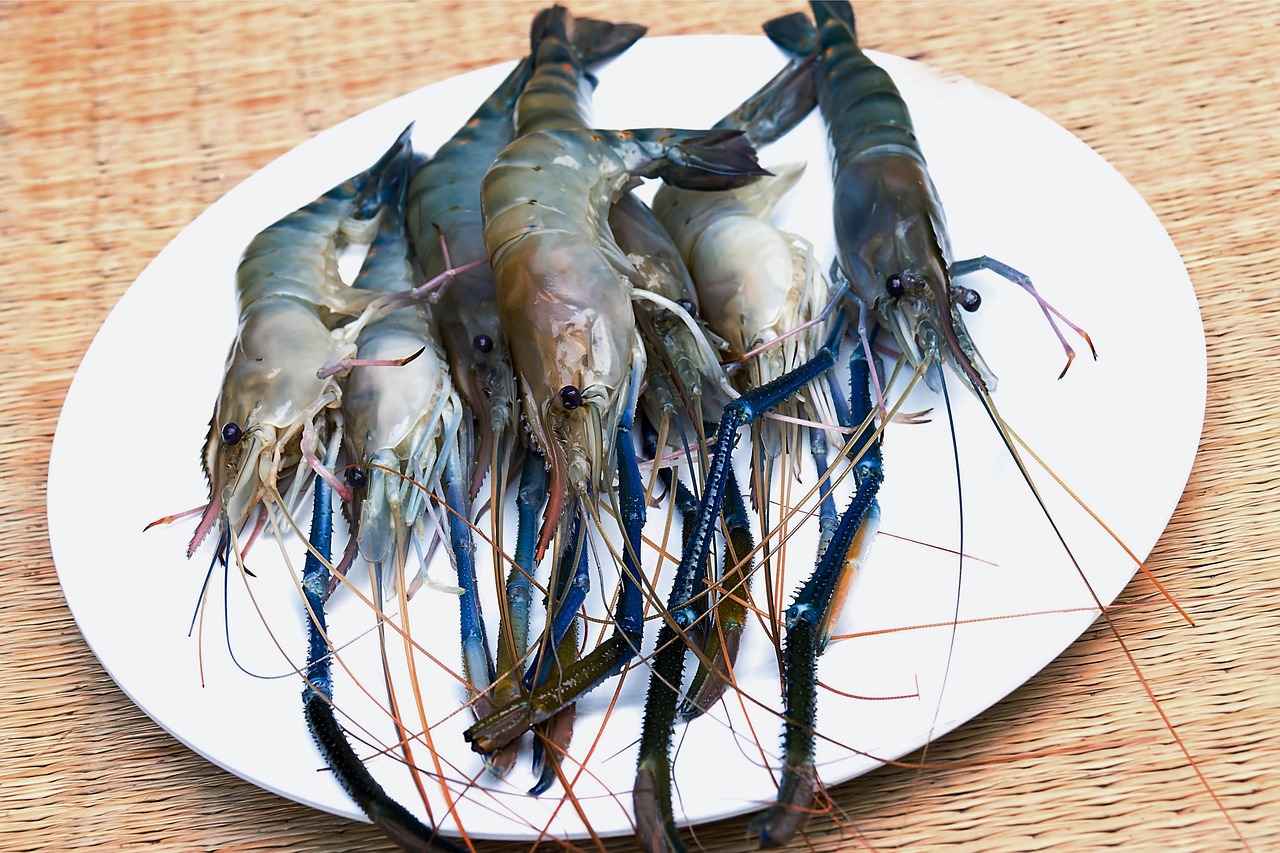
Shrimp has been the affordable luxury of the American seafood case for years. That bargain is starting to crack.
America’s shrimp habit depends on imports

If shrimp feels like an everyday food in the United States, that is because a huge global system has spent decades making it cheap, abundant, and easy to find. Americans eat shrimp in cocktail rings, freezer bags, tacos, pasta, takeout stir-fries, and restaurant baskets, often without noticing how dependent that menu is on foreign supply. According to NOAA, the U.S. imported 6.3 billion pounds of edible seafood products in 2023, and India, Indonesia, and Ecuador were the top import partners overall; shrimp is one of the most important imported seafood products in that mix. NOAA has also said the United States imported more than 1.3 billion pounds of shrimp products annually on average from 2019 through 2023, worth roughly $5.8 billion.
That dependence matters because shrimp sold in the U.S. is overwhelmingly imported. Industry groups and regional reporting have pegged the share at roughly 95% of shrimp eaten in America, a figure that helps explain why price shocks abroad move so quickly through grocery freezers and restaurant menus. Even when shrimp is peeled, breaded, seasoned, or packed in the United States, the raw product often started in ponds or processing plants thousands of miles away. The illusion of stability comes from scale, not resilience.
The supply chain has also become highly specialized. India dominates key value-added categories such as peeled and deveined shrimp sold to retail and foodservice buyers, while Ecuador has become a heavyweight in raw material supply thanks to large-scale production and relatively efficient logistics. Reuters reported in 2025 that India’s shrimp exporters were rattled by new U.S. tariffs, while Ecuador, facing a lower tariff rate and a shorter route to the U.S., stood to gain market share. That sounds like a routine trade shuffle, but it is really a warning that American shrimp prices are set by a narrow set of suppliers, each with different vulnerabilities.
When a market is this concentrated, even small disruptions can punch above their weight. A disease outbreak in South Asia, a customs delay in Southeast Asia, a tariff change in Washington, or a compliance dispute involving one exporting country can ripple into supermarket circulars and chain restaurant sourcing decisions within weeks. Cheap shrimp was never simply cheap food. It was cheap because a finely tuned global machine kept it that way, and that machine is now under strain.
Tariffs are turning a low-cost staple into a policy casualty

The clearest immediate reason shrimp is getting more expensive is trade policy. In 2025, U.S. tariff changes hit major shrimp suppliers with sharply different rates, creating instant uncertainty across the market. Reporting from Reuters and S&P Global showed the proposed and then revised tariff regime put pressure on India, Indonesia, Vietnam, and Ecuador at different levels, with a baseline 10% tariff becoming the floor and much steeper rates initially floated for some Asian suppliers. In practical terms, importers had to price shrimp not only on farming and freight costs, but on political risk.
That matters because shrimp margins are often thin. An extra 10% tariff on a high-volume food item is not a minor accounting detail; it can erase profitability, force contract renegotiations, and prompt importers to shift origins at short notice. S&P Global reported that Ecuadorian sellers quickly raised prices to U.S. buyers by 10%, effectively capturing part of the tariff shock instead of absorbing it. Once that happens, the consumer is no longer just paying the tax. The consumer is paying the tax plus the market’s opportunistic repricing around it.
UNCTAD warned in June 2025 that rising U.S. tariffs on fisheries products would push up seafood prices in the United States, a major seafood importer. That is especially relevant for shrimp because it is both mass-market and import-heavy, which means there is little domestic slack available to replace lost or costlier foreign product. If tariffs reduce imports from one country, buyers do not simply switch to a giant reserve of unused U.S. shrimp. They scramble for alternative suppliers already serving other markets, and those suppliers gain leverage.
The short-term behavior of importers made the picture even more volatile. Market data cited by trade analysts showed U.S. shrimp imports surged in spring 2025 as buyers rushed to bring in product ahead of tariff deadlines, with April import volumes hitting record highs. That stockpiling can temporarily soften retail prices, but it often sets up the opposite problem later: inventories clear, replacement product arrives at higher landed cost, and buyers discover the old deals are gone. The likely result is a lagged price increase that hits consumers after the policy headlines have faded.
Disease, biosecurity, and farm stress are squeezing supply

Shrimp may look like a simple commodity in the freezer aisle, but it begins as a biologically fragile farmed animal. That makes the industry unusually vulnerable to disease, and disease remains one of the most powerful hidden drivers of future prices. The FAO describes aquaculture as the world’s fastest-growing food production sector while stressing that disease is a major impediment to output. In shrimp, that challenge is acute because large-scale, high-density farming can spread pathogens quickly and turn profitable ponds into loss-making ones in a single season.
The industry has spent years coping with the legacy of destructive outbreaks such as Early Mortality Syndrome, also known as Acute Hepatopancreatic Necrosis Disease. FAO has documented how EMS caused massive die-offs and destabilized shrimp farming across Asia, and experts still treat biosecurity as a central cost of doing business. Even when a named crisis is not dominating headlines, producers are spending more on hatchery management, water quality, feed controls, disease monitoring, and survival rates. Those costs do not stay at the farm gate. They get baked into export pricing.
Recent production signals show how uneven the supply picture has become. FAO reported that during January through April 2025, India’s export-oriented vannamei shrimp sector saw lower harvests, while Ecuador increased output. At first glance that sounds reassuring, as if one producer can simply offset another. But shrimp is not a perfectly interchangeable product. Buyers need specific sizes, forms, certifications, processing capacity, and freight patterns, and not every supplier can instantly replace another in the categories Americans buy most.
Lower harvests also affect confidence up and down the chain. If processors are less certain about farm survival or harvest size, they are less willing to lock in aggressive prices months ahead. That uncertainty feeds into more conservative contracts, higher risk premiums, and less promotional pricing for retailers and restaurants. In a business that once depended on predictably cheap supply, biological risk is increasingly functioning like an invisible surcharge.
Regulation and compliance costs are adding another layer of pressure
Price is not being shaped by tariffs and disease alone. U.S. import rules for shrimp are also getting more demanding, and compliance costs eventually show up in the checkout total. NOAA’s Seafood Import Monitoring Program requires recordkeeping and traceability for shrimp imports to help keep illegal or misrepresented seafood out of U.S. commerce. Separately, shrimp imports are subject to environmental rules tied to sea turtle protection, and NOAA has emphasized that nations exporting shrimp to the United States must be certified annually under those requirements.
Those programs serve legitimate goals, but they add friction to a trade that depends on speed, paperwork accuracy, and reliable cross-border processing. Exporters and importers now have to manage documentation, harvest tracing, chain-of-custody records, and country-specific regulatory risk with increasing precision. If a supplier falls short, shipments can be delayed, denied, or redirected. Delays in seafood are expensive because cold storage, financing, and replacement sourcing all cost money, and importers pass those costs through whenever they can.
Trade remedies add still more complexity. Frozen warmwater shrimp has long been subject to antidumping and countervailing duty actions involving multiple supplying countries, and U.S. trade authorities have continued to review or maintain duties on key exporters. For buyers, this means the true landed cost of shrimp can include not just freight and ordinary customs charges, but a moving stack of duties that varies by country and sometimes by producer. That makes long-term menu pricing harder for restaurant chains and weakens the discount culture consumers became used to.
Food safety scrutiny can also reshape supply unexpectedly. The FDA continues to use import alerts for aquacultured shrimp, including a 2025 import alert covering shrimp from China and Hong Kong over banned or unsafe drug residues. The agency has also leaned on import alerts and recalls in other shrimp-related contamination cases. Even when such actions protect consumers, they tighten the pool of acceptable suppliers and increase screening costs. The result is a less forgiving market, where “cheap and available” is no longer the default assumption.
What this means for shoppers, restaurants, and the future of cheap seafood

For consumers, the most visible change may not be a dramatic overnight spike, but a steady erosion of value. The big bag in the freezer case may get smaller, the weekly sale may disappear, and the restaurant special may quietly switch from shrimp to another protein. Price increases can also arrive disguised as quality shifts, with more mixed sizes, lighter counts, or less labor-intensive formats. In other words, people may pay more even before the shelf tag tells the whole story.
Restaurants are especially exposed because shrimp has long been a menu workhorse. It is familiar, flexible, and profitable when bought at the right price, which is why chains use it in appetizers, pastas, rice bowls, tacos, and fried platters. But when imported peeled and deveined shrimp from India gets more expensive, when Ecuadorian sellers lift offers, or when duty uncertainty makes forward buying harder, menu engineering becomes unavoidable. Some operators will raise prices directly. Others will shrink portions, reduce promotions, or reserve shrimp for premium dishes.
The irony is that high prices may not immediately translate into relief for everyone in the supply chain. Reuters’ reporting from shrimp-producing regions in 2025 showed farmers and exporters facing squeezed margins even as U.S. policy suggested higher consumer prices ahead. That is because shocks are often absorbed unevenly: farmers face weak farmgate prices one month, processors face tariff uncertainty the next, and consumers get the bill later when inventories reset. Expensive food does not always mean healthy profits. Sometimes it means a stressed market passing losses around.
So is shrimp doomed to become a luxury again? Not necessarily. Global production is still large, and FAO noted that farmed shrimp output could reach 6 million tonnes in 2025, with Ecuador playing a major role. But abundance on paper is not the same as cheap shrimp in America. As tariffs, biosecurity costs, regulatory compliance, and concentrated sourcing collide, the old era of endlessly affordable shrimp is ending. The shrimp on your plate is about to cost more because the world that kept it cheap has become far more expensive to run.